Top Patreon Alternatives in 2026
Here for Patreon itself? See the full Patreon profile, pricing & reviews →
Suggest a change- If you want to keep tips fee-free and only pay a cut on memberships or shop sales, with no forced monthly bill, choose Ko-fi. tips are 0% fee on both plans, and the 5% cut on memberships and shop sales drops to 0% for $12 a month on Gold, whereas Patreon takes its platform cut on everything you collect.
- If you want the simplest possible setup with one flat cut and nothing to configure or upgrade into, choose Buy Me a Coffee. there is no plan to pick, no monthly fee, and no tier to unlock, just a flat 5% on every payment, which is faster to start with than Patreon's tiered page setup.
- If you already have your own website and audience and want to own your Stripe account and member data instead of routing everything through someone else's platform, choose Memberful. it bolts paywalls, courses, and gift memberships onto a site you already run, while Patreon requires your audience to live on Patreon's own page.
- If your content is mainly long-form writing and you want built-in discovery from other writers instead of relying on Patreon's video- and art-heavy audience, choose Substack. its Notes feed lets other Substack writers recommend you to their subscribers, which is closer to how newsletter readers actually find new writers than Patreon's creator-discovery feed.
- If you depend on Patreon's large existing pool of patrons who already have accounts and saved payment methods, choose stay on Patreon. switching means starting your subscriber count from zero, and no alternative here comes with an existing audience already signed up and paying.
Patreon charges no monthly software fee, but it takes a cut of what patrons pay you: 10% if you set up your page after August 2025, or a grandfathered 5%, 8%, or 12% if you're an earlier creator who has kept that page continuously published. Add card processing, currency conversion, and, for iOS memberships bought in the app, Apple's own cut on top, and total fees commonly run 13-20% of revenue, more on small pledges. Creators also point to unpredictable account suspensions and slow support as reasons they start building outside Patreon.
The tools below are the alternatives creators actually cross-shop: hosted tip-and-membership pages in Ko-fi and Buy Me a Coffee, bolt-on membership infrastructure for creators who already run their own site in Memberful, and Substack for writers whose product is really a newsletter with paid tiers attached. None of them replicate Patreon's existing pool of patrons outright, but each answers a specific reason creators leave.
Patreon alternatives compared
| Tool | Best for | Starting price | Free option | Last update |
|---|---|---|---|---|
| Ko-fiBest for keeping tips 100% fee-free | Creators who mainly collect one-off tips and want to keep 100% of them with no subscription | Free tier + custom | Yes | March 2026 |
| Buy Me a CoffeeBest for zero monthly cost | Creators who want a tip jar or basic membership live in minutes with zero monthly cost | Free tier + custom | Yes | December 2025 |
| MemberfulBest for owning your own site and member data | Creators and publishers who already have a website and want paywalls and subscriptions bolted on without moving their audience to a new platform | $49/mo | Trial (Free until you go live and start accepting real payments) | — |
| SubstackBest for newsletter writers | Writers who want to start a paid newsletter with zero upfront cost and no plan to compare | Free tier + custom | Yes | July 2026 |
Why teams switch from Patreon
New creator pages moved to a flat 10% platform fee in August 2025
The cheaper 5% Lite and 8% Pro legacy plans are gone for anyone starting fresh, and unpublishing an existing page loses the old rate permanently.
Combined fees commonly eat 13-20% of revenue
Creators cite the stacked platform cut, card processing, and currency conversion fees, along with billing, payout, and account-suspension handling, as reasons they build payment systems outside Patreon.
iOS memberships bought in the Patreon app lose an extra cut to Apple
In-app purchases on iOS route through Apple's system, which has taken 30% of new memberships since November 2024 (dropping to 15% after a member's first year), stacked on top of Patreon's own fee.
Patreon rates roughly 1.2 out of 5 on Trustpilot
Billing, payout, and account-suspension complaints are the recurring themes in creator reviews.
The best Patreon alternatives, ranked
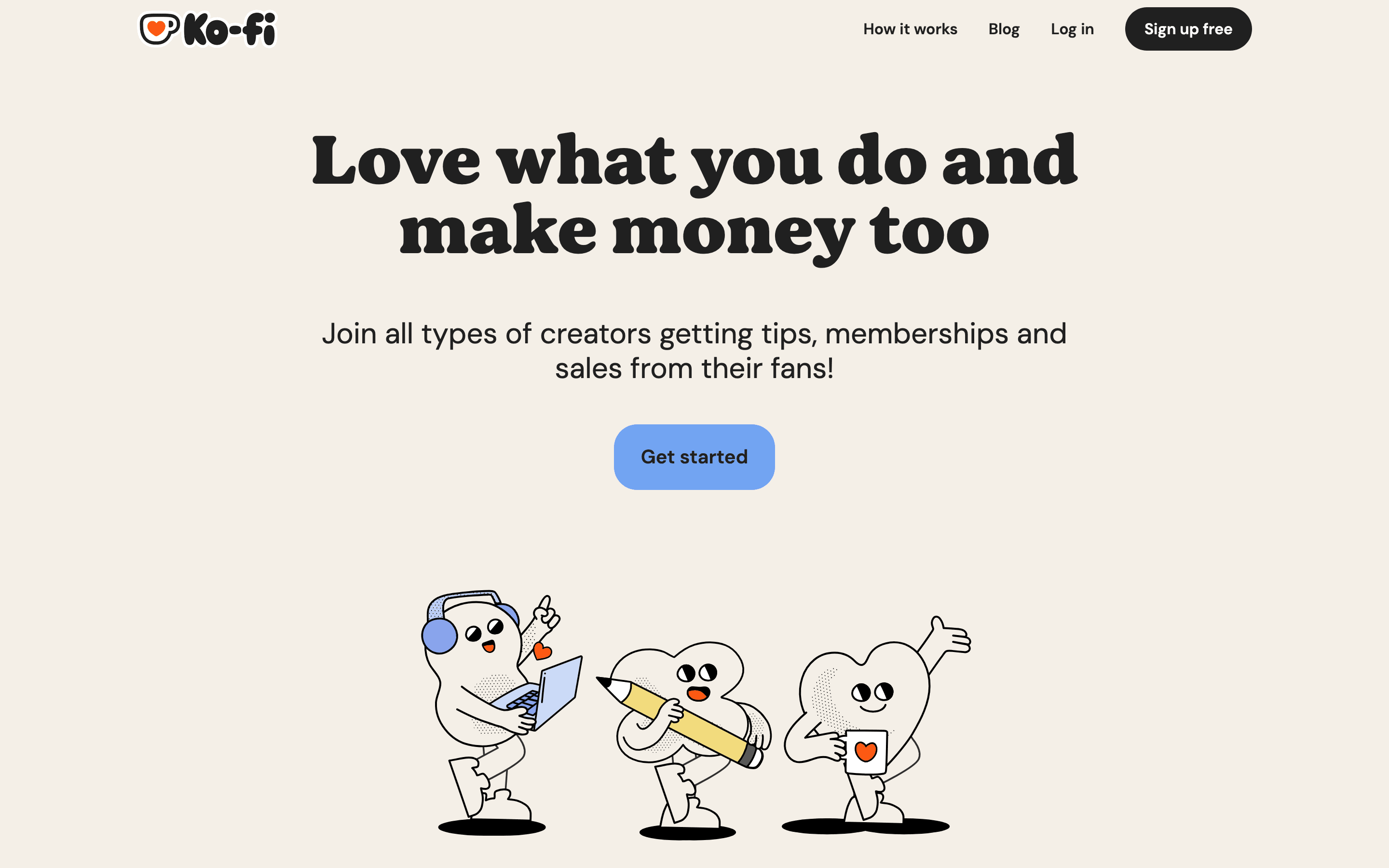
Ko-fi is the closest match to what draws creators to Patreon in the first place: a single hosted page where fans can tip, join a membership, buy from a shop, or book a commission, with no website of your own required. The core plan is free, and tips carry a 0% Ko-fi fee forever, unlike Patreon's percentage cut on everything you collect. Memberships, shop sales, and commissions cost 5% unless you pay $12 a month for Gold, which drops that to 0%, so break-even lands around $240 a month in that revenue. Watch the Contributor toggle: new accounts default it on, which quietly adds a 5% fee to tips unless you switch it off in payment settings. Membership tools are lighter than Patreon's or Memberful's, and Trustpilot reviews describe abrupt account suspensions and slow support.
Pros
- + Tips are 0% fee on both plans, unlike most tipping and membership tools
- + One page covers tips, shop, commissions, and memberships instead of juggling separate tools
- + Gold's flat $12/month pays for itself once you're doing meaningful shop or membership volume
Cons
- – New accounts are auto-enrolled in the Contributor program, which quietly adds a 5% fee to tips unless you find the toggle and switch it off
- – 5% fee on memberships, shop sales, and commissions on the free plan, on top of card processing
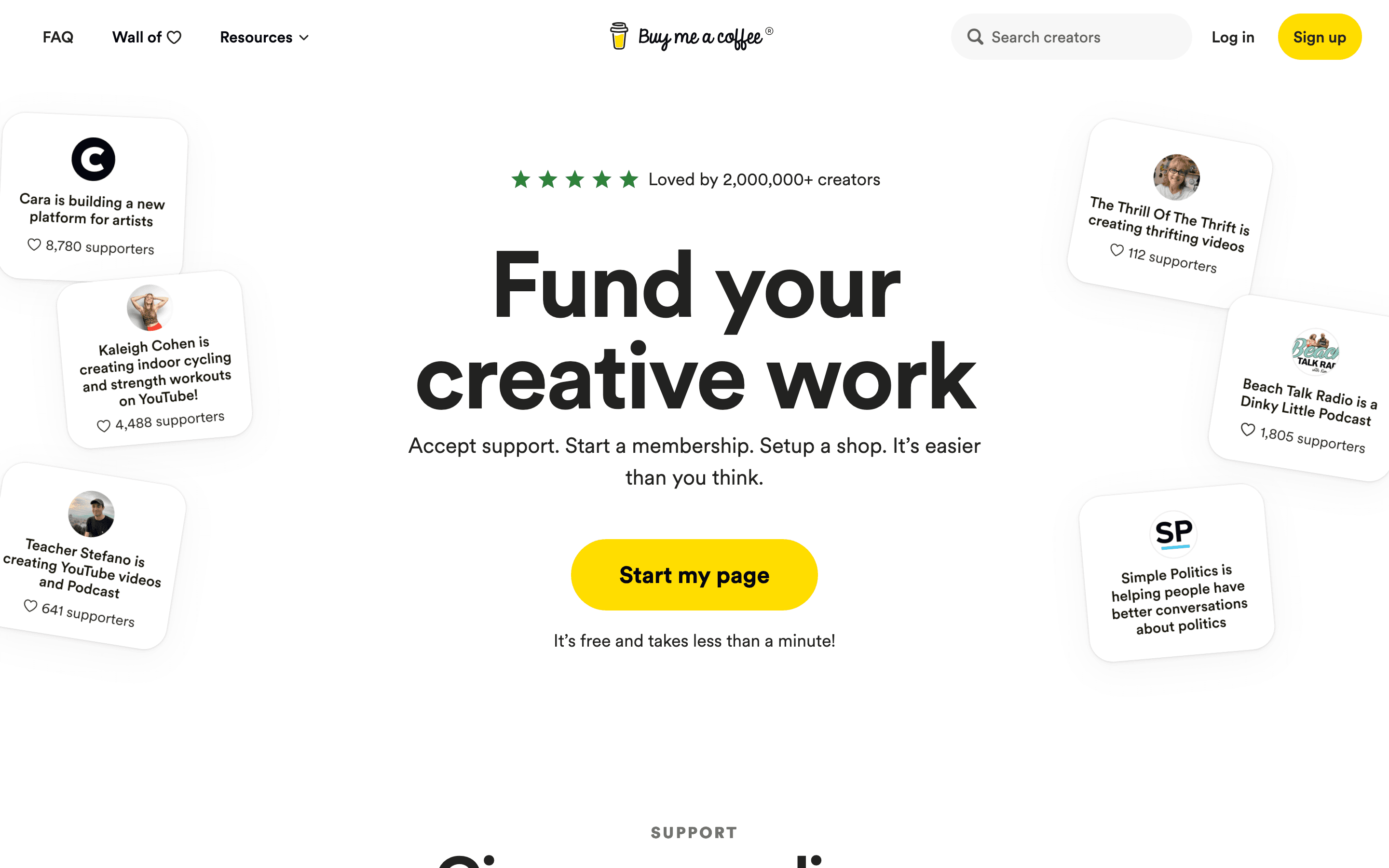
Buy Me a Coffee strips the decision down to one plan and one flat 5% cut on every payment, tips, memberships, shop sales, or paid posts, with no monthly bill and nothing to configure first. That makes it the fastest way to test whether an audience will pay before committing to anything bigger. The 90-92% you keep after Stripe's own processing fee only holds on larger payments, $20 and up. At BMC's own common coffee prices of $3-$10, the flat $0.30-per-transaction piece of Stripe's fee eats a bigger share, roughly 82-89% kept, the same small-payment fee erosion that hits Patreon's smaller pledges. It doesn't match Patreon's supporter CRM or analytics, and community features are thinner than a dedicated membership platform. The bigger catch is reliability: independent review sites and Product Hunt describe accounts suspended for vague 'risk concerns' right around payout time, with slow, days-to-weeks support responses when that happens. For a creator earning meaningful volume, that flat 5% forever, with no way to buy it down, can cost more over time than Ko-fi's optional Gold plan, the one alternative here that can actually beat BMC's rate once revenue is high enough to clear its $12 monthly cost.
Pros
- + No monthly fee at all, so there's no cost while you have zero or few supporters
- + Very fast to set up a page and start collecting tips
- + One page handles tips, memberships, and a digital shop together
Cons
- – 5% platform fee on every transaction adds up fast once volume is meaningful, on top of Stripe's 2.9% + $0.30
- – Multiple recent reports of accounts suspended for 'risk concerns' with little explanation, sometimes right before a payout
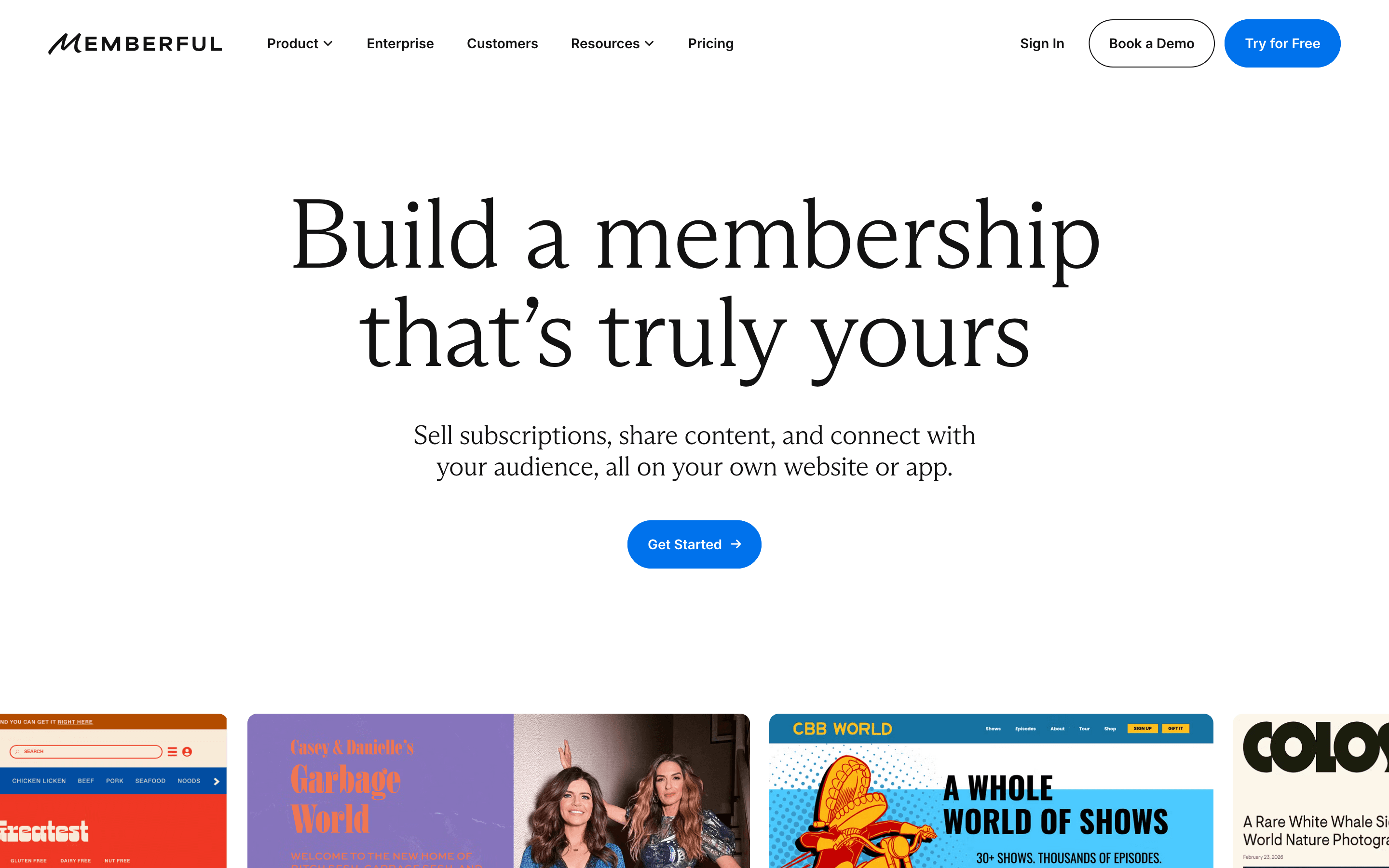
Memberful is the pick for creators who want to keep their own website and their own Stripe account instead of living inside a hosted platform, the opposite trade Patreon makes. Patreon itself owns Memberful and runs it as a separate product for exactly that audience: podcasters and publishers who already have a site and want paywalls, courses, and gift memberships bolted on without moving their audience anywhere. The one published plan is straightforward, $49 a month plus a 4.9% transaction fee, but that stacks with Stripe's own 2.9% + $0.30, so real costs commonly land near 7-8% of revenue on top of the flat fee. There's no free plan, so a creator with no revenue yet still pays $49 every month during setup, and Stripe is the only supported processor. Support is limited to weekday business hours, with an AI assistant handling everything outside that window.
Pros
- + You own your Stripe account and your member data instead of routing everything through Memberful's balance
- + One simple published plan instead of a maze of tiers
- + Deep, specific features: courses, podcasts, gift memberships, referral programs, and custom domains are all included at the one price
Cons
- – $49/month plus 4.9% per transaction stacks on top of Stripe's own 2.9% + $0.30, so real fees often land near 7-8% of revenue
- – No free plan, so new creators with no revenue yet still pay the flat fee every month
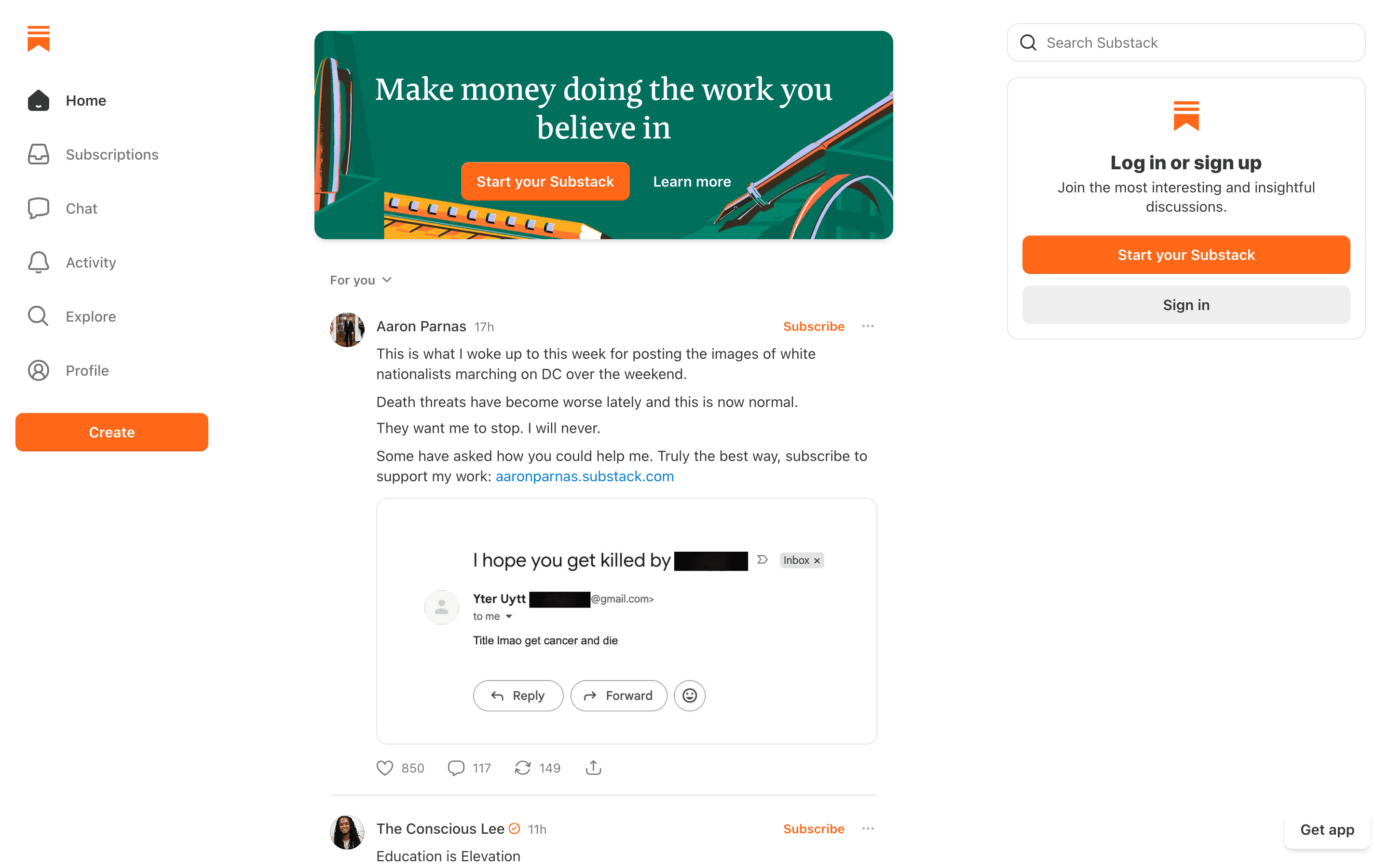
Substack fits a narrower slice of Patreon's audience: writers and newsletter creators rather than video, art, or podcast-first creators chasing tiered perks. Like Patreon, there's no monthly software fee, publishing is free, and you only pay once you turn on paid subscriptions, at which point Substack takes 10% plus Stripe's processing (roughly 2.9% + $0.30, plus a 0.7% recurring billing fee), landing around 13-16% combined. What it adds that Patreon doesn't is Notes, a built-in discovery and recommendation feed where other Substack writers can send you new subscribers without any outbound marketing on your part. Podcast and video hosting are included too. The tradeoffs: analytics stay at basic opens-and-clicks, that 10% cut never shrinks as you grow, and a custom domain costs a one-time $50. It's a genuine Patreon substitute mainly when writing, not community perks or tiered content drops, is the core of what you sell.
Pros
- + Free to publish, with no monthly fee gating any core feature
- + Payments, hosting, delivery, and a social/discovery layer (Notes) are all built in, so there's nothing else to wire up
- + Recommendations from other Substack writers can bring in subscribers without you doing outbound marketing
Cons
- – The 10% cut never goes away and never shrinks, so it gets more expensive in dollar terms the bigger you get
- – Stripe processing fees stack on top of Substack's cut, so the real cost is closer to 13-16% of revenue
Should your product be on this creator memberships & monetization list?
If you build a tool that belongs next to the ones above, submit it. A human reviews every submission. Approved products get their own page with pricing and screenshots, plus a place in the comparisons where they fit. It is free. You sign in with your work email so you can follow the decision, and there is no password to create.
Patreon alternatives: FAQ
What's the cheapest Patreon alternative?+
Buy Me a Coffee and Ko-fi both have no monthly software fee. Ko-fi goes further by making tips 0% fee forever, while Buy Me a Coffee takes a flat 5% on every payment type with no way to buy that down.
Is there a Patreon alternative that doesn't take a cut of tips?+
Ko-fi is the one built specifically around that: tips are 0% fee on both its free plan and its $12/month Gold plan. Memberships, shop sales, and commissions still cost 5% unless you're on Gold.
Which Patreon alternative is best if I already have my own website?+
Memberful is built for that case. It plugs paywalls, courses, and gift memberships into a site you already run and keeps your own Stripe account, rather than moving your audience to a new hosted page.
Is Substack a real alternative to Patreon?+
Only for creators whose main product is writing. Substack takes 10% of paid subscription revenue plus Stripe processing and adds a discovery feed called Notes, but it doesn't cover the tiered perks, shop, or commission tools that video and art creators use Patreon for.
Patreon alternatives: pricing compared
Entry price, billing model, and whether pricing is public. 2 of 5 publish pricing you can check without talking to sales.
| Tool | Starting price | Billing | Free option | Pricing disclosed |
|---|---|---|---|---|
| Patreon | Free tier + custom | usage-based | Yes | Not disclosed |
| Ko-fi | Free tier + custom | tiered | Yes | Partly public |
| Buy Me a Coffee | Free tier + custom | usage-based | Yes | Not disclosed |
| Memberful | $49/mo | flat + transaction fee | Trial (Free until you go live and start accepting real payments) | Partly public |
| Substack | Free tier + custom | revenue-share | Yes | Not disclosed |
How we made these picks. We compare tools on public pricing, features, and hands-on assessment, then verify every price against the vendor's own page. We never accept payment for rankings. Read the full methodology. Spotted an error? Report it.