Top Substack Alternatives in 2026
Here for Substack itself? See the full Substack profile, pricing & reviews →
Suggest a change- If you want the closest thing to Substack's audience-discovery network, just built around membership tiers instead of a newsletter, choose Patreon. its expanded Home feed and Collab Posts recommend creators to fans the way Substack Notes and cross-publication recommendations do, and it runs on the same pay-only-when-paid model.
- If you already run your own website and want to stop giving a platform a permanent cut of your subscription revenue, choose Memberful. it bolts paywalls and billing onto a site you already own, and you keep your own Stripe account and member data instead of routing everything through someone else's balance.
- If your business is a paid newsletter and you want a newsletter tool instead of a monetization platform, mainly for real subscriber analytics, choose Kit (ConvertKit). it's an email marketing platform built for creators, priced by list size instead of taking a cut of subscription revenue, with subscriber tagging, automations, and engagement analytics Substack doesn't offer.
- If your business is a paid newsletter and you rely on Substack's Notes discovery network and podcast hosting to find new readers, choose stay on Substack. Patreon and Memberful are monetization platforms, not newsletter tools, and Kit doesn't have a reader-discovery network to replace Substack's Notes and cross-publication recommendations. None of the three send a newsletter with built-in discovery the way Substack does.
None of the tools below fully replace Substack. Substack's job is three things bundled together: writing and sending a newsletter, taking payments from readers, and getting your writing in front of new readers through Notes and cross-publication recommendations. Nothing on this list does all three, so if you need all three, the honest answer is to stay on Substack and treat the cost as the price of that bundle.
Substack costs nothing until you charge readers, then it keeps 10% of every subscription payment forever, plus Stripe's card fee on top. That's fine for a new writer testing paid subscriptions, but it gets expensive fast once a newsletter earns real money, and Substack's analytics stop at opens and clicks. The three tools ranked here each solve one piece of that problem and give up another piece to do it.
Patreon and Memberful are membership and paywall platforms, not newsletter tools. Move to either one and you stop sending an email newsletter altogether. Kit (formerly ConvertKit) is a genuine newsletter tool, but it's built for email marketing: it takes no cut of subscription revenue because it has no paywall to take a cut of, and it has no discovery network either. Pick whichever tradeoff matters most: discovery, ownership, or a newsletter tool with better analytics.
Substack alternatives compared
| Tool | Best for | Starting price | Free option | Last update |
|---|---|---|---|---|
| PatreonBest for audience discovery | Creators who already have an audience and want recurring memberships without building payment infrastructure themselves | Free tier + custom | Yes | April 2026 |
| MemberfulBest for owning your own site and data | Creators and publishers who already have a website and want paywalls and subscriptions bolted on without moving their audience to a new platform | $49/mo | Trial (Free until you go live and start accepting real payments) | — |
| Kit (ConvertKit)Best for keeping the newsletter format with real analytics | Solo creators, newsletter writers, and course or digital product sellers who want automation without hiring a marketing ops person | $39/seat/mo | Yes | June 2026 |
Why teams switch from Substack
The revenue cut gets more expensive in absolute dollars as a newsletter grows
A blog post from beehiiv, a competing newsletter platform, describes creators starting to compare flat-fee options once monthly revenue reaches the low thousands. Treat the specific figures as marketing content from a rival trying to win Substack's paying customers, not independent research.
Analytics stop at opens and clicks
The same beehiiv post cites thin analytics as a reason creators look elsewhere. Substack's own metrics guide confirms the platform reports opens, click rate, and total clicks, with no subscriber-level engagement scoring, so the underlying limitation is independently verifiable even though the framing comes from a competitor.
The best Substack alternatives, ranked
Patreon is the alternative most Substack writers already know, because it runs on the same idea: no monthly fee, just a cut of what fans pay. New creators pay a flat 10% platform fee, the same rate Substack takes, though card processing and currency conversion stack on top and push real fees to 13-20% of revenue. What Patreon adds that a plain newsletter doesn't is tiered memberships, one-time payments, and podcast RSS distribution built around a large existing pool of patrons with saved payment methods. Its April 2026 discovery network update, mixing a fan's existing memberships with public recommendations, functions like Substack's Notes for finding new supporters. The tradeoffs are real: Patreon's Trustpilot score sits around 1.2 out of 5 over billing and suspension complaints, and iOS memberships lose an extra cut to Apple's in-app purchase rules. For a writer who wants tiers and discovery without building anything new, it's the nearest match to what Substack already does.
Pros
- + No upfront or monthly cost, you only pay when you get paid
- + Handles subscription billing, taxes, chargebacks, and fraud protection so creators don't have to run their own payment stack
- + Built-in tools for tiers, free trials, one-time payments, and podcast RSS distribution
Cons
- – Total fees (platform cut plus processing plus currency conversion) commonly reach 13-20% of revenue and run higher than that on small pledges
- – New creators pay 10% flat; the old lower-cost Lite (5%) and Pro (8%) plans are gone for anyone who unpublishes or starts fresh
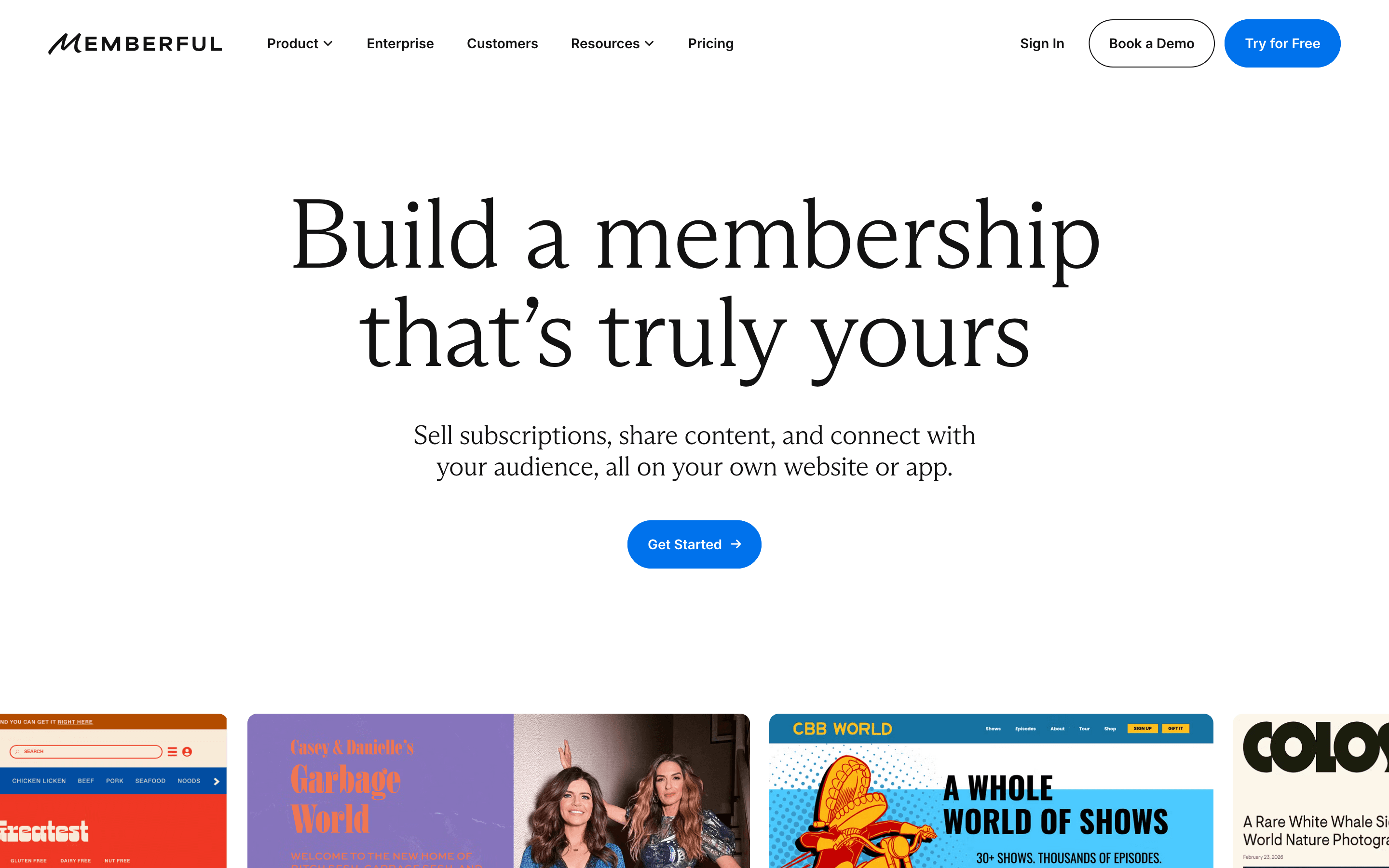
Memberful is the pick for a writer who wants to stop handing a platform a permanent percentage of revenue and instead own the site the subscriptions run through. It costs $49 a month plus a 4.9% transaction fee, on top of Stripe's own 2.9% + $0.30, so real fees commonly land around 7-8% of revenue rather than Substack's 13-16%. That difference favors anyone already earning meaningfully from paid subscriptions. Owned by Patreon but sold as a separate product, it plugs into a website you already run instead of hosting one for you, and every feature (paywalls, courses, gift memberships, referral programs) sits behind that one plan. The catch is there's no free plan, so a new creator with no revenue yet still pays $49 every month, and support outside weekday business hours is an AI assistant, not a person. It's built for creators who already have an audience and a site, not for starting from zero.
Pros
- + You own your Stripe account and your member data instead of routing everything through Memberful's balance
- + One simple published plan instead of a maze of tiers
- + Deep, specific features: courses, podcasts, gift memberships, referral programs, and custom domains are all included at the one price
Cons
- – $49/month plus 4.9% per transaction stacks on top of Stripe's own 2.9% + $0.30, so real fees often land near 7-8% of revenue
- – No free plan, so new creators with no revenue yet still pay the flat fee every month
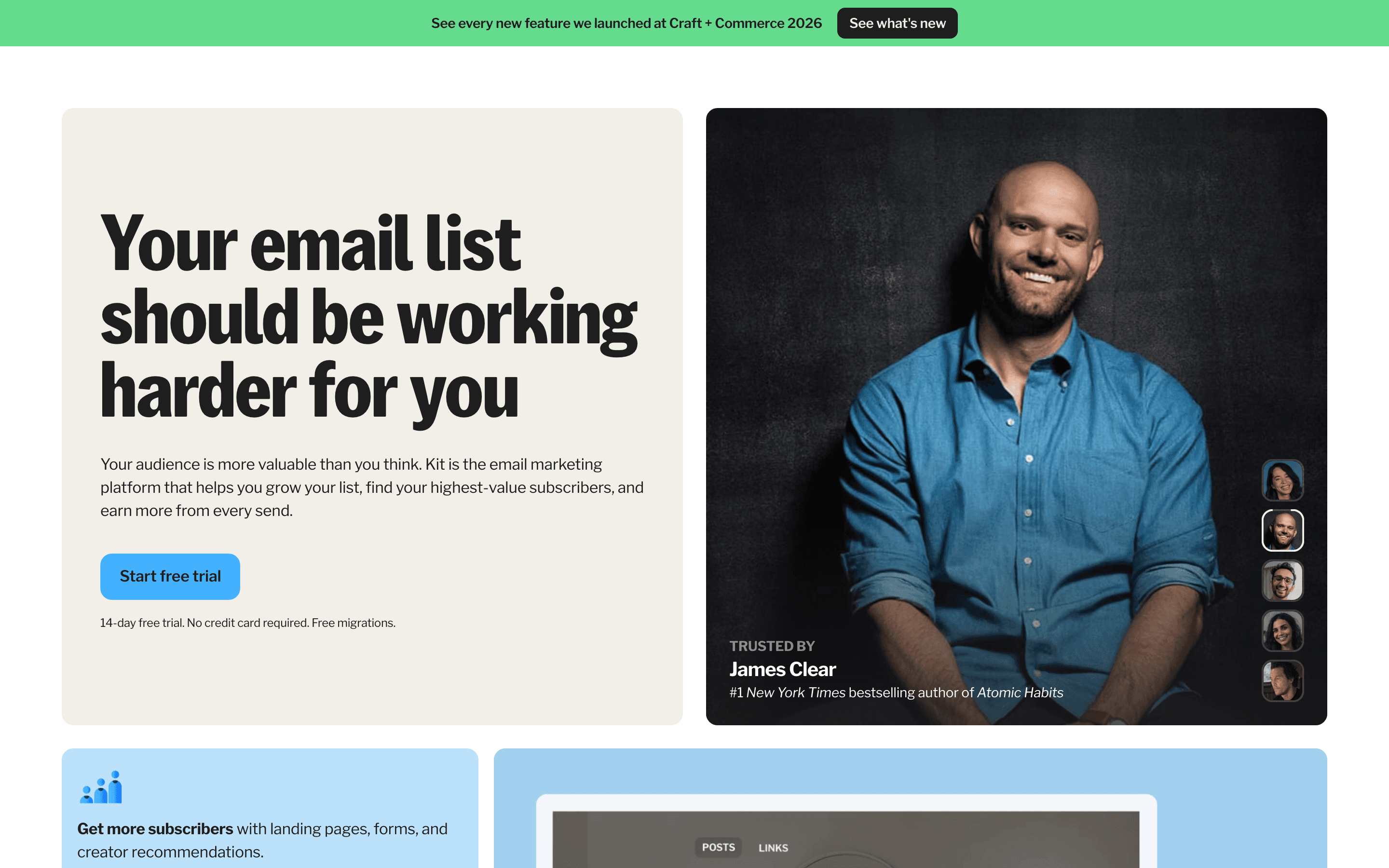
Kit, formerly ConvertKit, is the pick if what you want is a better newsletter tool, not a different way to collect payments. It's priced by subscriber count instead of taking a cut of what readers pay you: free up to 10,000 subscribers with unlimited broadcasts and forms, then $39/month for a 1,000-subscriber list on the Creator plan, rising with list size, or $79/month on Pro for engagement analytics and deliverability reporting. Since Kit charges for sending, not for subscription revenue, a paid newsletter earning real money keeps all of it instead of handing Substack 10%. It also gives writers the reader-level detail Substack doesn't: subscriber tagging, segmentation, and Subscriber Signals for demographic and professional data on top of opens and clicks. What it doesn't have is Substack's built-in discovery network. Kit sends to a list you build yourself, it doesn't recommend your newsletter to readers of other newsletters the way Substack Notes does, so growth has to come from your own marketing instead of platform discovery.
Pros
- + Free plan supports up to 10,000 subscribers, far more than most competitors' free tiers
- + Visual automation builder is unlimited even on the entry paid plan
- + Built-in landing pages, forms, and a creator-focused CRM reduce the need for extra tools
Cons
- – Price climbs quickly once your list grows past 1,000 subscribers
- – No published enterprise or custom pricing tier for larger senders
Should your product be on this creator memberships & monetization list?
If you build a tool that belongs next to the ones above, submit it. A human reviews every submission. Approved products get their own page with pricing and screenshots, plus a place in the comparisons where they fit. It is free. You sign in with your work email so you can follow the decision, and there is no password to create.
Substack alternatives: FAQ
What's the best Substack alternative for a paid newsletter with memberships?+
Patreon is the closest match. It runs on the same pay-only-when-paid model as Substack, at the same 10% rate for new creators, and its discovery feed serves a similar function to Substack Notes.
Is there a free Substack alternative?+
Kit (formerly ConvertKit) has a genuinely free plan up to 10,000 subscribers, with unlimited broadcasts and forms. Patreon and Memberful both cost you from the first dollar: Patreon takes a percentage of every payment, and Memberful charges a flat $49 a month regardless of revenue.
Do any of these alternatives charge less than Substack's 10% cut?+
Memberful charges $49/month plus 4.9%, which lands cheaper than Substack only once revenue is meaningful. Patreon matches Substack's 10% for new creators. Kit doesn't take a cut of revenue at all. It charges by subscriber count instead, so a newsletter earning real money keeps all of it.
Which alternative lets me keep my own website instead of moving to a hosted platform?+
Memberful. It's built to plug paywalls and billing into a site you already run, rather than hosting your publication the way Substack and Patreon both do.
What's the best Substack alternative if I just want a better newsletter tool, not a monetization platform?+
Kit, formerly ConvertKit. It's an email marketing platform built for creators, priced by list size instead of a cut of subscription revenue, with subscriber tagging and engagement analytics Substack doesn't offer. It has no reader-discovery network like Substack Notes, so growth depends on your own marketing.
Substack alternatives: pricing compared
Entry price, billing model, and whether pricing is public. 2 of 4 publish pricing you can check without talking to sales.
| Tool | Starting price | Billing | Free option | Pricing disclosed |
|---|---|---|---|---|
| Substack | Free tier + custom | revenue-share | Yes | Not disclosed |
| Patreon | Free tier + custom | usage-based | Yes | Not disclosed |
| Memberful | $49/mo | flat + transaction fee | Trial (Free until you go live and start accepting real payments) | Partly public |
| Kit (ConvertKit) | $39/seat/mo | per-seat | Yes | Public |
How we made these picks. We compare tools on public pricing, features, and hands-on assessment, then verify every price against the vendor's own page. We never accept payment for rankings. Read the full methodology. Spotted an error? Report it.