Top Lever Alternatives in 2026
Here for Lever itself? See the full Lever profile, pricing & reviews →
Suggest a change- If you want deeper recruiting analytics and dashboards without bolting on a separate BI tool, choose Ashby. Ashby builds pipeline and source-quality reporting into the core product, with custom dashboards for source quality and funnel conversion, though you pay a flat $400 a month regardless of how much you're actually hiring.
- If you run a formal, multi-stage interview process and need deep HRIS integrations like Workday, choose Greenhouse. Greenhouse's structured interview kits and scorecards force every hiring manager to evaluate candidates the same way, and it lists a direct Workday integration, while Lever's own integrations only mention HRIS platforms in general terms.
- If you want to see a real price before you ever talk to a salesperson, choose Workable. Workable is the only tool here with every tier fully priced in public, plus a no-credit-card 15-day trial. Ashby only publishes its entry-level Foundations price, and Greenhouse never publishes a number at all, while Lever keeps every price behind a sales call.
- If you already run sourcing campaigns and talent pools inside Lever's built-in CRM and your real complaint is cost, not features, choose stay on Lever. None of these alternatives replicate Lever's combined CRM-and-ATS model as directly, and migrating a working sourcing pipeline to a new system usually costs more in disruption than you'd save by switching.
Lever bundles a candidate CRM into its ATS, which is why sourcing-heavy recruiting teams pick it over more process-driven tools. The tradeoff shows up at contract time: pricing is never published. The median negotiated contract lands around $15,400 a year, but the real range runs wider than that. Small teams have landed deals closer to $6,700-$8,000 a year, and large enterprise deals reach $60,000-$140,000. Renewal increases of 8-15% show up often enough in buyer reports that you should plan for them.
The alternatives below only include tools an actual Lever buyer would cross-shop: in-house ATS platforms built for a company hiring its own employees. Bullhorn was dropped from this list. It's built for staffing and recruiting agencies placing candidates with client companies, a different job than the internal hiring Lever does, and Bullhorn's own positioning points buyers doing internal hiring toward Ashby, Greenhouse, or Lever instead.
Lever alternatives compared
| Tool | Best for | Starting price | Free option | Last update |
|---|---|---|---|---|
| AshbyBest overall alternative | Recruiting teams around 20-100 employees that want strong built-in analytics without bolting on a separate BI tool | $400/mo | No | May 2026 |
| GreenhouseBest for structured hiring at scale | Companies of 50+ employees that want a consistent, auditable interview process across every open role | Custom / quote | No | June 2026 |
| WorkableBest transparent pricing | Small and mid-size companies that want one system for both recruiting and basic HR tasks like onboarding and time off | $299/employee/mo | Trial (15 days, no credit card required, full Standard plan feature set) | May 2026 |
Why teams switch from Lever
Renewal prices climb 8-15% a year
Buyers report annual renewal increases in the 8-15% range on Lever contracts, which compounds fast on multi-year deals.
AI screening lags newer AI-first ATS platforms, and e-signature is thin
Reviewers say Lever's native e-signature is limited enough that teams end up paying separately for DocuSign, and that its AI functionality trails newer competitors.
Pricing is never published
Lever's pricing page has no numbers on it at all. Every deal starts as a custom quote sized to your headcount and hiring volume, with paid add-ons for Candidate Insights, AI Screening, and Onboarding on top.
The best Lever alternatives, ranked
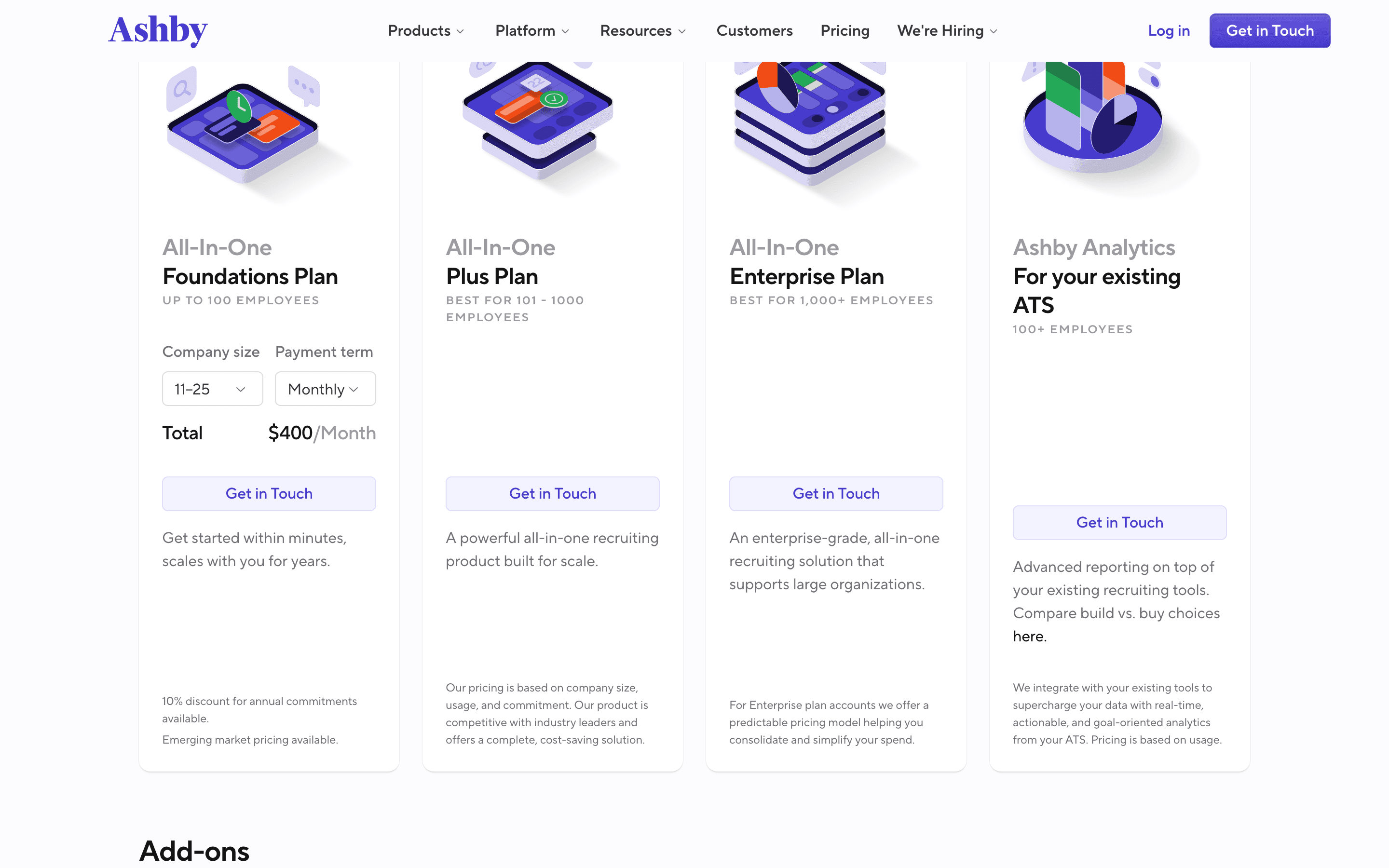
Ashby is the closest match to what Lever does today: sourcing, scheduling, and pipeline tracking in one system, with recruiting analytics and custom dashboards built into the core product. If your recruiting team already runs on numbers, source-quality reports, funnel conversion, time-to-fill by channel, Ashby gives you that without a separate BI tool bolted on. The catch is pricing. Foundations is a flat $400 a month for up to 100 employees, and crossing that headcount mid-contract forces a renegotiated Plus deal that can jump sharply. There's no free trial either, so you're committing before you can test it against your own hiring workflow, and Ashby drops boolean search for dropdown filters, which frustrates recruiters used to writing complex search strings. For teams under 100 employees with a numbers-driven recruiting lead, it's the strongest replacement for Lever's CRM-plus-ATS approach.
Pros
- + Recruiting analytics and reporting go deeper than most ATS competitors out of the box
- + One system for sourcing, scheduling, and pipeline tracking instead of several stitched-together tools
- + Frequent product releases, including AI features like report summaries and candidate rediscovery
Cons
- – Foundations includes only 200 email lookups a month, which teams running more than a couple of open roles at once burn through in about a week
- – Pricing is based on total company headcount, not recruiter seats, so growing past 100 employees mid-contract can trigger a large jump to the Plus tier
Greenhouse is the pick for teams that want less Lever-style sourcing and more process discipline: structured interview kits and scorecards that make sure every candidate for a role gets evaluated the same way. It integrates deeply with Workday and other HRIS platforms, which starts to matter once you're past the size where Lever's built-in CRM is the main draw. Like Lever, pricing is entirely quote-only, and Greenhouse also prices by total employee headcount rather than recruiter seats, so a lean recruiting team at a larger company can end up paying more than its hiring volume justifies. Reporting needs more manual work to get useful insights, according to reviewers, a real step down from Lever's built-in dashboards. Renewal increases run 3-7% a year, milder than Lever's 8-15%. Choose Greenhouse if structured, auditable interviews matter more to you than a built-in sourcing CRM.
Pros
- + Interview kits and scorecards genuinely reduce inconsistent, gut-feel hiring decisions across a hiring team
- + Strong integration ecosystem, including a direct Hire Link export into Workday for new-hire data
- + Responsive customer support according to most reviewers on Capterra
Cons
- – No public pricing. You have to go through a sales call and negotiate to find out what you'll actually pay
- – Reporting is limited out of the box and reviewers describe it as requiring manual work to get useful insights
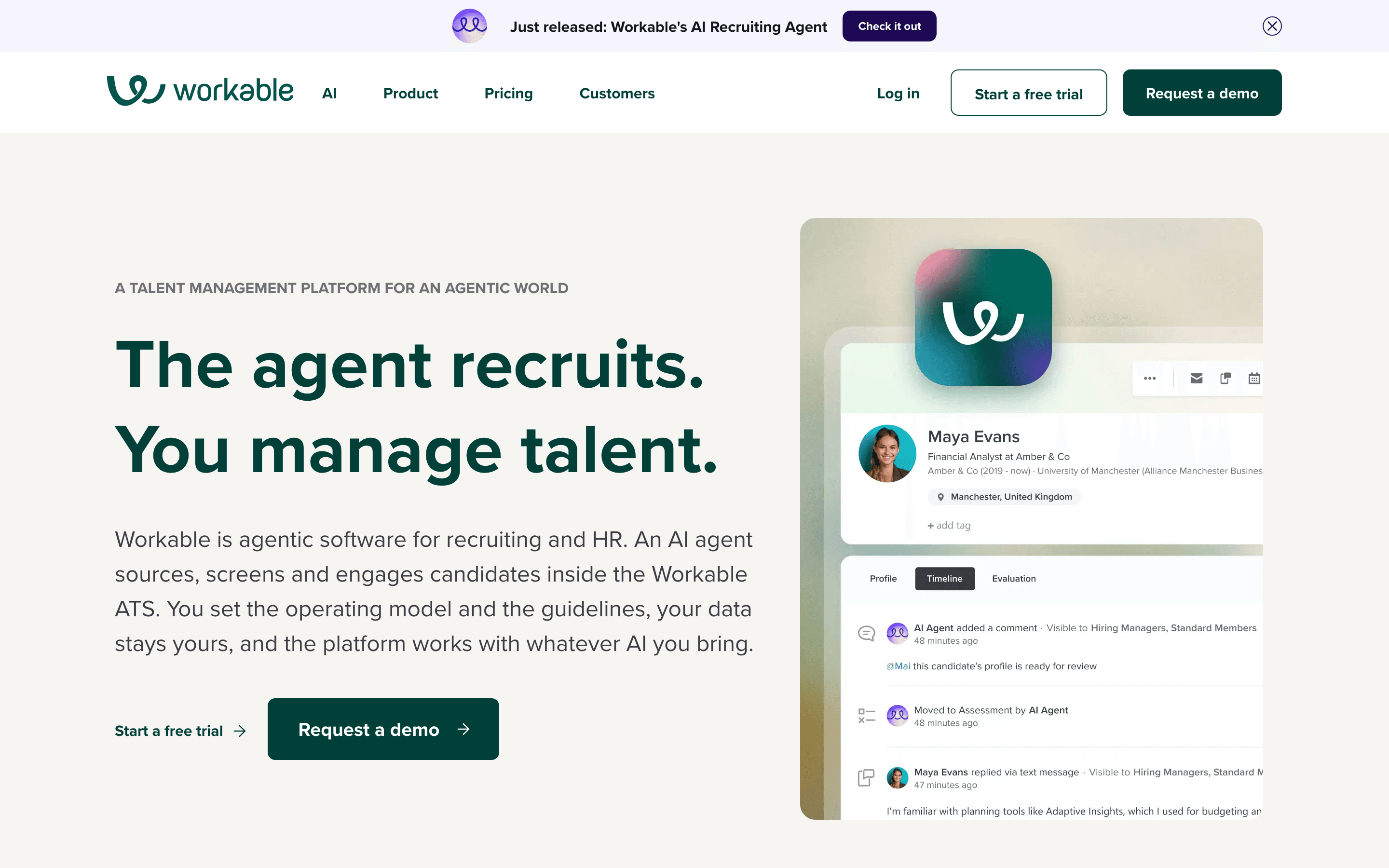
Workable is the alternative for teams that want to see a number before booking a call. Standard starts at $299 a month for companies with 1-20 employees, billed annually, and a 15-day free trial lets you test the real feature set with no credit card required. Every tier here, not just the entry price, is published on Workable's pricing page; Ashby only discloses its entry-level Foundations price and still sends Plus and Enterprise buyers to a sales call, and Greenhouse never publishes a number at any tier. Workable also bundles basic HR work, onboarding, time off, payroll prep, alongside the ATS, something Lever doesn't attempt. The tradeoff is depth. Workable's structured-hiring workflows are lighter than Greenhouse's or Ashby's, and the advertised Standard price excludes texting, video interviews, and assessments, which run $59-$109 a month each as add-ons unless you move up to Premier at $599 a month. Pricing also scales with total company headcount rather than recruiter count, same as the rest of this list, and renewal increases run 8-9% a year. Pick Workable if full pricing transparency across every tier matters more to you than Lever's sourcing-CRM depth.
Pros
- + Public, tiered pricing you can see without booking a sales call
- + Combines ATS and basic HR (onboarding, time off, payroll prep) in one system
- + 15-day free trial with no credit card and the full Standard feature set
Cons
- – Priced by total company headcount, not by recruiter or ATS-user seats, so bills grow with the whole company
- – Standard plan's advertised $299/month excludes texting, video interviews, and assessments, which run $59-$109/month each as add-ons
Should your product be on this ats & recruiting software list?
If you build a tool that belongs next to the ones above, submit it. A human reviews every submission. Approved products get their own page with pricing and screenshots, plus a place in the comparisons where they fit. It is free. You sign in with your work email so you can follow the decision, and there is no password to create.
Lever alternatives: FAQ
What is the best Lever alternative overall?+
Ashby is the closest substitute for Lever's sourcing-and-analytics approach, with deeper built-in reporting, though it charges a flat $400 a month regardless of your hiring volume.
Is there a cheaper alternative to Lever?+
Workable is the cheapest option with fully public pricing across every tier, starting at $299 a month for companies with 1-20 employees, versus Lever's median negotiated contract of about $15,400 a year.
Which Lever alternative has transparent, public pricing?+
Workable is the only one of these tools with every tier fully priced in public. Ashby publishes just its entry-level Foundations price ($400/month) and still requires a sales call for Plus and Enterprise, and Greenhouse requires a quote at every tier.
Is Bullhorn a good Lever alternative?+
No. Bullhorn is built for staffing and recruiting agencies placing candidates with client companies, not for in-house teams hiring for themselves, which is the job Lever does.
Lever alternatives: pricing compared
Entry price, billing model, and whether pricing is public. 2 of 4 publish pricing you can check without talking to sales.
| Tool | Starting price | Billing | Free option | Pricing disclosed |
|---|---|---|---|---|
| Lever | Custom / quote | quote-only | No | Not disclosed |
| Ashby | $400/mo | tiered | No | Partly public |
| Greenhouse | Custom / quote | quote-only | No | Not disclosed |
| Workable | $299/employee/mo | tiered | Trial (15 days, no credit card required, full Standard plan feature set) | Public |
How we made these picks. We compare tools on public pricing, features, and hands-on assessment, then verify every price against the vendor's own page. We never accept payment for rankings. Read the full methodology. Spotted an error? Report it.