Top Brex Alternatives in 2026
Here for Brex itself? See the full Brex profile, pricing & reviews →
Suggest a change- If you want the closest like-for-like replacement with a comparable free tier, choose Ramp. its Free plan matches Brex Essentials on unlimited cards, invoice OCR, and basic accounting automation, while AI-driven expense coding sits on Ramp's $15/seat Plus tier, comparable to Brex's $12/seat Premium.
- If you're a European mid-market company that wants procurement bundled in with cards, choose Spendesk. it packages cards, expenses, invoices, and procurement in one system built around European accounting integrations like Sage and Datev.
- If you're a large enterprise that needs sourcing, supplier risk, and contract management beyond card controls, choose Coupa. it covers the full source-to-pay cycle, something Brex's card-first platform was never built to do, though most Coupa customers keep a separate card provider (Brex itself ships a Coupa Pay integration) rather than dropping cards altogether.
- If you're a venture-backed startup that just needs cards, bill pay, and travel with a free tier, choose stay on Brex. Essentials stays free and Premium at $12/seat/month covers multi-entity support and live budgets for most growth-stage teams without a sales call.
Brex is a free-to-start corporate card and spend management platform built for venture-backed startups, with unlimited global cards, bill pay, and travel booking bundled into a $0/seat Essentials plan. In April 2026, Capital One completed its $5.15 billion acquisition of Brex, so it now runs as part of a bank rather than as an independent fintech. Its underwriting still leans on company cash and financials, which works against cash-light or non-VC-backed businesses.
Ramp and Spendesk are the two direct substitutes here: both compete head-on with Brex on cards, expenses, and bill pay, at roughly the same company size Brex serves. Coupa is a different kind of tool and only a partial fit. It's an enterprise source-to-pay suite, and in practice companies run it alongside a card provider rather than instead of one, since Brex itself lists a Coupa Pay virtual card integration as a native feature. It's included here as the closest option for companies that have outgrown card-level spend management, not as a like-for-like replacement. A company that's outgrown Brex to that degree and is standardized on SAP ERP or S/4HANA should also look at SAP Ariba, though its multi-year, systems-integrator-led implementations put it out of range for anyone still comparing free tiers, so it isn't ranked here. Tools like Tipalti and Procurify solve adjacent problems (mass vendor payouts, purchase-requisition workflows) but neither leads with card issuing, so they aren't ranked as Brex alternatives.
Brex alternatives compared
| Tool | Best for | Starting price | Free option | Last update |
|---|---|---|---|---|
| RampBest overall alternative | US-based companies that want corporate cards, expense management, and bill pay in one system instead of stitching together separate tools | $15/seat/mo | Yes | June 2026 |
| SpendeskBest for European mid-market teams | European mid-market finance teams (roughly 50-250 employees) that want cards, expenses, invoices, and procurement in one platform | Custom / quote | No | June 2026 |
| CoupaBest for enterprise procurement | Large enterprises consolidating procurement, invoicing, expenses, and supply chain planning into one platform | Custom / quote | No | May 2026 |
Why teams switch from Brex
Brex is now a Capital One product, not an independent fintech
Capital One completed its $5.15 billion acquisition of Brex in April 2026, and some finance teams would rather not run their card program through a bank-owned platform.
Underwriting favors well-capitalized, venture-backed companies
Brex sets card limits based on company cash and financials, which disadvantages cash-light or non-VC-backed businesses compared with card programs that underwrite differently.
Custom expense policies and deeper ERP integrations require the paid Premium tier
The free Essentials plan only includes basic accounting integrations. Dynamic approval chains, compliance audit detection, and multi-entity support all sit behind the $12/seat/month Premium plan.
Enterprise and procurement-level pricing isn't transparent
Brex's Smart Card and Enterprise plans are both quote-only, so companies that outgrow Premium can't see total cost without a sales conversation.
The best Brex alternatives, ranked
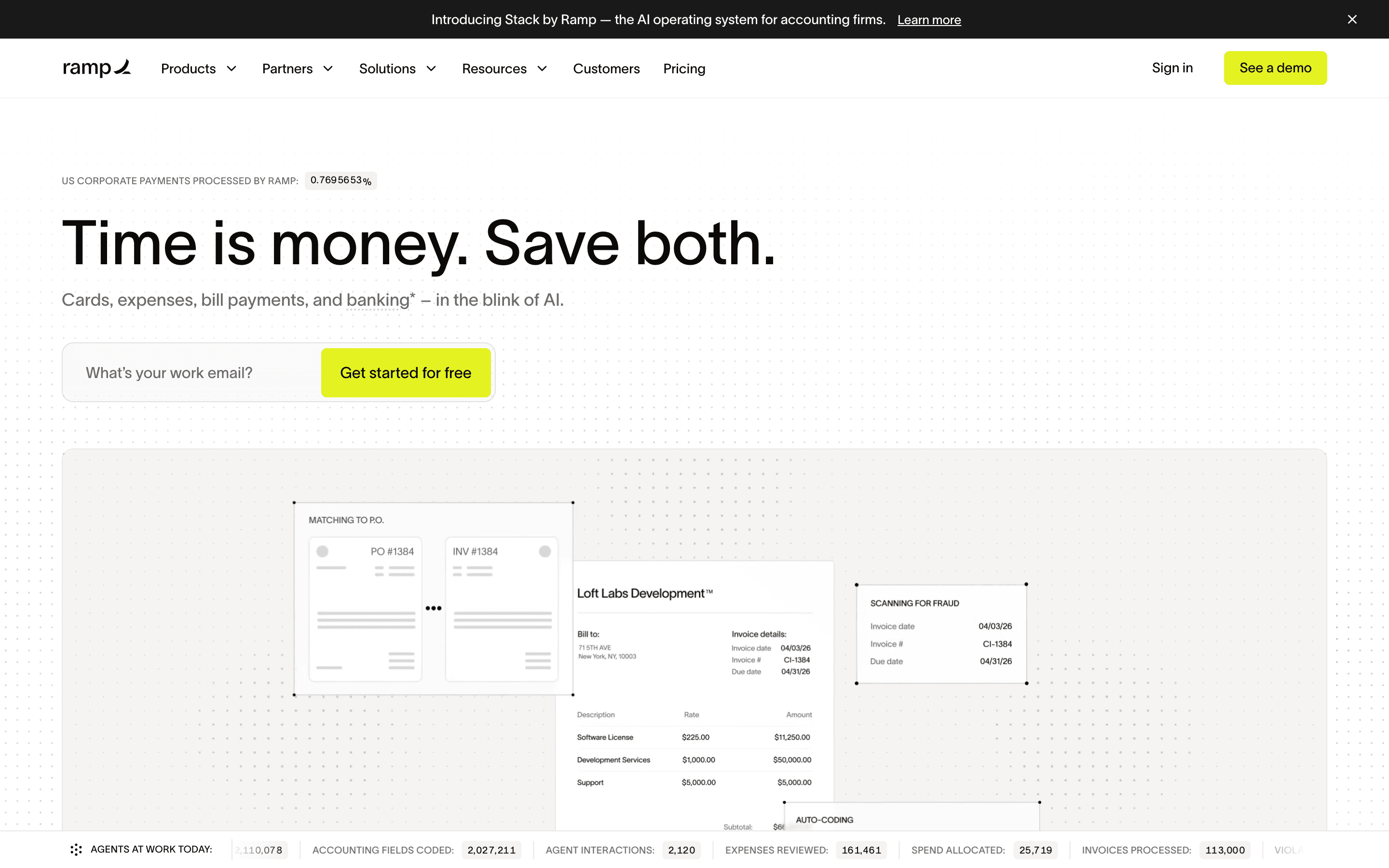
Ramp is the most direct Brex alternative on the market. Both companies sell corporate cards, expense management, and bill pay to venture-backed and mid-market companies, and both offer a genuinely free tier. Ramp's Free plan includes unlimited cards, invoice capture with OCR, and basic accounting automation at no seat cost, matching Brex Essentials on those specific features. Travel booking and multi-entity support, both part of Brex Essentials, aren't confirmed until Ramp's paid tiers, so the free-tier match isn't full parity. Where Ramp pulls ahead is AI: its Plus tier, at $15/seat/month, auto-codes transactions and recommends approvals, which can speed up monthly close more than Brex's $12/seat Premium tier. The catch is transparency. Ramp layers an unpublished platform fee on top of Plus, so the real monthly cost only shows up after a sales call, and its card issuing covers about 30 countries versus Brex's 210+. For most teams comparing the two head to head, Ramp is the safer switch unless broader global card coverage matters more than AI automation.
Pros
- + The Free plan includes unlimited cards and basic accounting automation with no seat fee
- + AI auto-coding and expense review cut down manual bookkeeping compared with older expense tools
- + Bill pay, procurement, and travel are native, not bolted-on integrations
Cons
- – The Plus plan's platform fee isn't published, so the real cost per company only shows up during a sales conversation
- – Enterprise pricing is fully custom and annual-only, so there's no self-serve path for larger organizations
Spendesk covers the same ground as Brex, cards, expenses, invoices, plus procurement, but it's built for a market Brex barely serves: mid-market Europe. Where Brex publishes clear per-seat prices, Spendesk keeps everything behind a sales quote, a fixed platform fee plus variable transaction charges, with modules like procurement, multi-entity management, and accounts payable sold as separate add-ons. That opacity is the main tradeoff. In exchange you get procurement workflows Brex doesn't have built in, unlimited users and cards on the base subscription, and 2026 additions like AI-assisted field pre-fill and an MCP-based chat interface for querying spend data. If your company is headquartered in Europe or runs multiple entities across countries, Spendesk's multi-entity consolidation and Sage, Xero, and Datev integrations match local accounting needs better than Brex does. US-only companies have less reason to make the switch.
Pros
- + Combines cards, expense claims, invoice payments, and procurement approvals in one interface, so you are not reconciling separate tools
- + The base subscription includes unlimited users and cards, so adding headcount does not add per-seat card fees
- + Mobile receipt capture and AI-assisted field pre-fill (cost centers, categories) cut manual data entry on expense claims and invoices
Cons
- – No public pricing. Every prospect has to go through a sales quote, so it is hard to compare cost against competitors upfront
- – Multiple reviewers report slow, unresponsive customer support and drawn-out offboarding when closing an account
Coupa operates at a scale most Brex customers haven't reached yet, and it's included here as the outer edge of the list rather than a direct switch. It's a full source-to-pay suite covering sourcing, contracts, invoicing, expenses, and supply chain design, sold as separate modules with no published pricing and no self-serve signup. Third-party estimates put real contracts anywhere from $50,000 a year for smaller deployments to $500,000 or more for large multi-module rollouts, a different cost bracket entirely from Brex's $0 to $12/seat plans. What justifies that gap is depth: formal sourcing events, supplier risk management, and Coupa Compose, its new agentic AI toolkit for automating sourcing and invoice matching, go well beyond what Brex's card-first platform attempts. Implementations also run months, not days. Importantly, Coupa isn't a card replacement: Brex's own integration list includes a Coupa Pay virtual card, and most companies that adopt Coupa keep it paired with a card provider (Brex or otherwise) rather than switching away from cards entirely. Coupa makes sense once a company has outgrown card-level spend controls and needs enterprise procurement governance across many business units, added on top of whatever card program it already runs. For a startup still on Brex Essentials, it's the wrong tool entirely.
Pros
- + Covers sourcing, procurement, invoicing, expenses, and supply chain in one connected platform instead of several point tools
- + Strong built-in approval workflows and spend controls suited to complex, multi-entity organizations
- + Investing heavily in agentic AI, including Coupa Compose and Navi Agent Studio, to automate sourcing, invoice matching, and risk workflows instead of adding generic chat features
Cons
- – No published pricing anywhere. Every buyer has to go through a sales cycle and RFP process to learn the cost
- – Third-party buyer estimates put annual contracts in the tens to hundreds of thousands of dollars, out of reach for small and mid-size companies
Should your product be on this spend & procurement list?
If you build a tool that belongs next to the ones above, submit it. A human reviews every submission. Approved products get their own page with pricing and screenshots, plus a place in the comparisons where they fit. It is free. You sign in with your work email so you can follow the decision, and there is no password to create.
Brex alternatives: FAQ
What's the biggest reason companies leave Brex?+
Brex's April 2026 acquisition by Capital One turned it into a bank-owned product, and its underwriting still favors well-capitalized, venture-backed companies. Both push some finance teams toward alternatives.
Is there a free alternative to Brex?+
Yes. Ramp's Free plan matches Brex Essentials with unlimited cards, invoice capture, and basic accounting automation at no seat cost.
What's the best Brex alternative for large enterprises?+
Coupa, once a company has outgrown card-level spend controls and needs a full source-to-pay suite for sourcing, contracts, and supplier risk. It doesn't publish pricing and takes months to implement, so it's a fit for enterprises rather than a direct Brex switch, and most companies keep it paired with a card provider (Brex ships a Coupa Pay integration) rather than dropping cards altogether. Companies already standardized on SAP ERP or S/4HANA should look at SAP Ariba instead, though its systems-integrator-led rollouts put it out of range for anyone still comparing free tiers.
Brex alternatives: pricing compared
Entry price, billing model, and whether pricing is public. 2 of 4 publish pricing you can check without talking to sales.
How we made these picks. We compare tools on public pricing, features, and hands-on assessment, then verify every price against the vendor's own page. We never accept payment for rankings. Read the full methodology. Spotted an error? Report it.
More spend & procurement comparisons
Further reading
- Best corporate cards for startups - Ramp and Brex both offer free corporate cards for startups. Ramp fits AI-heavy bookkeeping, Brex fits multi-entity and global card coverage.
- Best spend management for startups at seed stage - For a 10-person startup, Ramp or Brex covers cards, expenses, and bill pay for free. Spendesk and Procurify only make sense once you need real procurement.