Top Chatwoot Alternatives in 2026
Here for Chatwoot itself? See the full Chatwoot profile, pricing & reviews →
Suggest a change- If you want the cheapest way to add live chat and email to one shared inbox without running your own server, choose Crisp. Crisp's Free plan covers 2 seats and a shared inbox with no time limit, and paid tiers are priced per workspace instead of per seat, which is cheaper for a small team than Chatwoot's cloud plans once you don't want to self-host.
- If you want an AI agent that resolves most support conversations on its own and you're comfortable paying for outcomes instead of a flat credit pool, choose Intercom. Intercom's Fin AI Agent resolves conversations across chat, email, and phone for $0.99 per outcome, a more mature and heavily used AI layer than Chatwoot's Captain, whose per-conversation credit cost isn't even published.
- If you run a small ecommerce or SaaS shop and want live chat plus a bot that reads your help center without much setup, choose Tidio. Tidio's free plan covers 10 seats and its Lyro AI agent answers from your existing help content with little configuration, though you should budget for Lyro as a separate line item once you're past the free trial allotment.
- If you want a dedicated, mature chat widget and don't mind paying per agent with no free tier, choose LiveChat. LiveChat has run for over two decades as a standalone widget and now bundles SMS and Apple Messages for Business into its Business plan, a level of channel maturity Chatwoot only just reached with its own voice-calling beta.
- If you want to self-host and keep every conversation on your own server without paying per agent, choose stay on Chatwoot. No tool in this list offers a genuinely free, unlimited-agent self-hosted edition the way Chatwoot's Community edition does, and all four alternatives here are cloud-only products billed per seat or per workspace.
Chatwoot's biggest draw is the option to self-host for free and run live chat, WhatsApp, Instagram, and email out of one open-source inbox. Support and growth teams look elsewhere when they hit the free cloud plan's 500-conversation cap, when SSO sits behind a 2.5x jump to the $99/seat Enterprise tier, or when they don't want to run their own server just to get unlimited agents.
The four tools below cover the range. Crisp and Tidio compete on price and simplicity for small teams, LiveChat sells a more mature standalone widget, and Intercom trades Chatwoot's flat per-seat model for a deeper, outcome-priced AI agent.
Chatwoot alternatives compared
| Tool | Best for | Starting price | Free option | Last update |
|---|---|---|---|---|
| CrispBest value for small teams | Small support or growth teams that want chat, email, and a basic AI bot in one inbox without per-seat pricing | $45/seat/mo | Yes | April 2026 |
| IntercomBest AI agent | Support teams that want an AI agent (Fin) to resolve a large share of tickets on its own across chat, email, and phone | $19/seat/mo | Trial (14 days, no credit card required) | July 2026 |
| TidioBest for small ecommerce and SaaS teams | Small ecommerce or SaaS support teams that want live chat, a shared inbox, and a basic AI bot without stitching together separate tools | $29/mo | Yes | — |
| LiveChatBest dedicated chat widget | Support teams that want a dedicated, mature live chat widget and are fine paying per agent | $19/agent/mo | Trial (14 days, no credit card required) | June 2026 |
Why teams switch from Chatwoot
Self-hosted users argue the per-agent pricing for premium features erases the cost advantage of running your own server
Chatwoot still charges per agent for SLAs, audit logs, and capacity management on self-hosted Premium Support and Enterprise, and users have asked Chatwoot for a flat instance-wide fee instead.
SSO and audit logs sit behind a roughly 2.5x per-seat price jump, and AI costs are hard to predict
Moving from Business ($39/agent/month) to Enterprise ($99/agent/month) mainly buys SSO/SAML and audit logs, and Captain AI's per-conversation credit cost isn't published anywhere.
The free cloud plan is too thin for a real support queue
The Hacker plan caps out at 500 conversations a month, about 17 a day, which pushes an active support team to a paid plan or into self-hosting sooner than they'd planned.
The best Chatwoot alternatives, ranked
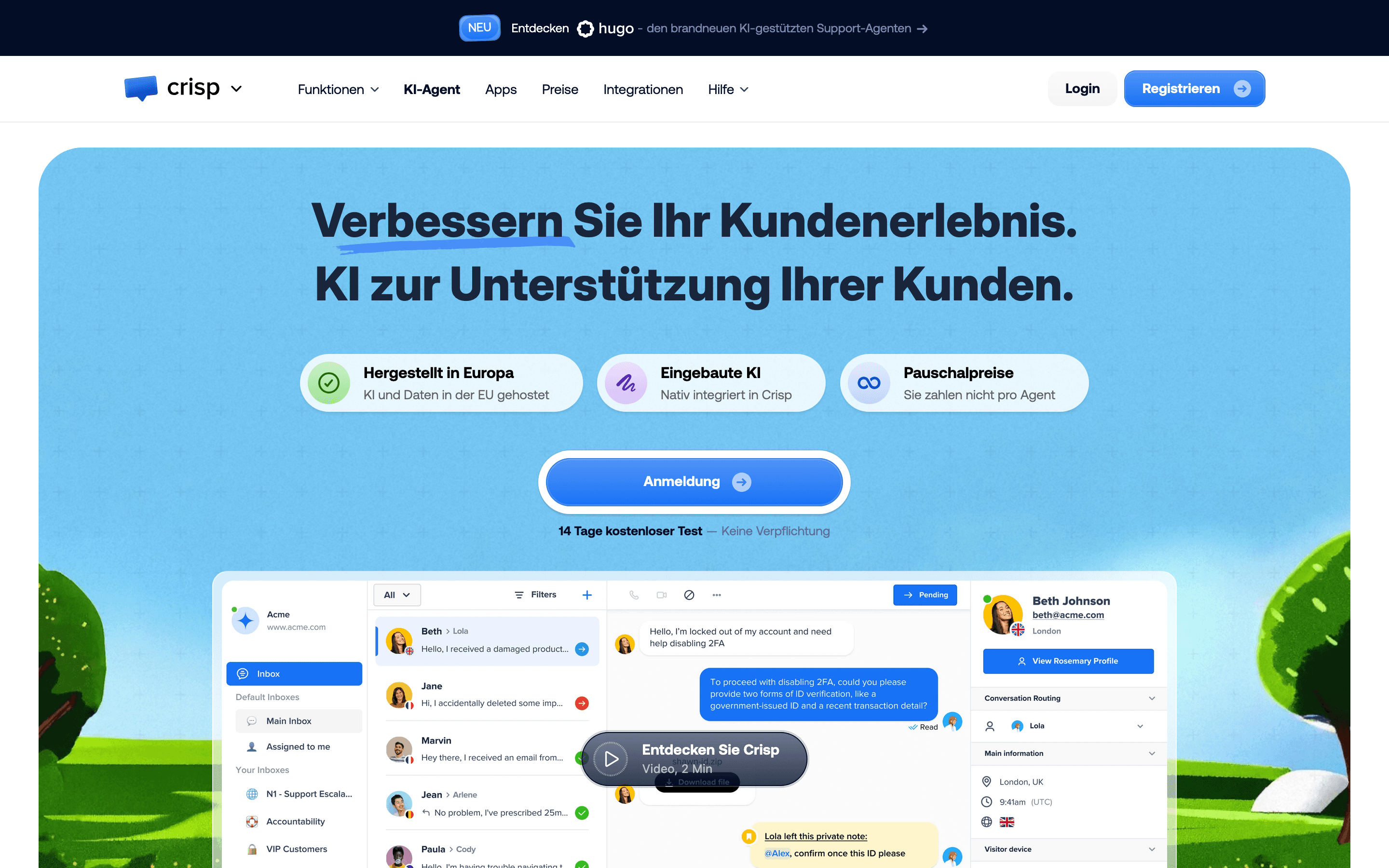
Crisp is the closest fit if what drew you to Chatwoot was the price, not the self-hosting. Instead of billing per agent, Crisp charges per workspace, so a small team can run 4 seats on the $45/month Mini plan without every new hire adding to the bill the way Chatwoot's per-agent pricing does. The Free plan covers 2 seats, a website widget, and a shared inbox with no time limit, similar in spirit to Chatwoot's Hacker plan but without the 500-conversation cap. The catch: extra seats beyond each tier's included count only come as an add-on ($10/seat/month), and that add-on is only available on the Plus plan, so a growing team on Mini or Essentials can't just add one agent. Crisp's Hugo AI chatbot is credit-metered like Chatwoot's Captain, but Crisp publishes rough conversation counts per tier (about 90 on Mini, 450 on Essentials), so you can estimate AI usage before you commit.
Pros
- + Flat workspace pricing instead of per-seat pricing, which is cheaper for small teams with several agents
- + Free plan is genuinely usable for 2 agents, not a time-limited trial
- + Omnichannel inbox and ticketing are available well below what comparable tools charge at the same tier
Cons
- – Extra agent seats can only be added on the Plus plan, so a growing team on Mini or Essentials has to upgrade the whole plan rather than just add a seat
- – AI credits are limited on Mini and Essentials, so an active Hugo chatbot can hit its monthly cap before the month is out
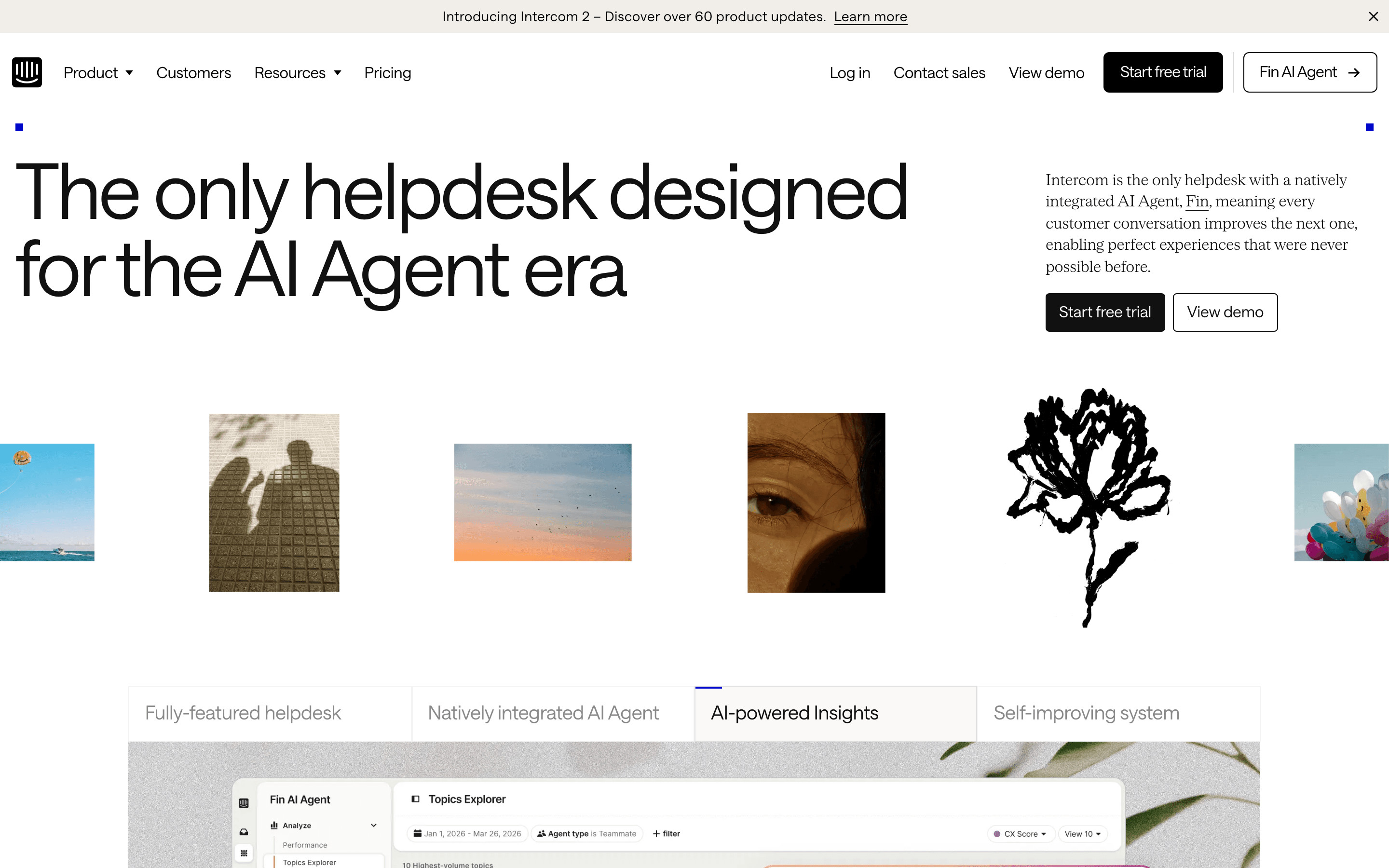
Intercom is the upgrade path for teams that have outgrown what Chatwoot's Captain AI can do. Fin, Intercom's AI agent, resolves conversations end to end across chat, email, phone, and WhatsApp, and it's billed per resolved outcome ($0.99 each) rather than a flat monthly credit pool, so cost tracks usage instead of a fixed allowance that runs out mid-month. Entry pricing looks close to Chatwoot's at first glance: Essential currently shows $19/seat/month billed annually, matching Chatwoot's Startups tier, and includes Fin, a shared inbox, and ticketing. But that $19 is a live promotional price, shown struck through against a $29 reference price on Intercom's own pricing page, and the non-annual (monthly-billed) rate is actually $39/seat. Treat $29-$39 as the more durable number to compare against Chatwoot rather than the promo. The gap opens further up the ladder regardless. Advanced ($85/seat) adds multiple team inboxes and workflow automation; Expert ($132/seat) is where SSO, HIPAA support, and multibrand help centers actually show up, well above Chatwoot's $99/seat Enterprise ceiling, and add-ons like Copilot and Pro stack on top of seat prices. Worth flagging before you commit: Intercom is mid-rebrand to Fin and being acquired by Salesforce for about $3.6 billion, which adds some uncertainty about its direction.
Pros
- + Fin AI Agent resolves a large share of support volume end-to-end across chat, email, WhatsApp, SMS, phone, and Slack, and is priced per outcome instead of a flat AI add-on
- + One shared inbox spans chat, email, and phone with workflows, macros, and SLA automation built in
- + Frequent, granular product updates, sometimes several in the same week (for example phone workflow triggers and call-outcome automation on 2026-07-03)
Cons
- – No forever-free plan, only a 14-day trial
- – Total cost is hard to predict upfront. Seat price, Fin's $0.99-per-outcome fee, and separate add-ons (Copilot, Pro, Proactive Support Plus) all stack on top of each other.
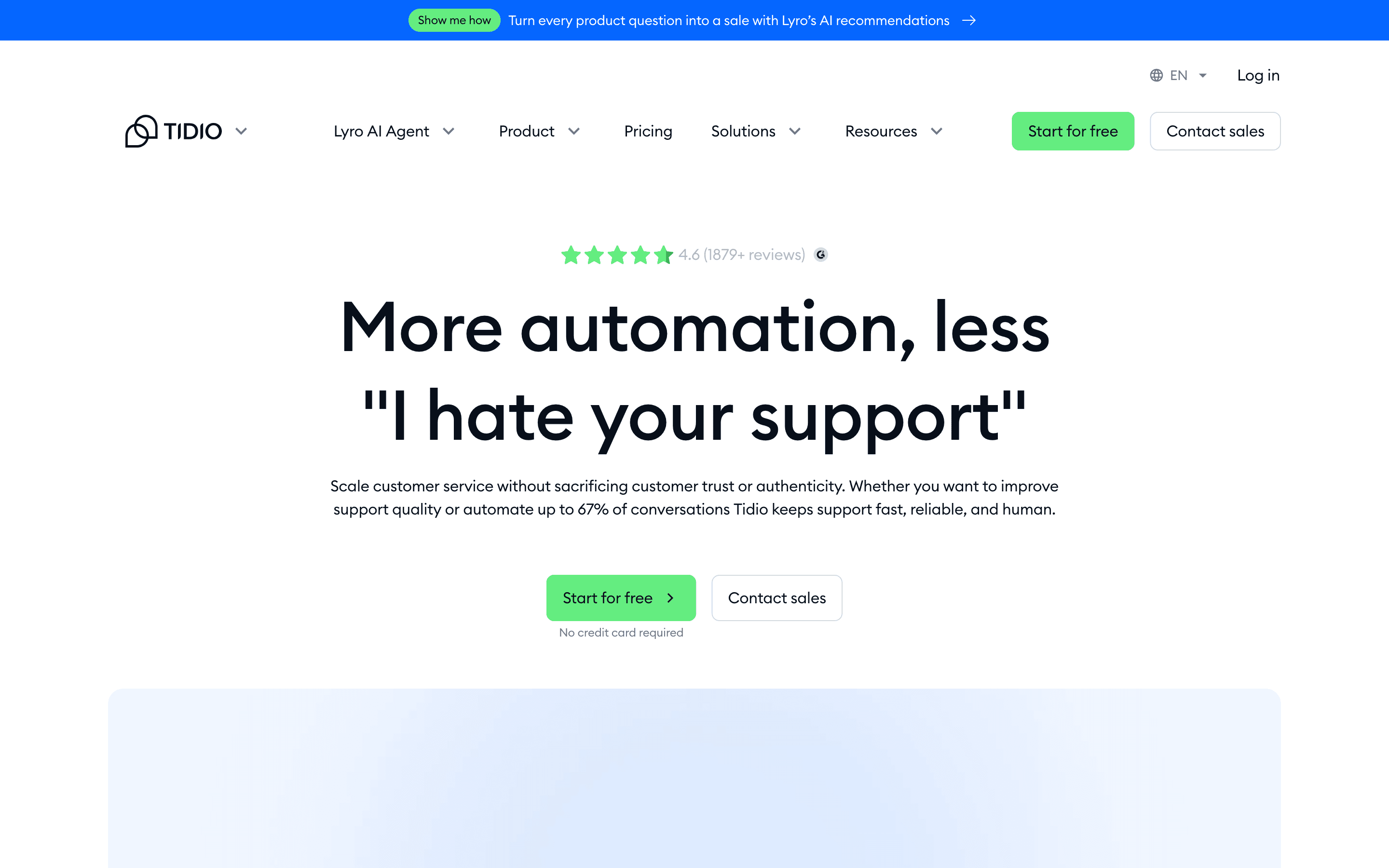
Tidio suits the same small ecommerce and SaaS teams Chatwoot's free tier attracts, but its pricing is built around 'billable conversations' rather than agents or a flat fee. The Free plan covers 10 seats and 50 billable conversations a month, enough for a small team testing chat before committing further. Lyro, Tidio's AI agent, reads your help center content with little setup, similar in idea to Chatwoot's Captain, but Lyro is billed as a separate add-on starting at $39/month until you reach the Plus tier, where it's finally bundled into the plan price. Worth knowing upfront: Tidio restructured its pricing in December 2024, and reviewers on Trustpilot and Capterra documented bills doubling overnight with little advance notice, a rockier history than Chatwoot's own pricing changes. There's also a hard jump from Growth, capped at $349/month, to Plus, starting at $749/month, with nothing priced in between.
Pros
- + Free plan covers 10 seats and 50 billable conversations, which is workable for a small team just trying chat
- + Lyro AI reads your help center and existing content without a lot of setup
- + One tool covers live chat, a shared inbox, and basic ticketing, so support teams don't need a separate help desk for simple cases
Cons
- – Lyro and Flows are billed separately from the base plan on Free, Starter, and Growth, so the advertised plan price understates what you'll actually pay for AI
- – No middle tier between Growth (which tops out at $349/month for 2,000 conversations) and Plus (from $749/month), which is a hard jump for a team that outgrows Growth's conversation limits
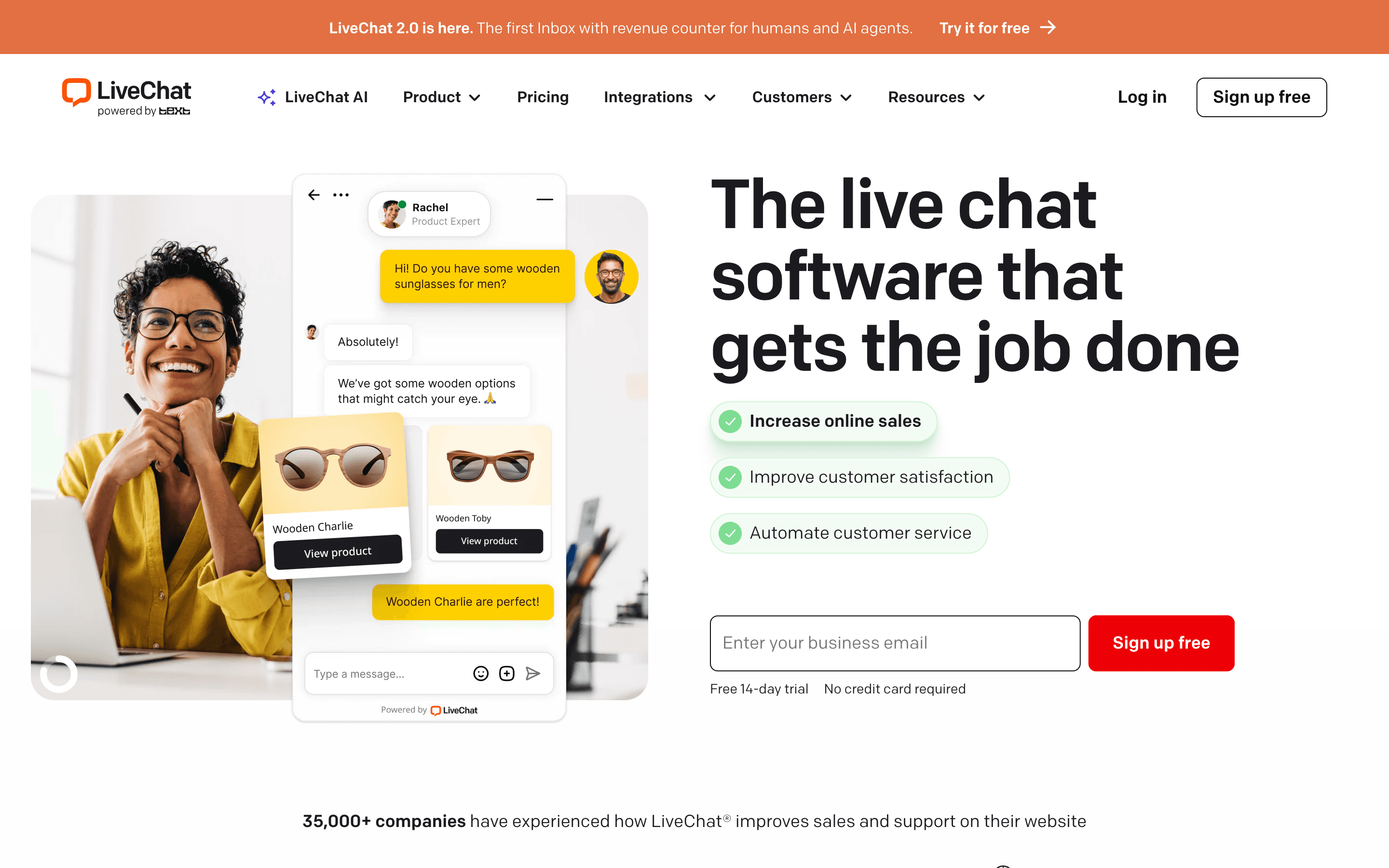
LiveChat is the option for teams that want a dedicated, single-purpose chat widget rather than Chatwoot's bundled inbox, and are fine paying per agent with no free tier. Twenty-plus years as a standalone product shows in the polish: full widget customization, a large integration library, and, as of June 2026, a built-in WhatsApp Business integration through parent company Text. The catch is the family-of-products structure. ChatBot and HelpDesk are sold separately from LiveChat itself, so a team that wants chat, a bot, and ticketing in one place, the way Chatwoot bundles them, ends up paying for three subscriptions instead of one. Visitor tracking is also capped per tier, from 100 on Starter up to 1,000 on Business, forcing an upgrade purely for tracking volume. Capterra reviewers commonly flag the price as high for what's included.
Pros
- + Mature, reliable chat widget with a long track record and a large integration library
- + Clear per-tier feature breakdown, with real prices published for every plan except Enterprise
- + SMS and Apple Messages for Business are available as built-in channels on Business
Cons
- – No free plan, only a 14-day trial
- – Visitor tracking is capped per tier (100 on Starter, 400 on Team, 1,000 on Business), which forces an upgrade purely for tracking volume
Should your product be on this website chat & chatbots list?
If you build a tool that belongs next to the ones above, submit it. A human reviews every submission. Approved products get their own page with pricing and screenshots, plus a place in the comparisons where they fit. It is free. You sign in with your work email so you can follow the decision, and there is no password to create.
Chatwoot alternatives: FAQ
What's the best free alternative to Chatwoot?+
Crisp and Tidio both have usable free plans. Crisp Free covers 2 seats and a shared inbox with no time limit but caps you at 100 contact profiles. Tidio Free covers up to 10 seats but caps you at 50 billable conversations a month. Neither matches Chatwoot's self-hosted Community edition, which has no agent cap at all if you're willing to run the server yourself.
Is there a self-hosted alternative to Chatwoot?+
Not among Crisp, Tidio, LiveChat, or Intercom. All four are cloud-only products billed per seat or per workspace. If self-hosting matters to you, Chatwoot's own free Community edition remains the option, though it drops Captain AI, voice, and role-based permissions unless you pay for Premium Support or Enterprise on top of your own infrastructure.
Which Chatwoot alternative has the closest entry price?+
Intercom's Essential plan currently shows $19/seat/month billed annually, matching Chatwoot's Startups tier headline rate. But that $19 is a live promotional price on Intercom's pricing page, struck through against a $29 reference price, and the non-annual (monthly-billed) rate is $39/seat. So $29-$39 is the sturdier number to compare against Chatwoot's $19, not the promo. On top of that, Intercom bills its Fin AI agent separately at $0.99 per resolved conversation, while Chatwoot's Captain AI credits are bundled into the seat price up to a monthly allowance.
Why do teams leave Chatwoot?+
The most common reasons are that self-hosted premium features still cost per agent, erasing some of the savings of running your own server, that SSO and audit logs only arrive at the $99/seat Enterprise tier, and that the free cloud plan's 500-conversation cap is too low for an active support queue.
Chatwoot alternatives: pricing compared
Entry price, billing model, and whether pricing is public. 5 of 5 publish pricing you can check without talking to sales.
| Tool | Starting price | Billing | Free option | Pricing disclosed |
|---|---|---|---|---|
| Chatwoot | $19/seat/mo | per-seat | Yes | Public |
| Crisp | $45/seat/mo | flat | Yes | Partly public |
| Intercom | $19/seat/mo | per-seat | Trial (14 days, no credit card required) | Public |
| Tidio | $29/mo | tiered | Yes | Partly public |
| LiveChat | $19/agent/mo | per-seat | Trial (14 days, no credit card required) | Partly public |
How we made these picks. We compare tools on public pricing, features, and hands-on assessment, then verify every price against the vendor's own page. We never accept payment for rankings. Read the full methodology. Spotted an error? Report it.