Top Paddle Alternatives in 2026
Here for Paddle itself? See the full Paddle profile, pricing & reviews →
Suggest a change- If you bill by usage, API calls, or credits, like an AI or dev-tool product, choose Polar. It is a merchant of record built around usage-based and credit-based billing from the start, and every fee tier is published with no custom quotes required.
- If your volume is high enough that Paddle's flat cut costs more than paying for processing and tax separately, choose Stripe. Its base rate of 2.9% + $0.30 is cheaper than Paddle's at scale, and Stripe Tax and Stripe Billing let you add compliance and subscriptions as separate line items instead of one bundled fee.
- If PayPal and Venmo acceptance matter more to your customers than automated tax filing, choose Braintree. It is the only option here built around PayPal wallets under one SDK, but it does not calculate or file sales tax at all, so you would run a separate tax tool alongside it.
- If your volume is large enough to negotiate interchange++ pricing and you can clear an enterprise minimum invoice, choose Adyen. Direct acquiring and negotiated interchange++ rates beat Paddle's flat 5% + $0.50 at scale, though there is no published starting price, no sales tax handling, and onboarding starts with a sales conversation rather than a signup form.
- If you are a solo founder or small team selling globally who does not want to touch tax registration or run a second billing vendor, choose stay on Paddle. It has the longest track record and the broadest published country coverage for sales tax and VAT among the merchant-of-record options here, and switching to Polar would mean re-doing checkout integration and migrating active subscriptions for a fee structure that is not meaningfully cheaper at small volume.
Paddle's pitch is one fee that covers payment processing, checkout, and global sales tax and VAT, so a small team never has to register for tax in another country. That convenience costs 5% + $0.50 per transaction, and it comes with less control: Paddle owns the customer relationship, decides when to freeze or hold a payout, and shows up as the seller on every card statement, not your brand.
Teams leave Paddle for a few different reasons, and they land on different tools depending on which one applies. Some want the same merchant-of-record setup with a lower product-continuity risk than Paddle, which points to Polar. Others want to drop the flat cut entirely and own sales tax compliance themselves, which points to Stripe, Braintree, or Adyen depending on volume and payment methods.
Paddle alternatives compared
| Tool | Best for | Starting price | Free option | Last update |
|---|---|---|---|---|
| PolarBest overall Paddle-style replacement | Indie developers and small SaaS teams who want to skip registering for sales tax and VAT themselves | Free | Yes | May 2026 |
| StripeBest if you want to own tax compliance yourself | Developers who want a well-documented API and are comfortable wiring up payments themselves | Usage-based | No | June 2026 |
| BraintreeBest if PayPal/Venmo wallets matter most | Businesses that need PayPal, Venmo, and card acceptance under one SDK instead of separate integrations | Usage-based | No | March 2026 |
| AdyenBest for high-volume or enterprise sellers | Larger or high-volume merchants who can negotiate rates and want one platform across regions, cards, and local payment methods | Custom / quote | No | May 2026 |
Why teams switch from Paddle
Payouts held for 90 to 180+ days after an account closure or risk review
Multiple sellers report Paddle holding funds for months after a risk flag or account closure, with support slow to respond or resolve the case, a serious cash flow risk for a growth-stage company.
FTC fined Paddle $5 million over its merchant-of-record due diligence
In June 2025 the FTC fined Paddle for processing payments for a deceptive tech-support scheme run through its platform without adequate monitoring, a direct consequence of Paddle sitting between sellers and customers as merchant of record.
The 5% + $0.50 fee gets expensive fast as volume grows
A business processing $500,000 a month pays roughly $25,000 in Paddle fees on that volume alone, which is meaningfully more than a standalone processor plus a separate tax tool once you are past the early stage.
The best Paddle alternatives, ranked
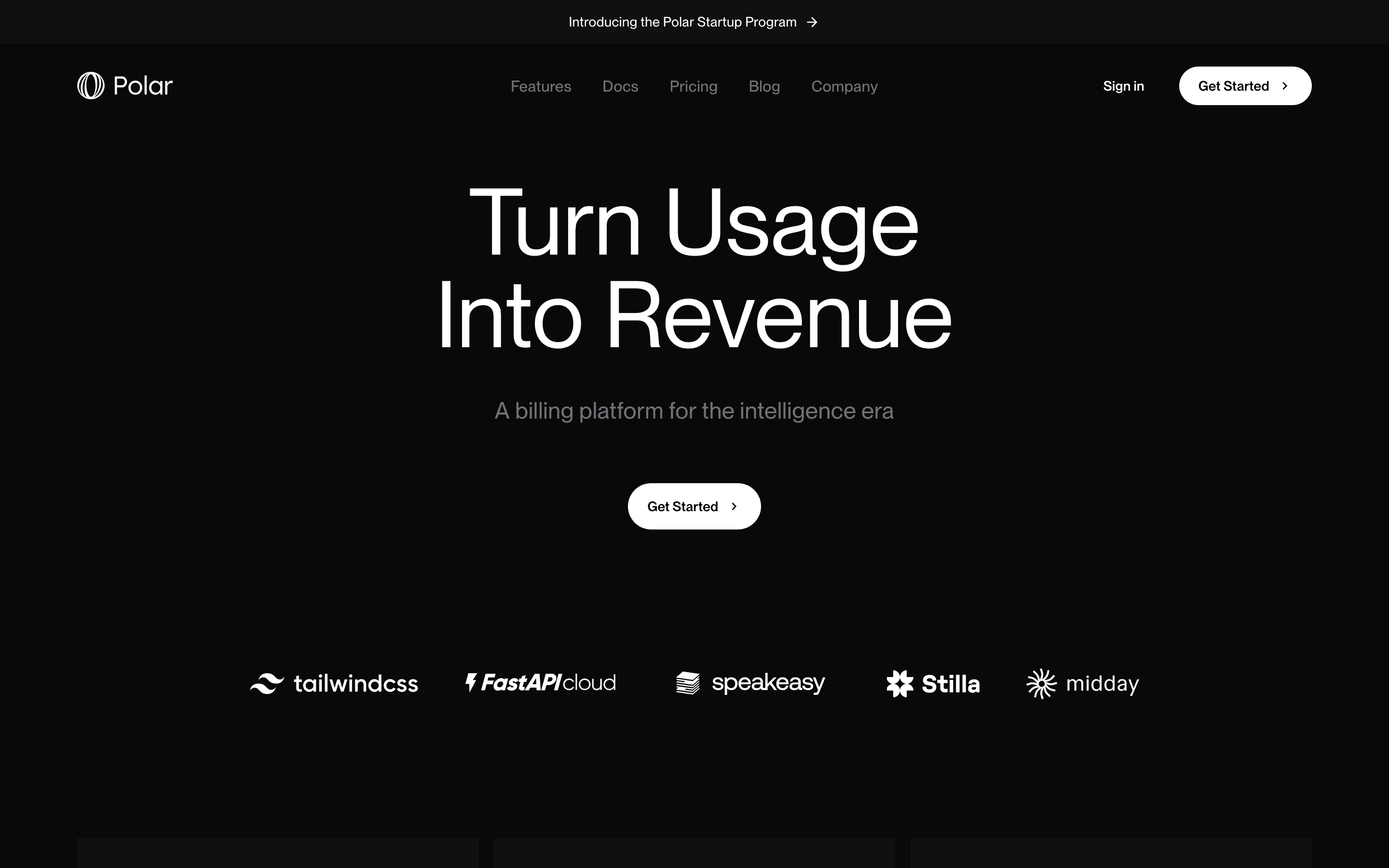
Polar is the closest thing to a Paddle replacement that is still actively being built out. Like Paddle, it acts as merchant of record: it registers for sales tax and VAT in every country your customers are in, so you are not filing returns yourself. Where it differs is the pricing model and the audience. Polar published four tiers in May 2026, from a free 5% + $0.50 rate up to 3.4% + $0.30 on the $400/month Scale plan, and every number sits on its own docs page, no custom quotes needed for the fee schedule itself. It is built for usage-based and credit-based billing from day one, which makes it a natural fit for AI and dev-tool companies charging by API call or token rather than flat seats. The tradeoffs are real: support has been reported as slow, and upgrading to a paid plan permanently forfeits any older grandfathered rate.
Pros
- + Handles merchant-of-record tax compliance, so you don't register for sales tax or VAT yourself
- + Built for usage-based and credit-based billing out of the box, not bolted on
- + Fee schedule is fully published, including the exact grandfather cutoff date, with no quote-only tiers
Cons
- – Raised its free-tier rate from 4% + $0.40 to 5% + $0.50 in May 2026 for any organization created after the cutoff
- – Lower rates now require paying $20-$400 a month on top of the transaction fee, a real cost increase versus the old flat rate
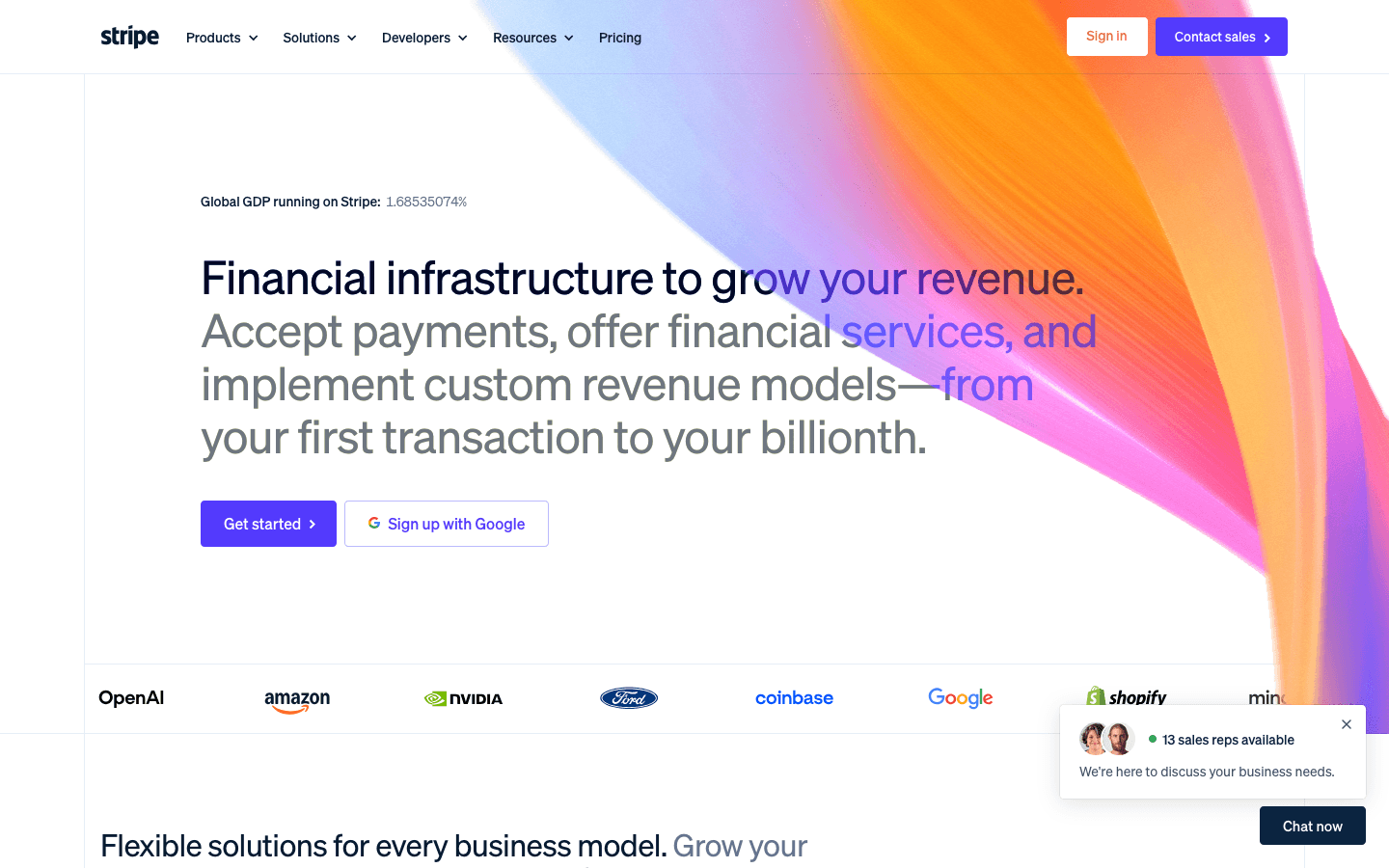
Stripe is not a merchant of record like Paddle. You stay the seller of record, which means you register for sales tax and VAT yourself, or add Stripe Tax as a separate line item priced at 0.5% per transaction through no-code integrations, or a flat Tax Complete plan starting at $90 a month. What you get in exchange is a lower headline processing rate (2.9% + $0.30 versus Paddle's 5% + $0.50), the largest integration ecosystem of any option here, and Stripe Billing for subscriptions if you need it. This is the right move once your volume is high enough that Paddle's flat cut costs more than Stripe processing plus Stripe Tax plus Stripe Billing added together, and you are willing to own the compliance piece instead of handing it off. It is the wrong move if the entire reason you picked Paddle was to avoid touching tax registration at all.
Pros
- + Processing rate and surcharges are published, not hidden behind a sales call
- + One account covers cards, ACH, wallets, and dozens of local payment methods across regions
- + Billing and Tax products plug into the same dashboard and API, so you're not reconciling three vendors
Cons
- – Account holds and reserve requirements are decided by an automated risk system, and businesses report funds frozen for months with vague explanations
- – Add-on products (Billing, Tax, Sigma, Revenue Recognition) each carry their own separate fee, so the effective rate for a subscription business with tax compliance can run well above the advertised 2.9%
Braintree covers a narrower job than Paddle. It processes cards, PayPal, Venmo, and wallets under one SDK, but it does not handle sales tax or VAT at all, so switching from Paddle to Braintree means adding a separate tax tool on top. It makes the most sense for one specific reason: PayPal and Venmo are core to how your customers pay, and you want them under the same integration as your card processing. Pricing is 2.89% + $0.29 for standard cards, cheaper than Paddle's blended rate, with a discounted 2.19% + $0.29 rate for verified nonprofits. The downsides show up in reviews often: no phone support, chargebacks and account freezes are recurring complaints, and since the brand folded into paypal.com, pricing details are harder to find than a dedicated pricing page used to make them. Treat Braintree as a processor swap, not a like-for-like Paddle replacement.
Pros
- + One SDK covers cards, PayPal, Venmo, and major wallets, so you skip building separate integrations
- + No monthly or setup fee, you only pay per transaction
- + Nonprofits with 501(c)(3) status get a lower card rate (2.19% + $0.29)
Cons
- – Standard card rate (2.89% + $0.29) runs higher than several flat-rate competitors
- – No phone support, and multiple review sites report slow or unresponsive email support

Adyen is built for a different size of business than Paddle usually serves. There is no published starting price. Card payments run a small fixed fee plus interchange cost plus a 0.60% markup, and Adyen sets an unpublished minimum monthly invoice by industry, so onboarding starts with a sales conversation rather than a signup form. Like Braintree, it does not handle sales tax or VAT, so you would need a separate compliance tool if you leave Paddle for Adyen. The fit is real for one segment: sellers who have outgrown Paddle's flat 5% + $0.50 fee and process enough volume that interchange++ pricing, direct acquiring, and negotiated rates beat it on cost, and who have the operational capacity to run tax compliance themselves. For a solo founder or small team, the minimum invoice and paperwork-heavy onboarding make Adyen a poor match.
Pros
- + No setup fee, monthly platform fee, or closure fee for core processing
- + One integration covers cards, wallets, and a long list of local payment methods across regions
- + Interchange++ pricing means you see the actual interchange and scheme cost rather than a marked-up blended rate
Cons
- – No published starting price. You have to talk to sales to know your real rate and minimum invoice
- – Minimum monthly invoice requirement isn't disclosed publicly and varies by industry
Should your product be on this payment processing list?
If you build a tool that belongs next to the ones above, submit it. A human reviews every submission. Approved products get their own page with pricing and screenshots, plus a place in the comparisons where they fit. It is free. You sign in with your work email so you can follow the decision, and there is no password to create.
Paddle alternatives: FAQ
What is the biggest difference between Paddle and Stripe?+
Paddle is merchant of record, so its 5% + $0.50 fee includes global sales tax and VAT handling. Stripe charges a lower base rate (2.9% + $0.30) but leaves you as the seller of record, so you register for tax yourself or add Stripe Tax as a separate line item.
Is there a cheaper merchant-of-record alternative to Paddle?+
Yes. Polar charges 5% + $0.50 on its entry tier, the same as Paddle, but Polar's paid plans buy that rate down to as low as 3.4% + $0.30 per transaction.
Why are people leaving Paddle?+
The two most common complaints are payouts held for 90 to 180+ days after an account closure or risk review, and a June 2025 FTC fine over Paddle's due diligence as merchant of record for a deceptive seller on its platform.
Which Paddle alternative does not handle sales tax at all?+
Braintree and Adyen are both payment processors, not merchants of record. Neither calculates or files sales tax or VAT, so you would need a separate tax tool alongside either one.
Paddle alternatives: pricing compared
Entry price, billing model, and whether pricing is public. 3 of 5 publish pricing you can check without talking to sales.
How we made these picks. We compare tools on public pricing, features, and hands-on assessment, then verify every price against the vendor's own page. We never accept payment for rankings. Read the full methodology. Spotted an error? Report it.