Top Drift Alternatives in 2026
Here for Drift itself? See the full Drift profile, pricing & reviews →
Suggest a change- If you want an AI agent that resolves conversations end-to-end across chat, email, and phone, choose Intercom. Fin is priced per resolved outcome instead of a flat AI add-on, and it already handles chat, email, WhatsApp, SMS, and phone inside one shared inbox, though Intercom itself is mid-rebrand to Fin and being acquired by Salesforce, so it's not immune to the same kind of ownership churn that pushed you off Drift.
- If you just want a mature, dedicated live chat widget without a sales AI layer to manage, choose LiveChat. Every tier below Enterprise publishes a real per-agent price, and the Business plan adds SMS and Apple Messages for Business as built-in channels rather than a separate bolt-on product.
- If you want to control your own data and never get stranded by another vendor's sunset again, choose Chatwoot. The self-hosted Community edition is free with no agent cap, and being open source means your support inbox is not at the mercy of an acquirer's roadmap the way Drift customers are right now.
- If you're a small support or growth team watching every dollar, choose Crisp. Crisp charges per workspace instead of per seat, so a two-agent team on the Free plan pays nothing while still getting a real chat widget and a shared inbox.
- If you're mid-contract with Drift and its Salesforce and Salesloft Cadences wiring is load-bearing for your sales process, choose start your migration off Drift now. Drift is being sunset by Salesloft, with existing customers steered toward 1mind and no roadmap or fixed shutdown date. Ripping out lead-routing and account-based workflows overnight risks more disruption than the gradual wind-down, so keep Drift running only while you build and test a move to a supported tool like Intercom. Mid-contract is not a reason to wait.
Drift used to be the default pick for B2B teams that wanted a chatbot on their website to qualify leads and book meetings. In March 2026 its owner, Clari + Salesloft, announced it is sunsetting the product and steering existing customers toward 1mind instead. There is no fixed shutdown date, but there is also no roadmap, no public pricing page, and reviewers describe slower support since the Salesloft acquisition.
We left 1mind out of the ranking below. It's a pure AI sales-agent product built for outbound and qualification workflows, not a drop-in replacement for a website chat widget, and it has no public pricing or review history yet to judge it against. If you own the chat bubble on your site, that's reason enough to start evaluating a real replacement now instead of waiting for the wind-down to force your hand. The five tools below cover the range: a heavyweight AI-support platform, a mature dedicated widget, an open-source option you can self-host, and two lighter tools built for smaller teams.
Drift alternatives compared
| Tool | Best for | Starting price | Free option | Last update |
|---|---|---|---|---|
| IntercomBest for AI-driven automation | Support teams that want an AI agent (Fin) to resolve a large share of tickets on its own across chat, email, and phone | $19/seat/mo | Trial (14 days, no credit card required) | July 2026 |
| LiveChatBest dedicated chat widget | Support teams that want a dedicated, mature live chat widget and are fine paying per agent | $19/agent/mo | Trial (14 days, no credit card required) | June 2026 |
| ChatwootBest for self-hosting | Teams that want to self-host their support inbox instead of trusting a vendor's cloud | $19/seat/mo | Yes | June 2026 |
| CrispBest value for small teams | Small support or growth teams that want chat, email, and a basic AI bot in one inbox without per-seat pricing | $45/seat/mo | Yes | April 2026 |
| Tidio | Small ecommerce or SaaS support teams that want live chat, a shared inbox, and a basic AI bot without stitching together separate tools | $29/mo | Yes | — |
Why teams switch from Drift
Drift's owner announced it is sunsetting the product entirely
Clari + Salesloft is referring existing Drift customers to 1mind, an AI sales agent company, under an exclusive partnership announced in March 2026. Teams are being pushed off Drift regardless of how satisfied they were with it.
Pricing was steep for the value, with no public rate card
Reviewers cite per-seat fees and implementation costs stacking well past the quoted base price, on a product that never published a rate card to begin with.
The best Drift alternatives, ranked
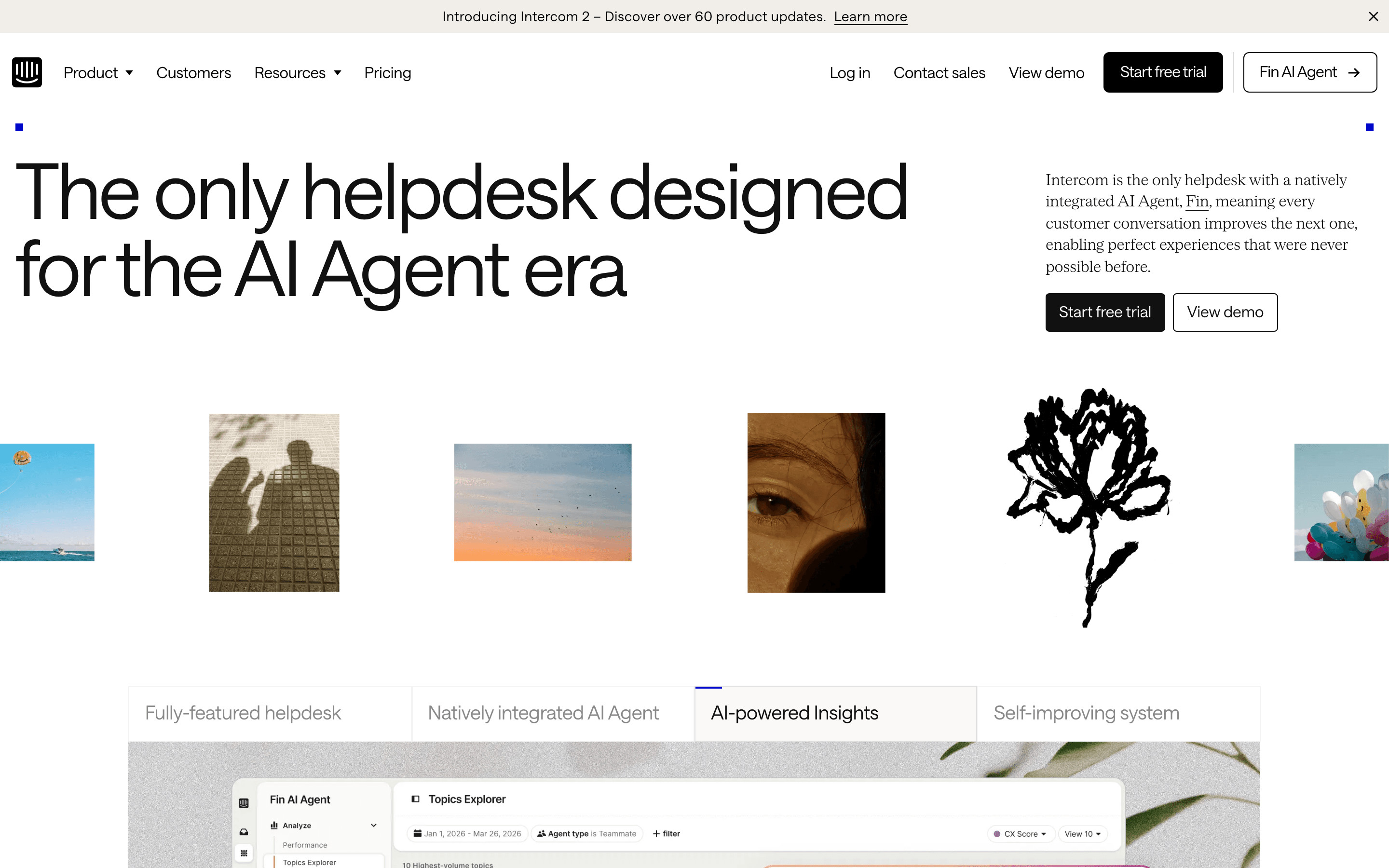
Intercom is the closest thing to a full replacement for what Drift originally sold: a chat widget backed by an AI agent that can act on its own, not just answer FAQs. Fin resolves conversations across chat, email, WhatsApp, SMS, and now phone, and Intercom bills it per resolved outcome at $0.99 rather than folding it into a flat seat fee, so cost tracks usage. Seats start at $19 per seat per month billed annually on Essential, but that price is tagged as a live A/B pricing test, and Advanced and Expert jump to $85 and $132 per seat per month before any Fin usage. The company is also mid-rebrand to Fin and being acquired by Salesforce, so it carries its own vendor-uncertainty baggage. Pick it if you want the most capable AI layer and can live with a stacked, harder-to-predict bill. Skip it if predictable per-seat pricing matters more than automation depth.
Pros
- + Fin AI Agent resolves a large share of support volume end-to-end across chat, email, WhatsApp, SMS, phone, and Slack, and is priced per outcome instead of a flat AI add-on
- + One shared inbox spans chat, email, and phone with workflows, macros, and SLA automation built in
- + Frequent, granular product updates, sometimes several in the same week (for example phone workflow triggers and call-outcome automation on 2026-07-03)
Cons
- – No forever-free plan, only a 14-day trial
- – Total cost is hard to predict upfront. Seat price, Fin's $0.99-per-outcome fee, and separate add-ons (Copilot, Pro, Proactive Support Plus) all stack on top of each other.
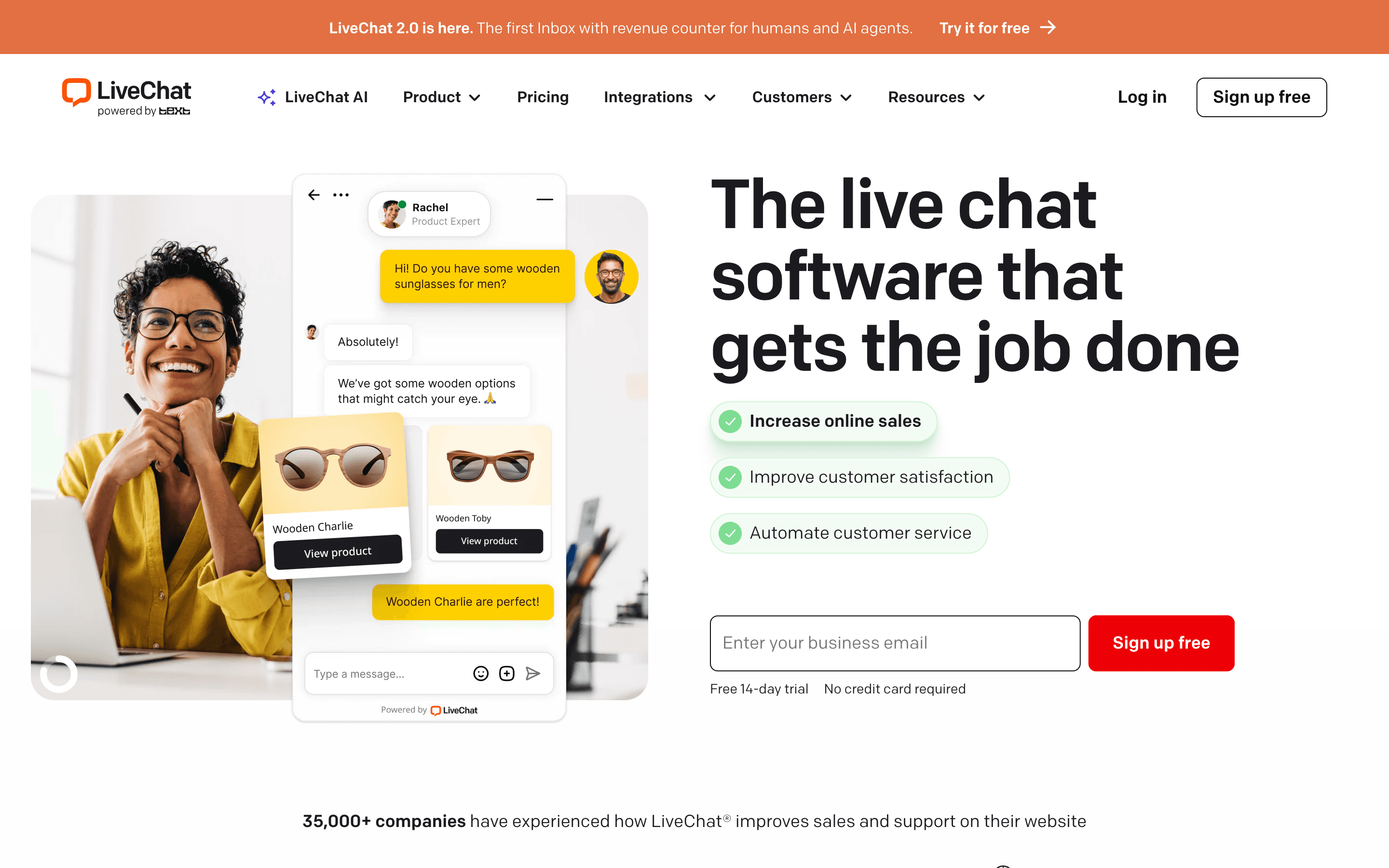
LiveChat is a dedicated, mature website chat widget with a long track record, which matters if you're leaving Drift because of an announced sunset and want a vendor that isn't going anywhere. Pricing is per agent per month, and unlike Drift, every tier except Enterprise has a real published price: $19 per agent on Starter up to $79 per agent on Business, billed annually. Business adds SMS and Apple Messages for Business plus work scheduling and staffing prediction, features closer to what a growth team managing several channels actually needs. The catch is that chatbot and helpdesk ticketing are separate LiveChat-family products with their own bills, so a team wanting chat plus a bot plus tickets ends up stacking three subscriptions. There is no free plan, only a 14-day trial. Choose LiveChat if you want a straightforward, reliable widget and don't need Drift's chatbot flows replaced by anything fancier.
Pros
- + Mature, reliable chat widget with a long track record and a large integration library
- + Clear per-tier feature breakdown, with real prices published for every plan except Enterprise
- + SMS and Apple Messages for Business are available as built-in channels on Business
Cons
- – No free plan, only a 14-day trial
- – Visitor tracking is capped per tier (100 on Starter, 400 on Team, 1,000 on Business), which forces an upgrade purely for tracking volume
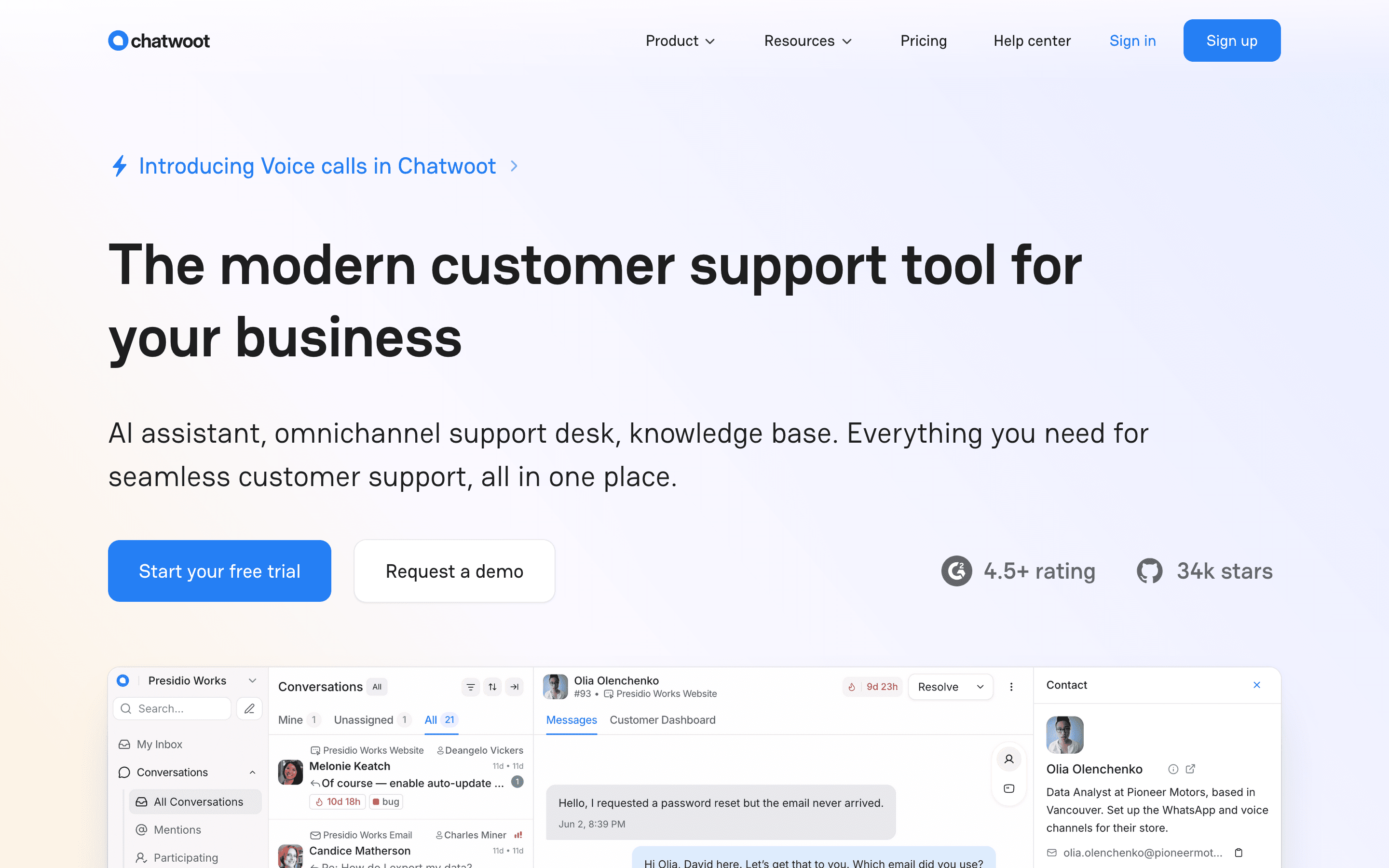
Chatwoot is the pick for teams that read Drift's sunset announcement and decided they never want to be stuck waiting on an acquirer's roadmap again. It's open source, and the self-hosted Community edition is free with no agent cap, though you give up Captain AI, voice, custom branding, and role permissions unless you pay for Premium Support or Enterprise on your own server. Cloud pricing starts at $19 per agent per month on Startups and tops out at $99 per agent per month on Enterprise for SSO and audit logs, both billed annually. One inbox already covers live chat, email, WhatsApp, Instagram, and a new voice-calling beta, more channel coverage out of the gate than Drift ever had. The free Hacker cloud plan caps out at 500 conversations a month, too low for a real queue, so budget-conscious teams that outgrow it should plan to self-host instead of paying for Startups.
Pros
- + Genuinely free, unlimited-agent self-hosted Community edition if you're willing to run the server yourself
- + One inbox covers live chat, email, WhatsApp, Instagram, and now voice
- + Open-source codebase means no vendor lock-in on your data
Cons
- – The free Hacker cloud plan caps out at 500 conversations a month, about 17 a day, too low for a real support queue
- – SSO/SAML and audit logs sit behind the Enterprise tier only, a roughly 2.5x per-seat jump from Business ($39 to $99/agent)
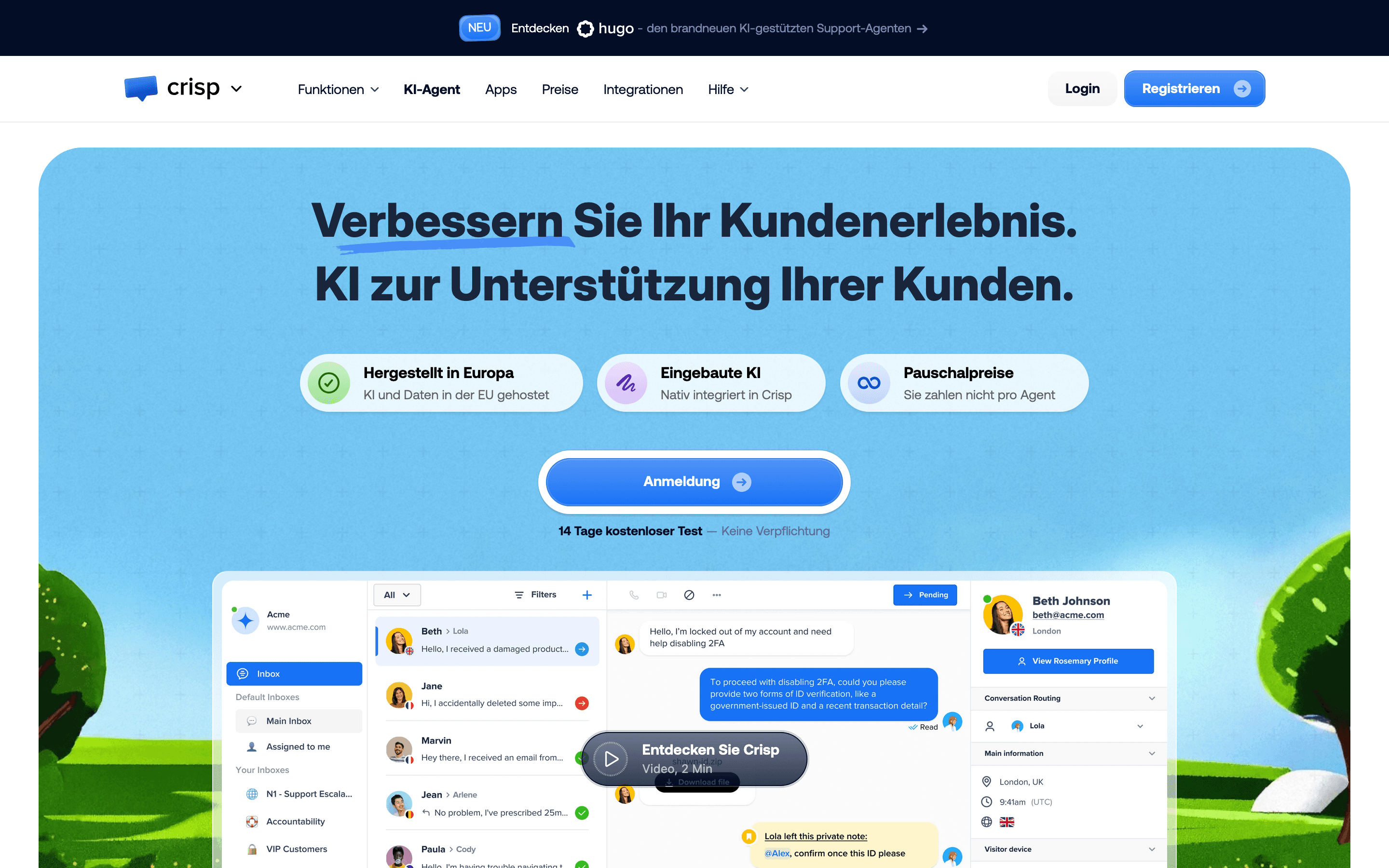
Crisp charges per workspace, not per seat, which flips the usual math: a two-person team pays nothing on the Free plan, and even Essentials at $95 a month covers 10 seats for less than LiveChat or Intercom would charge for the same headcount. It bundles a chat widget, shared inbox, email, and an AI chatbot called Hugo, with a knowledge base and workflow automation showing up at $95 a month, well below what comparable tools charge at that tier. The tradeoff is that Hugo's AI usage is credit-metered and capped by plan, so an active bot can burn through its monthly allowance before the month ends, and extra agent seats can only be added on the $295 a month Plus plan. Pick Crisp if you're a small support or growth team that wants chat, email, and a basic bot in one flat-priced tool rather than a per-seat platform built for scale.
Pros
- + Flat workspace pricing instead of per-seat pricing, which is cheaper for small teams with several agents
- + Free plan is genuinely usable for 2 agents, not a time-limited trial
- + Omnichannel inbox and ticketing are available well below what comparable tools charge at the same tier
Cons
- – Extra agent seats can only be added on the Plus plan, so a growing team on Mini or Essentials has to upgrade the whole plan rather than just add a seat
- – AI credits are limited on Mini and Essentials, so an active Hugo chatbot can hit its monthly cap before the month is out
Tidio
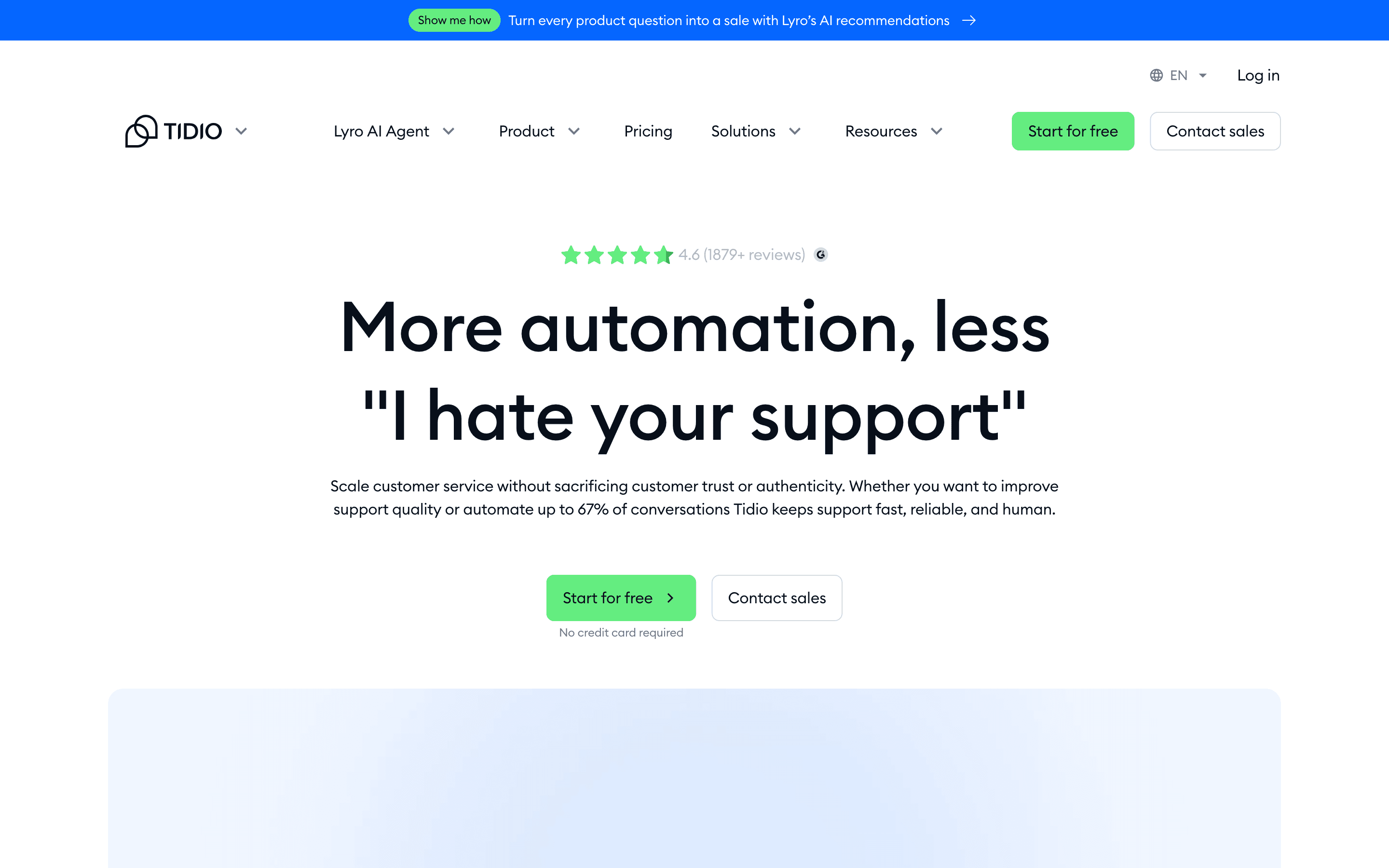
Tidio is built for smaller ecommerce and SaaS teams that want live chat, a shared inbox, and an AI agent called Lyro without assembling separate tools. The Free plan covers 10 seats and 50 billable conversations a month, and Starter is $29 a month. The catch, worth reading the fine print for, is that Lyro AI is billed separately from the base plan on Free, Starter, and Growth, so the advertised price doesn't include the AI layer that Drift buyers usually want most. Tidio also restructured its pricing in December 2024, and reviewers documented bills doubling overnight with little warning. Plans jump hard too: Growth tops out at $349 a month for 2,000 conversations, then Plus starts at $749 a month with nothing in between. Choose Tidio if your conversation volume is modest and predictable, and go in with your eyes open on how Lyro is actually priced.
Pros
- + Free plan covers 10 seats and 50 billable conversations, which is workable for a small team just trying chat
- + Lyro AI reads your help center and existing content without a lot of setup
- + One tool covers live chat, a shared inbox, and basic ticketing, so support teams don't need a separate help desk for simple cases
Cons
- – Lyro and Flows are billed separately from the base plan on Free, Starter, and Growth, so the advertised plan price understates what you'll actually pay for AI
- – No middle tier between Growth (which tops out at $349/month for 2,000 conversations) and Plus (from $749/month), which is a hard jump for a team that outgrows Growth's conversation limits
Should your product be on this website chat & chatbots list?
If you build a tool that belongs next to the ones above, submit it. A human reviews every submission. Approved products get their own page with pricing and screenshots, plus a place in the comparisons where they fit. It is free. You sign in with your work email so you can follow the decision, and there is no password to create.
Drift alternatives: FAQ
What's the best Drift alternative now that Drift is being sunset?+
It depends on what you actually used Drift for. If you leaned on its chatbot to qualify leads and want an AI agent to keep doing that work, Intercom's Fin is the closest match. If you mainly need a reliable chat widget without the AI complexity, LiveChat is the more direct swap.
Is there a free Drift alternative?+
Chatwoot's self-hosted Community edition is free with no agent cap, though you run the server yourself and lose Captain AI, voice, and role-based permissions. Crisp also has a usable free plan for 2 agents with no time limit, if you don't need to self-host. Tidio's Free plan covers 10 seats and 50 billable conversations a month, but that doesn't include its Lyro AI agent, which is billed separately.
How does Drift's pricing compare to these alternatives?+
Drift never published a public rate card, and its old entry tier was widely reported at roughly $2,500 a month billed annually, with real-world costs pushed higher by per-seat fees and implementation charges. Every alternative here publishes real prices, starting as low as free (Crisp, Chatwoot) or $19 a seat a month (LiveChat, Intercom, Chatwoot cloud), with Tidio's Starter plan at $29 a month for smaller teams.
Why is Drift being discontinued?+
Clari + Salesloft, Drift's owner since the 2024 acquisition, announced in March 2026 that it is sunsetting Drift and referring existing customers to 1mind, an AI sales agent company, under an exclusive partnership. No fixed shutdown date has been given; the transition is described as gradual.
Drift alternatives: pricing compared
Entry price, billing model, and whether pricing is public. 5 of 6 publish pricing you can check without talking to sales.
| Tool | Starting price | Billing | Free option | Pricing disclosed |
|---|---|---|---|---|
| Drift | Custom / quote | quote-only | No | Not disclosed |
| Intercom | $19/seat/mo | per-seat | Trial (14 days, no credit card required) | Public |
| LiveChat | $19/agent/mo | per-seat | Trial (14 days, no credit card required) | Partly public |
| Chatwoot | $19/seat/mo | per-seat | Yes | Public |
| Crisp | $45/seat/mo | flat | Yes | Partly public |
| Tidio | $29/mo | tiered | Yes | Partly public |
How we made these picks. We compare tools on public pricing, features, and hands-on assessment, then verify every price against the vendor's own page. We never accept payment for rankings. Read the full methodology. Spotted an error? Report it.