Top Attio Alternatives in 2026
Here for Attio itself? See the full Attio profile, pricing & reviews →
Suggest a change- If you want a real pipeline CRM with a flat, predictable per-seat price and no credit system to track, choose Pipedrive. Lite starts at $14/seat/month billed annually and already bundles an AI Sales Assistant, so you are not paying extra for AI on top of the seat price the way Attio's credit pool works.
- If you want to start on a genuinely free plan and grow into marketing and support tools later, choose HubSpot. the Free CRM plan never expires and needs no credit card, and it doubles as the entry point to free marketing, service, and live chat tools. Its widely quoted 1,000-contact figure only caps how many contacts you can email through the free marketing tools; the free CRM itself stores up to 1 million records across contacts, companies, and deals, well past Attio's 50,000-record Free tier cap. Pick HubSpot for the wider free toolset, not because the two plans measure capacity the same way.
- If your team spends most of its day calling and texting prospects, not designing a data model, choose Close. calling, SMS, and email are native to the product with a built-in power and predictive dialer, something Attio was never built to do.
- If you liked Attio's custom object model but don't want core usage gated by credits, choose Airtable. tables, linked records, views, and automations cost nothing to use. Airtable only draws on its AI credit allowance for optional field generation and summarization, unlike Attio, where core features like Ask Attio and enrichment pull from the same capped credit pool.
- If your CRM is really a shared, enriched contact list built from LinkedIn and email, choose folk. folkX pulls leads and their context straight from LinkedIn and Sales Navigator, and its AI assistants handle the same kind of research and summarization Attio leans on, aimed at the same small-team buyer.
- If you need built-in enrichment, natural-language record creation, and a genuinely custom object model working together out of the box, choose stay on Attio. no alternative here combines a flexible data model with inbox-synced enrichment and AI search as tightly as Attio does, even with its credit metering.
Attio's pitch is a CRM you shape around your own process instead of a fixed contact/company/deal template, with AI search, enrichment, and workflows built in. That flexibility is real, but it comes with a credit system layered on top of seat pricing: every plan includes a monthly allowance of seat and workspace credits that AI features and enrichment eat into, so actual cost can climb past the advertised per-seat price. Calling, sequences, and advanced permissions also sit behind the Pro tier, a 138% jump over Plus, and Enterprise is quote-only.
Teams shop alternatives for a few concrete reasons: they want a flat price they can predict, they want calling and outbound tooling included from day one, or they want the same build-your-own flexibility without a metered AI layer on top. The tools below are the ones a real Attio buyer, a startup founder or RevOps lead choosing a lightweight CRM, would actually cross-shop.
Attio alternatives compared
| Tool | Best for | Starting price | Free option | Last update |
|---|---|---|---|---|
| PipedriveBest value | Small and mid-sized B2B sales teams that want a fast, visual pipeline without a heavy admin setup | $14/seat/mo | Trial (14 days, full access to the selected plan, no credit card required) | June 2026 |
| HubSpotBest free alternative | Growing companies that want marketing, sales, and support data in one system instead of stitching together separate point tools | $7/seat/mo | Yes | June 2026 |
| CloseBest for outbound sales teams | Small and midsize teams doing high-volume outbound calling and email who want calling, SMS, and email built into the CRM | $9/seat/mo | Trial (14 days, no credit card required) | May 2026 |
| Airtable | Teams that want one tool to run a CRM, a project tracker, and an ops database, and are willing to build it themselves | $20/seat/mo | Yes | June 2026 |
| folk | Small teams and agencies whose CRM is really a shared, enriched contact list built from LinkedIn and email | $24/seat/mo | Trial (2 weeks, no credit card required) | April 2026 |
| CopperBest for Google Workspace teams | Small teams already living in Gmail and Google Calendar who want a CRM that feels native to that workflow | $23/seat/mo | Trial (14 days, no credit card required) | June 2026 |
Why teams switch from Attio
The credit system makes real monthly cost unpredictable
Every Attio plan includes a monthly allowance of seat and workspace credits that get consumed by AI features like Ask Attio and by enrichment. Heavy use of those features pushes real cost above the advertised per-seat price.
Calling, sequences, and advanced permissions sit behind a steep tier jump
Those features only show up on Pro, which costs $69/seat/month billed annually versus $29/seat/month on Plus, a 138% increase for teams that need outbound tooling.
Enterprise pricing is quote-only with no published numbers
Teams that outgrow Plus or Pro and need unlimited objects, SAML SSO, or custom workspace credits have to go through a sales conversation instead of seeing a price up front.
The best Attio alternatives, ranked
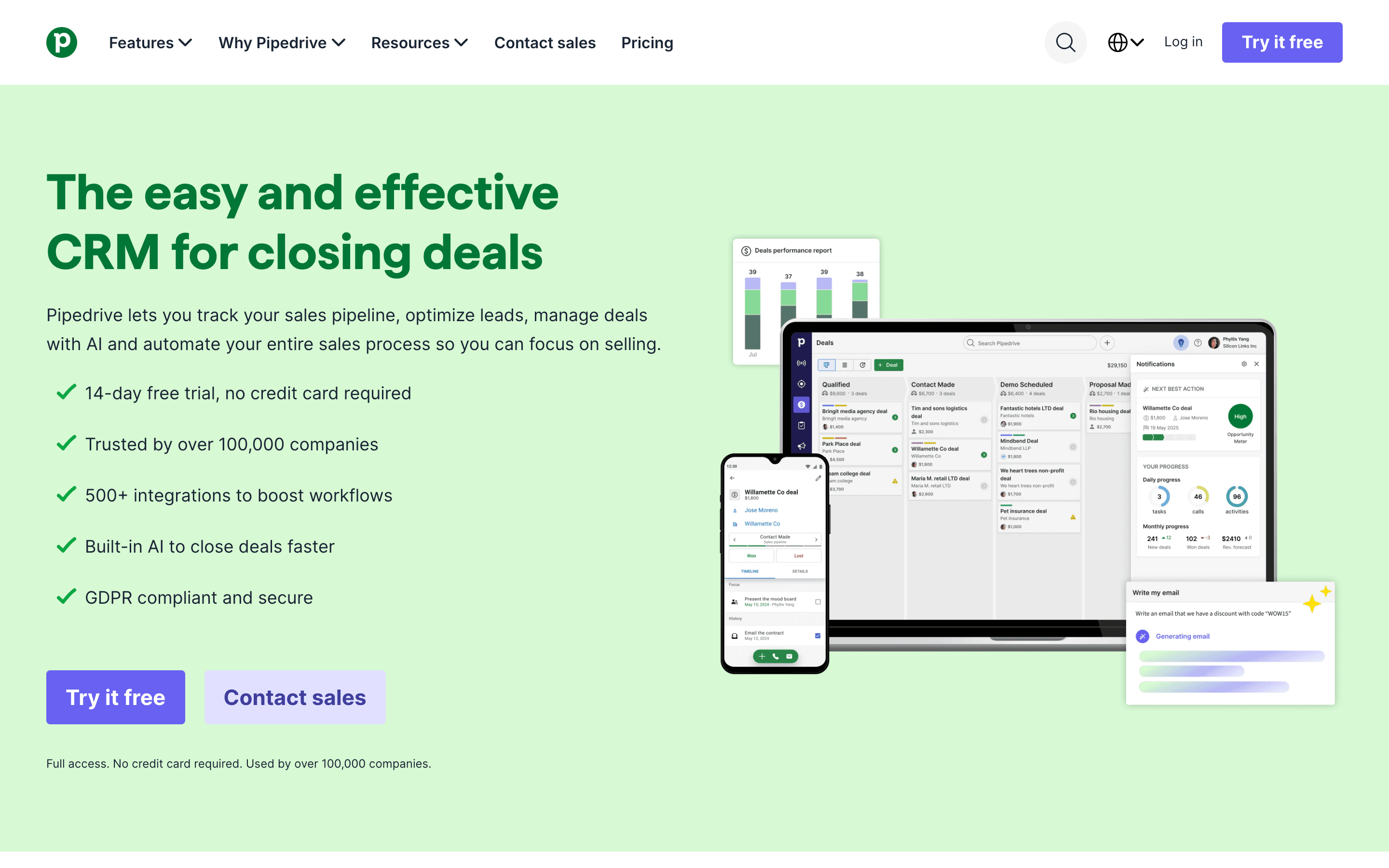
Pipedrive is the most direct fit for founders who want Attio's ease of setup without the credit system. Lite starts at $14/seat/month billed annually and already includes lead, pipeline, and calendar management plus an AI Sales Assistant, so you are not paying extra for AI the way Attio's credit pool works. The visual, drag-and-drop pipeline is fast for reps to learn, and a native MCP server added in June 2026 connects deals and contacts to ChatGPT or Claude, which matches Attio's AI-forward pitch. The tradeoff is flexibility: Pipedrive's pipeline-first structure is not a custom object model, and real automation, two-way email sync, and lead generation tools are locked to Growth and Premium, so cost still climbs as you add capability.
Pros
- + The pipeline UI is fast to set up and easy for reps to learn with little training
- + AI Sales Assistant and AI-generated reports are included on the entry plans too, not held back for the top tier
- + 500+ marketplace integrations, plus a native MCP server added in June 2026 for connecting CRM data to ChatGPT and Claude
Cons
- – No permanent free plan, unlike some CRM competitors
- – Core revenue-generating features like LeadBooster's chatbot, live chat, and prospecting tools, plus Smart Docs and Campaigns, cost extra unless you're on Premium or Ultimate
HubSpot is the pick if you want to start free and grow into a full revenue stack. The Free CRM plan never expires, needs no credit card, and covers 2 users versus Attio's 3-seat Free tier. Its often-cited 1,000-contact cap is a limit on contacts you can email through the free marketing tools, not on storage: the free CRM itself can hold up to 1 million records across contacts, companies, and deals, well past Attio's 50,000-record Free tier cap. What HubSpot offers is a free on-ramp to a much bigger system: its shared contact database ties marketing, sales, and service together as you add paid Hubs, and Breeze AI now bundles a Customer Agent and prospecting agent into workflows rather than selling them separately. The catch is the price jump: Sales Hub Professional runs $90-100/seat/month plus a $1,500 onboarding fee, a much steeper step than Attio's own Plus-to-Pro jump, and total cost depends on which Hubs and contact tiers you combine.
Pros
- + One contact record shared across marketing, sales, and service cuts down on duplicate data entry
- + The free CRM plan has no time limit and needs no credit card to start
- + A large ecosystem of native integrations and a marketplace of third-party apps
Cons
- – Marketing Hub pricing tracks marketing contact volume, so costs can rise as your list grows even without adding seats
- – Professional and Enterprise tiers on Sales and Marketing Hub carry separate one-time onboarding fees, from $1,500 to $7,000 depending on hub and tier
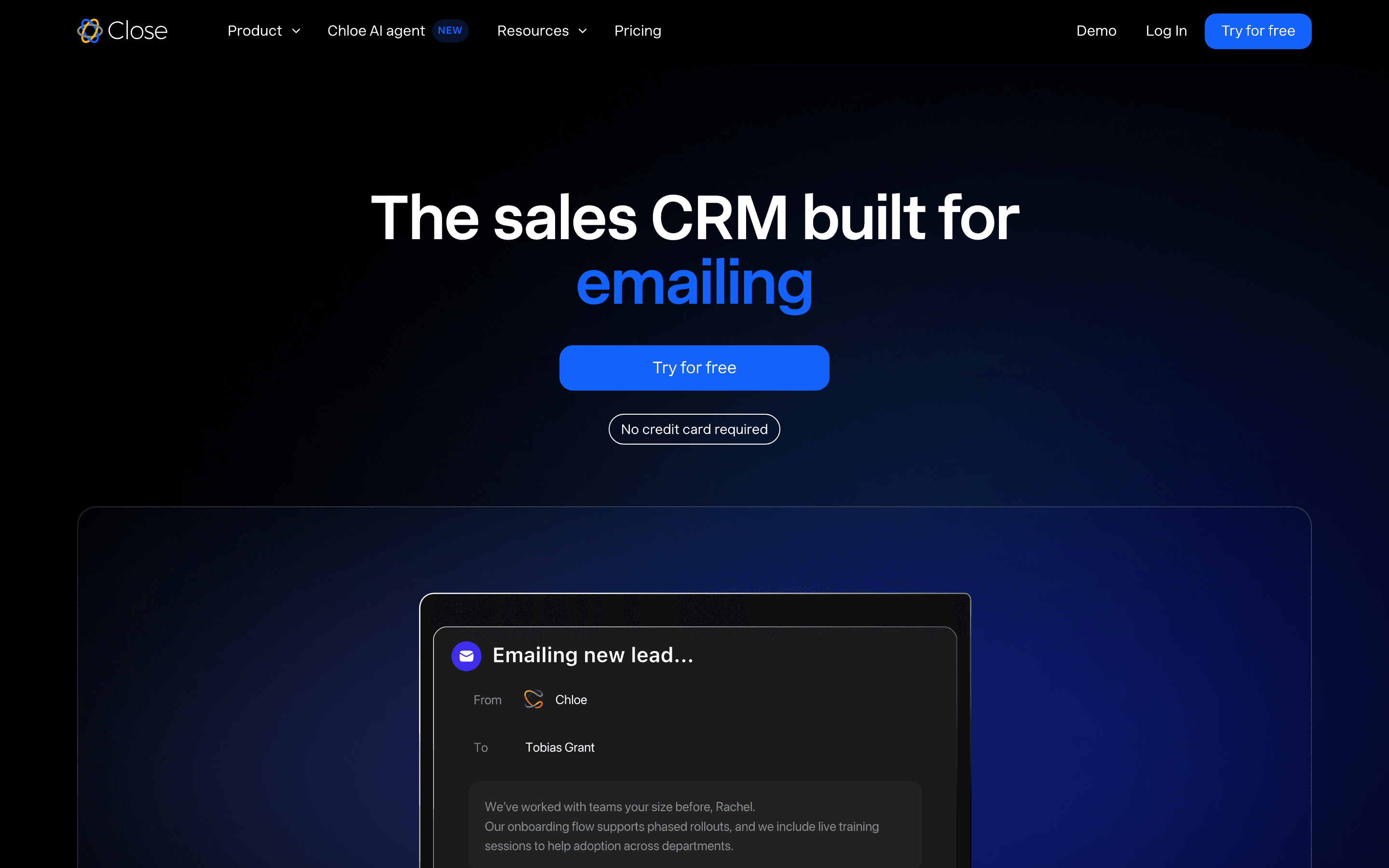
Close is the pick for startups whose CRM problem is really an outbound sales problem. Calling, SMS, and email are native to the product, not integrations, so every call and text logs straight to the lead record, and the power dialer (predictive on the Scale plan) speeds up high-volume calling in a way Attio was never built for. Pricing is public and per seat, from $9/month for the 1-user Solo plan up to $139/month for Scale, though calling minutes and phone numbers bill separately on usage. Close also ships a built-in AI voice agent, Chloe, that qualifies leads and books meetings on its own. What you give up versus Attio is the custom object model: Close's data structure is built around leads and contacts, not a schema you design.
Pros
- + Calling, SMS, and email are built into the product, not bolted on, so call and message activity logs straight to the lead record
- + The power dialer speeds up high-volume outbound calling, and the predictive dialer on the Scale plan speeds it up further
- + Workflow automation, multi-step email, call, and SMS sequences with branching, comes starting on the Growth plan instead of a separate add-on product
Cons
- – There's no free-forever tier, only a 14-day trial, so teams can't run it long-term at zero cost the way they can with HubSpot's free CRM
- – The Solo plan caps out at 1 user and 10,000 leads, so almost any real team has to jump straight to the $35-a-seat Essentials tier
Airtable
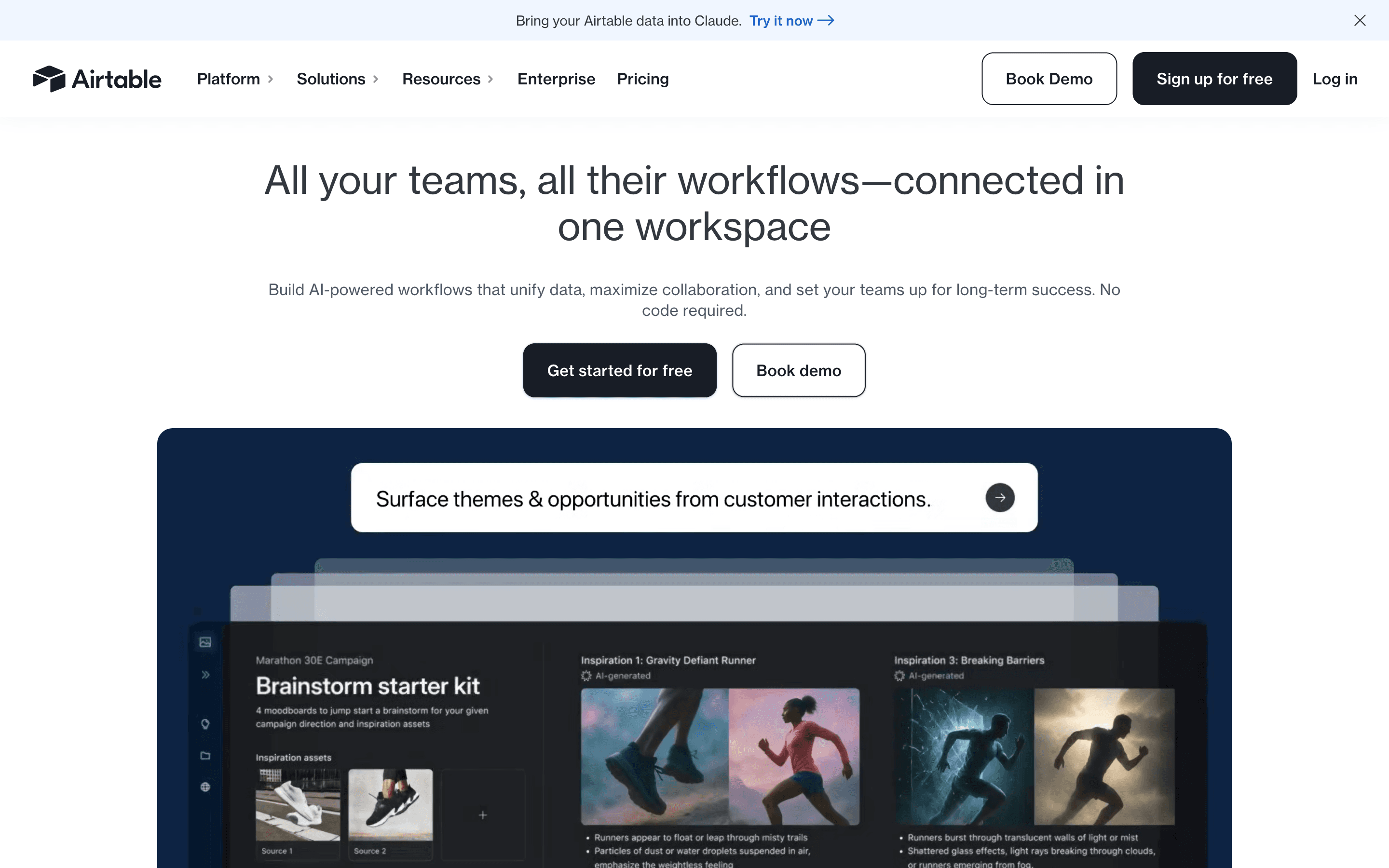
Airtable is the closest match to what actually makes Attio different: a data model you design yourself instead of a fixed contact/company/deal structure. The core building blocks, tables, linked records, views, and automations, cost nothing extra to use. Airtable only spends its AI credit allowance (500 per editor on Free, 15,000 per collaborator on Team) on optional field generation and summarization, unlike Attio, where core features like Ask Attio and enrichment draw from the same capped credit pool. The Free plan is genuinely usable for a small team starting out. The real cost is time: Airtable ships no built-in email sequencing, call logging, or deal scoring, so you build the CRM parts yourself, and record caps per base (1,000 free, 50,000 Team) mean a growing team hits a wall Attio wouldn't.
Pros
- + Free plan is genuinely usable for small teams starting out, not just a demo
- + Linked records and views make it easy to reshape the same data into a pipeline, a calendar, or a report
- + Automations and the API cover most integration needs without extra tools
Cons
- – Record caps per base (1,000 free, 50,000 Team, 125,000 Business) force a plan upgrade or a data cleanup as you grow, not just a seat upgrade
- – Team plan price doubled from $10 to $20 per seat when Airtable retired the old Plus plan in Q3 2025
folk
folk is the closest cousin to Attio in spirit: a small, AI-forward CRM built for founders and small teams rather than a full sales org. The folkX browser extension pulls leads straight off LinkedIn and Sales Navigator, and AI assistants (Recap, Research, Follow-up, Workflow) handle the same kind of automated enrichment and summarization Attio leans on. Where folk differs is what's included at the entry price: deal tracking, sequences, dashboards, and API access all require the $48/seat/month Premium plan, double the $24 Standard price, and there's no free-forever tier, only a 2-week trial. Enrichment credits are also shared across the whole workspace rather than per seat, so a small team doing heavy prospecting can burn through the monthly cap fast, a tradeoff similar to Attio's own credit system.
Pros
- + folkX makes it fast to pull leads and their context off LinkedIn, including Sales Navigator, straight into the CRM
- + AI assistants (Recap, Research, Follow-up, Workflow) cut down on manual note-taking and prospect research
- + Setup is quick since most of the CRM populates itself from synced email, calendar, and LinkedIn activity
Cons
- – No free-forever plan, only a 2-week trial
- – Deal tracking, sequences, dashboards, and API access are locked behind Premium, which is double the Standard price per seat
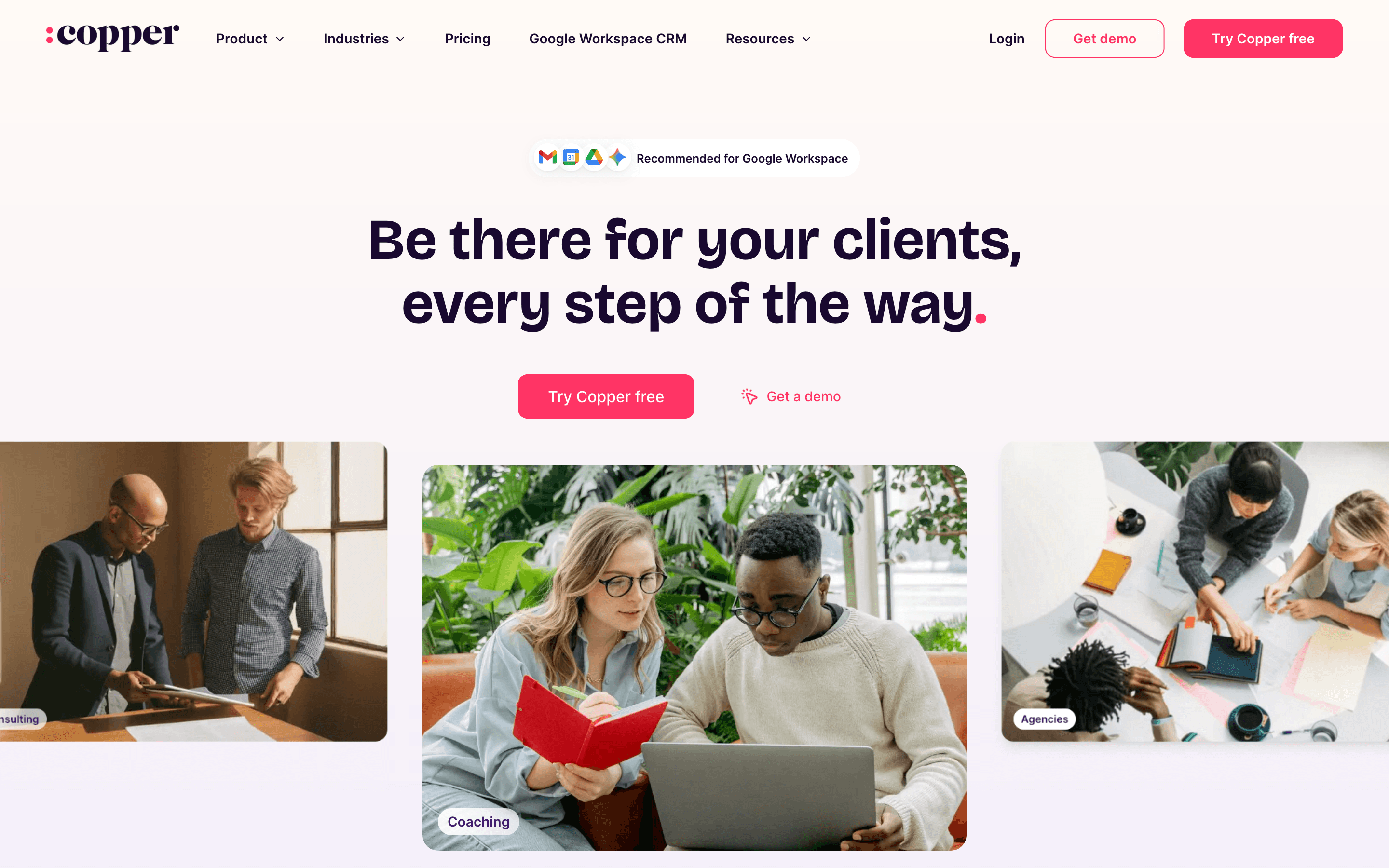
Copper is the pick for teams that live entirely inside Gmail and Google Calendar and want a CRM that auto-fills from that activity rather than one built around custom objects. It logs email and calendar activity automatically and has a clean, simple interface reps pick up fast, with published per-seat pricing starting at $23/month for Basic. The catch is that Basic doesn't include real pipeline stages or sales opportunities, so most teams end up paying $59/seat/month for Professional just to track deals properly, and reporting has real gaps that push teams to Looker Studio or Google Sheets exports. Reviewers also flag a rigid cancellation and auto-renewal process. Copper is a fine downgrade in flexibility from Attio, not an upgrade, useful mainly for Google-native simplicity.
Pros
- + Auto-logs email and calendar activity so reps spend less time on data entry
- + Clean, simple interface that's fast to learn for non-technical sales teams
- + Pricing is published up front, no sales call required to see what it costs
Cons
- – Basic plan includes basic pipelines but not Sales Opportunities, the deal record with a revenue rollup, so most teams end up needing Professional
- – Native reporting has real gaps (reviewers note not every field can be included in a report); Copper ships official Looker Studio and Google Sheets export connectors as the standard workaround for deeper analysis
Should your product be on this crm & marketing list?
If you build a tool that belongs next to the ones above, submit it. A human reviews every submission. Approved products get their own page with pricing and screenshots, plus a place in the comparisons where they fit. It is free. You sign in with your work email so you can follow the decision, and there is no password to create.
Attio alternatives: FAQ
What's the best free alternative to Attio?+
HubSpot's Free CRM plan never expires and needs no credit card, and covers 2 seats versus Attio's 3-seat Free tier. Its often-cited 1,000-contact cap only limits contacts you can email through the free marketing tools; the free CRM itself can store up to 1 million records, well past Attio's 50,000-record Free tier cap. HubSpot's edge is that its free tier is the entry point to free marketing, service, and live chat tools.
What's the cheapest paid alternative to Attio?+
Pipedrive's Lite plan starts at $14/seat/month billed annually, undercutting Attio's $29/seat Plus plan, and already includes an AI Sales Assistant rather than metering AI use through credits.
Which Attio alternative is best for outbound calling?+
Close, because calling, SMS, and email are built natively into the CRM with a power and predictive dialer, instead of needing a separate calling tool bolted on.
Is there an alternative to Attio's flexible, custom-object data model?+
Airtable is the closest match. You build your own tables and linked relationships instead of a fixed CRM structure, though you have to build sales-specific features like sequencing and call logging yourself.
Attio alternatives: pricing compared
Entry price, billing model, and whether pricing is public. 7 of 7 publish pricing you can check without talking to sales.
| Tool | Starting price | Billing | Free option | Pricing disclosed |
|---|---|---|---|---|
| Attio | $29/seat/mo | per-seat | Yes | Partly public |
| Pipedrive | $14/seat/mo | per-seat | Trial (14 days, full access to the selected plan, no credit card required) | Public |
| HubSpot | $7/seat/mo | tiered | Yes | Public |
| Close | $9/seat/mo | per-seat | Trial (14 days, no credit card required) | Public |
| Airtable | $20/seat/mo | per-seat | Yes | Partly public |
| folk | $24/seat/mo | per-seat | Trial (2 weeks, no credit card required) | Partly public |
| Copper | $23/seat/mo | per-seat | Trial (14 days, no credit card required) | Public |
How we made these picks. We compare tools on public pricing, features, and hands-on assessment, then verify every price against the vendor's own page. We never accept payment for rankings. Read the full methodology. Spotted an error? Report it.