Airtable Review
Spreadsheet-database hybrid for building custom apps and lightweight CRMs
Is this your product? Claim this page · Request a change
Looking for a Airtable alternative? See our ranked comparison.→What is Airtable?
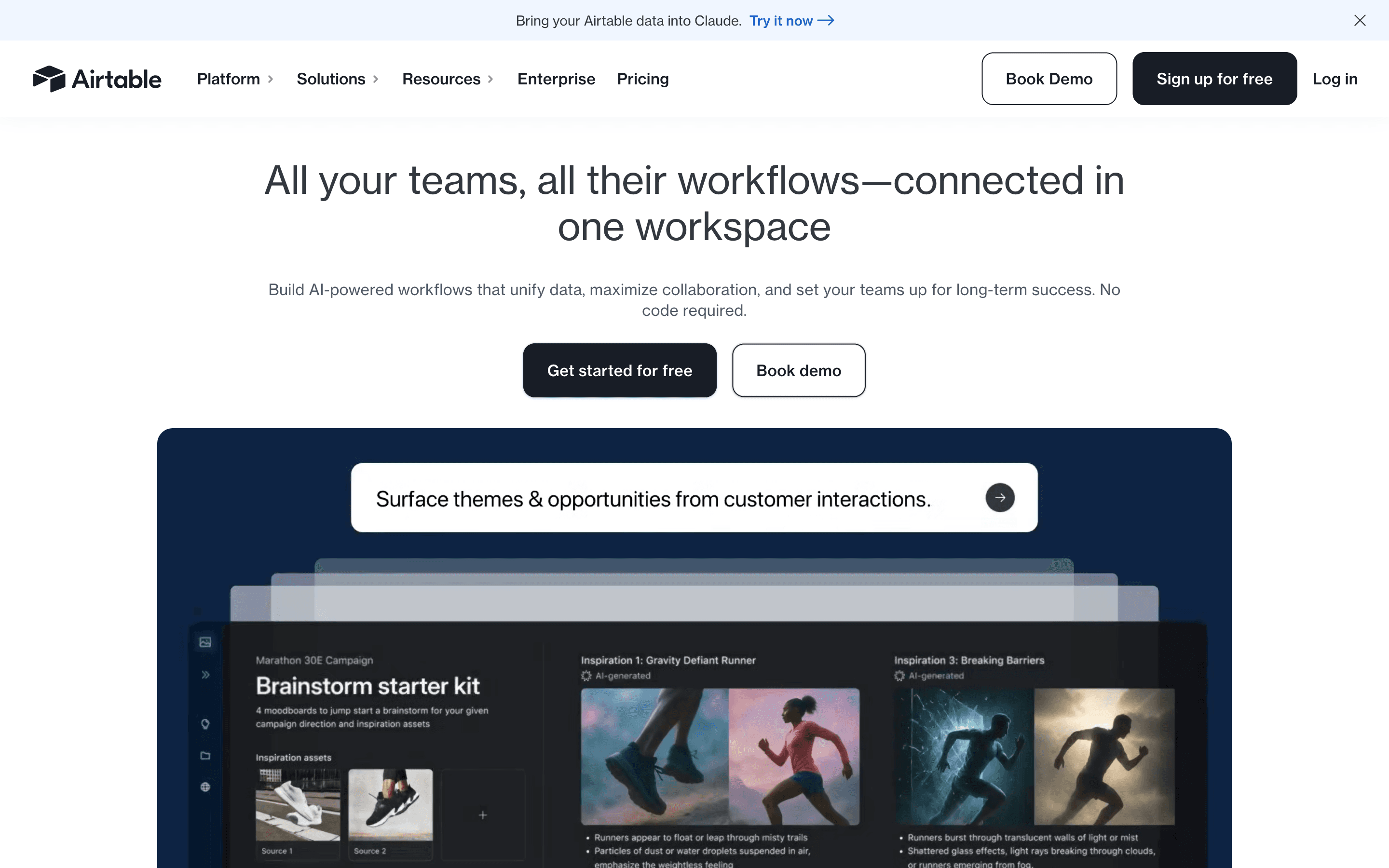
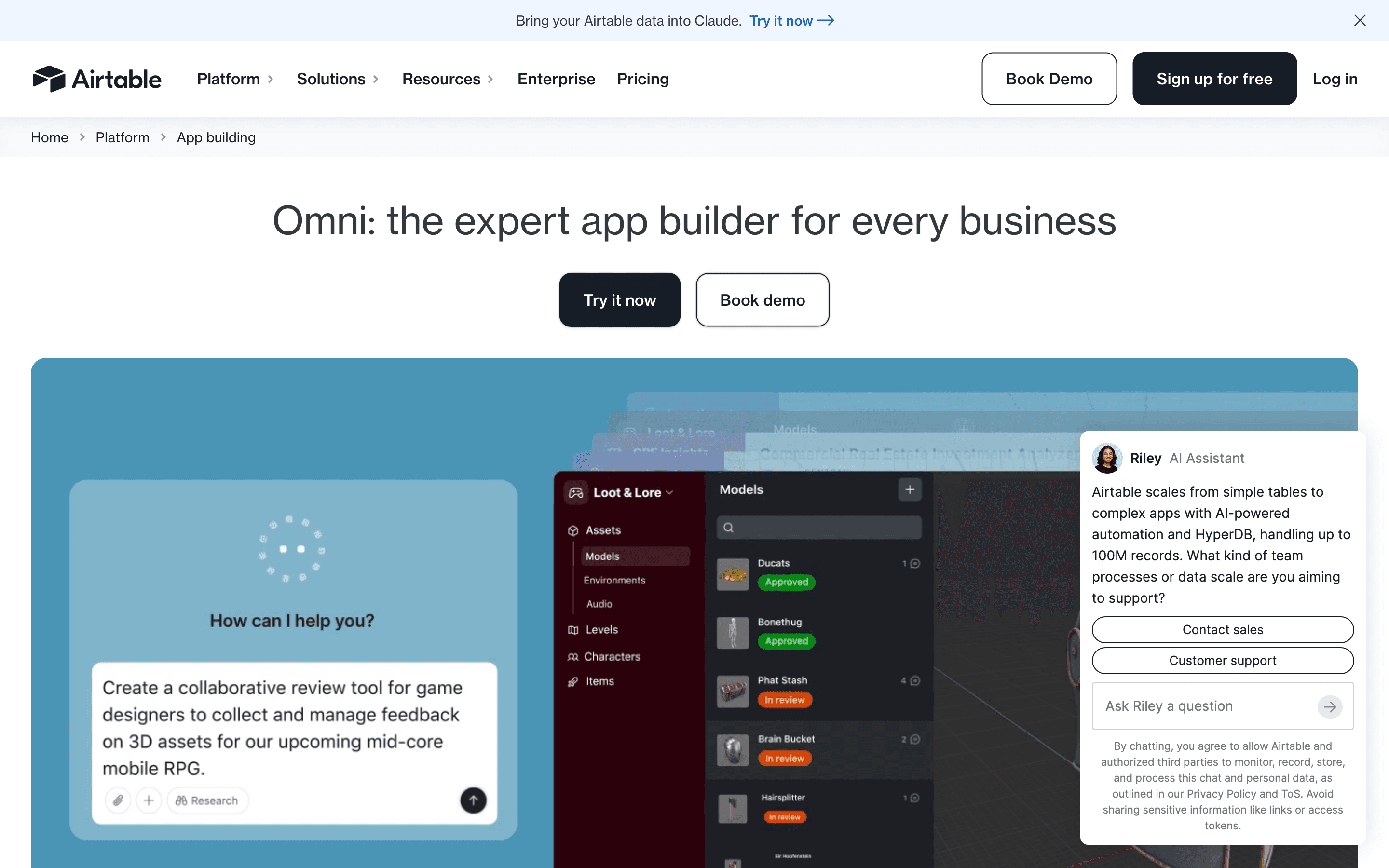
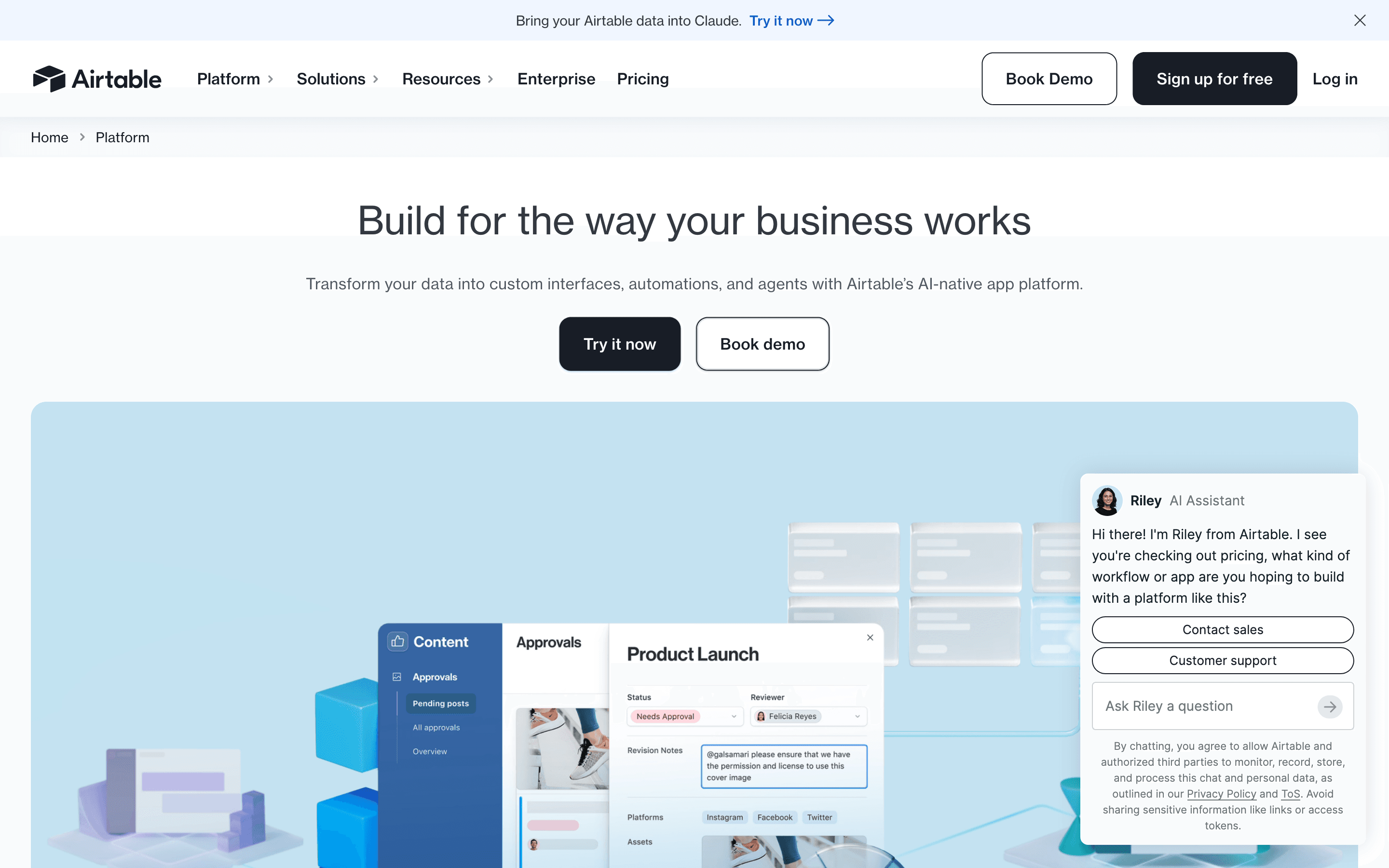
Airtable is a spreadsheet that behaves like a database. You build tables with linked records, custom views, and automations, then layer on forms, interfaces, and AI agents without writing code. A lot of RevOps and founder teams use it as a lightweight CRM: a pipeline view, a contacts table, an automation that pings Slack on stage change.
It is not a CRM out of the box. There is no built-in email sequencing, call logging, or deal scoring. You get those by building them yourself or bolting on templates, which is flexible but takes setup time a dedicated CRM would save you.
Airtable screenshots
Who it's for
- ✓ Teams that want one tool to run a CRM, a project tracker, and an ops database, and are willing to build it themselves
- ✓ Founders who need something up and running today without buying a dedicated CRM seat
Who should look elsewhere
- ✗ Sales teams that want CRM features (sequences, call logs, forecasting) working on day one without configuration
- ✗ Teams with more than about 50,000 records in one base who don't want to pay Business or Enterprise prices to keep growing
Pros
- + Free plan is genuinely usable for small teams starting out, not just a demo
- + Linked records and views make it easy to reshape the same data into a pipeline, a calendar, or a report
- + Automations and the API cover most integration needs without extra tools
- + AI features (summarization, field generation, agents) are now bundled into every paid plan's credit allowance
Cons
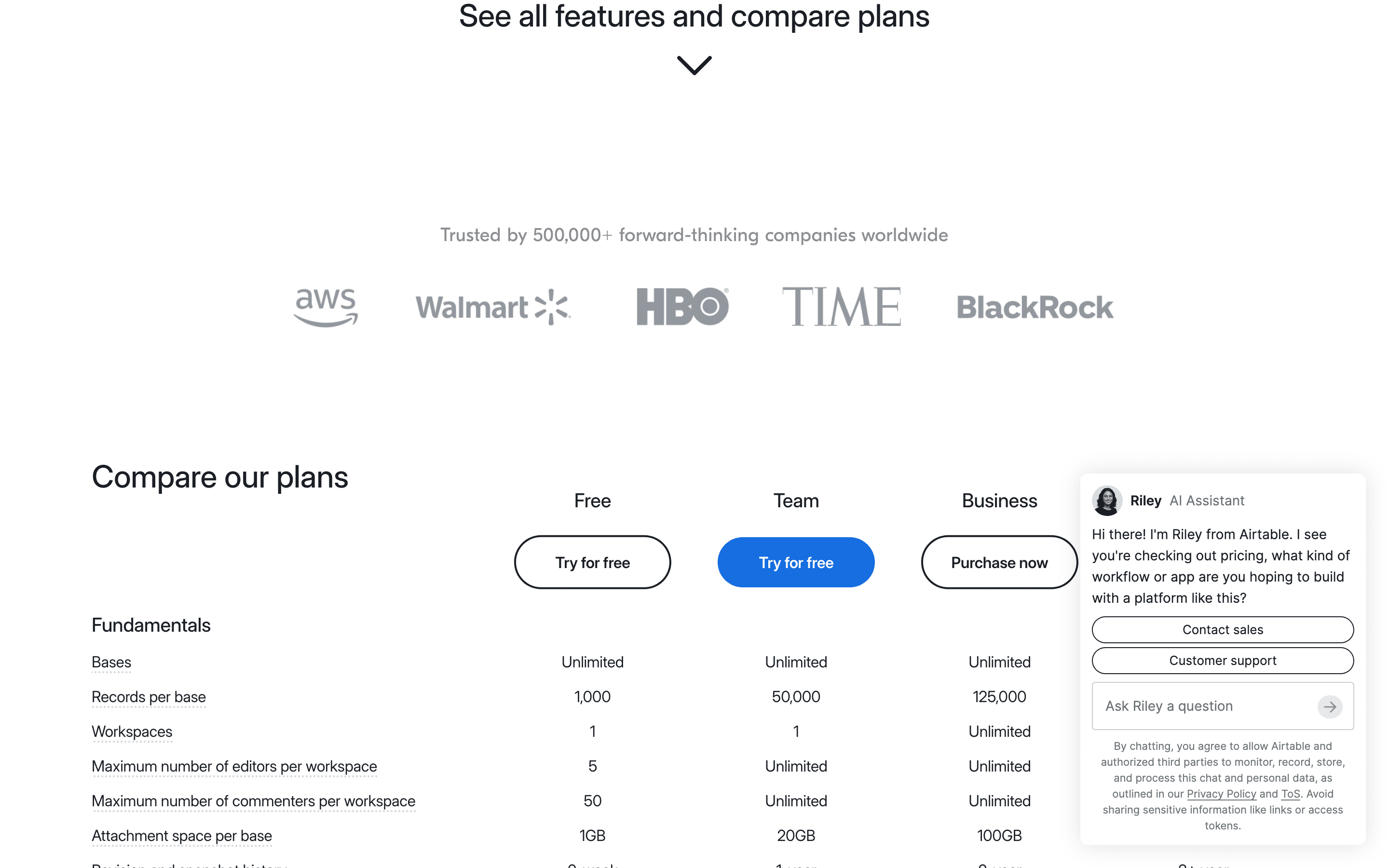
- – Record caps per base (1,000 free, 50,000 Team, 125,000 Business) force a plan upgrade or a data cleanup as you grow, not just a seat upgrade
- – Team plan price doubled from $10 to $20 per seat when Airtable retired the old Plus plan in Q3 2025
- – No built-in sales features like sequencing or call logging, so it takes real setup work to function as a CRM
- – Enterprise pricing is not published, so budgeting for a scale-up requires a sales conversation
Airtable pricing
What you pay for
You pay per seat, and read-only viewers are always free. What counts as a billable seat differs by plan: Team bills Commenters and up, Business only bills Editors and up. The Free plan caps out at 1,000 records, so anything real runs into that wall fast. Team and Business list real self-serve prices on the pricing page; Enterprise Scale is quote-only and negotiated through sales.
At about $20/month to start, it sits mid-pack on price in CRM & Marketing.
| Plan | Price | Highlights |
|---|---|---|
| Free | Free | 1,000 records per base · 1GB attachments per base · 2 weeks of revision history · 500 AI credits per editor |
| Team | $20/seat/mo | 50,000 records per base · 20GB attachments per base · 1 year of revision history · 100,000 API calls per workspace per month · 15,000 AI credits per collaborator |
| Business | $45/seat/mo | 125,000 records per base · 100GB attachments per base · Unlimited API calls per workspace per month · 20,000 AI credits per user · Admin panel and two-way sync |
| Enterprise Scale | Custom | Unlimited org units, workspaces, and bases · SAML/SSO, dedicated customer success manager, and priority support · AI credit allowance negotiated with sales |
Team is $24/seat/month and Business is $54/seat/month if billed monthly instead of annually. Read-only collaborators, form submitters, and share-link viewers are always free. On Team, anyone with Commenter access or above is billable; on Business, only Editor access or above is billable, so Business commenters are free. Airtable replaced its old Plus plan with Team in Q3 2025, roughly doubling the entry price from $10 to $20/seat/month. Enterprise Scale is quote-only.
Pricing verified July 7, 2026 · source
How Airtable's pricing compares
Airtable next to its closest alternatives on entry price, billing, and whether pricing is public.
| Tool | Starting price | Billing | Free option | Pricing disclosed |
|---|---|---|---|---|
| Airtable | $20/seat/mo | per-seat | Yes | Partly public |
| Attio | $29/seat/mo | per-seat | Yes | Partly public |
| folk | $24/seat/mo | per-seat | Trial (2 weeks, no credit card required) | Partly public |
| Copper | $23/seat/mo | per-seat | Trial (14 days, no credit card required) | Public |
| HubSpot | $7/seat/mo | tiered | Yes | Public |
| Pipedrive | $14/seat/mo | per-seat | Trial (14 days, full access to the selected plan, no credit card required) | Public |
| Close | $9/seat/mo | per-seat | Trial (14 days, no credit card required) | Public |
Is Airtable still actively developed?
Last significant update: June 2026. Added a beta API endpoint letting enterprise admins add or remove up to 10 workspaces from the enterprise AI allowlist, part of a run of admin and API updates through mid-2026.
Top Airtable alternatives
Airtable FAQ
Is Airtable free to use?+
Yes, the Free plan works for small teams, but it caps out at 1,000 records and 1GB of attachments per base, so it fits testing or small projects more than a running CRM.
What does Airtable cost per user?+
Team is $20 per seat per month billed annually ($24 billed monthly). Business is $45 per seat per month billed annually ($54 billed monthly). Enterprise Scale is custom-priced through sales.
What happens when I hit Airtable's record limit?+
Airtable does not delete your data, but you can't add new records past the cap for your plan. You need to move to a higher plan or archive old data to keep working.
Does Airtable work as a CRM?+
It can, using linked tables, views, and automations, but it has no built-in email sequencing or call logging. Teams that need those out of the box usually pair Airtable with a dedicated CRM or pick one instead.