Top folk Alternatives in 2026
Here for folk itself? See the full folk profile, pricing & reviews →
Suggest a change- If you want folk's AI-native, fast feel but with a plan you can run for free, choose Attio. Attio's Free plan covers up to 3 seats and 50,000 records at no cost, something folk does not offer at any price.
- If your team already lives inside Gmail and Google Calendar all day, choose Copper. Copper builds the CRM directly inside Gmail and auto-logs email and calendar activity onto records without a separate browser extension.
- If you want to build the exact contact and deal tracker you need and would rather not pay a per-seat CRM price at all, choose Airtable. Airtable's Free plan and linked-record tables let a cost-conscious founder shape their own system instead of paying for folk's built-in structure.
- If your team needs a real deal pipeline without paying folk's Premium price to unlock it, choose Pipedrive. Pipedrive's Lite plan starts at $14 a seat a month, cheaper than folk's $24 Standard tier, and includes pipeline stages from day one. Forecasting itself needs the $39/seat Growth tier, not Lite.
- If your team spends its day on high-volume outbound calling and SMS, not sourcing contacts from LinkedIn, choose Close. Close bundles calling, SMS, and email sequencing directly into the CRM, with a power dialer starting on the $99/seat Growth tier, tools folk was never built to include.
- If your CRM is really a LinkedIn-sourced, enriched contact list with light deal tracking, not a formal sales pipeline, choose stay on folk. folkX's LinkedIn and Sales Navigator capture, plus the Recap and Research AI assistants, do that specific job better than any general CRM on this list, and switching would mean rebuilding a workflow that already works.
folk turns the contacts already in your LinkedIn, Gmail, Outlook, and WhatsApp into a CRM. The folkX browser extension pulls people straight off LinkedIn and Sales Navigator, and AI assistants summarize, research, and draft follow-ups so a shared contact list builds itself instead of getting typed in by hand.
Teams start looking elsewhere once they hit folk's edges: no free plan at any price, deal tracking and API access locked behind a Premium tier that costs exactly double Standard, and enrichment credits shared across the whole workspace instead of per seat. The alternatives below are the tools a real folk buyer would actually cross-shop, from AI-native CRMs with a genuine free tier to pipeline-first tools built for teams that have outgrown a contact list.
folk alternatives compared
| Tool | Best for | Starting price | Free option | Last update |
|---|---|---|---|---|
| AttioBest free alternative | Startups and small sales teams that want a CRM shaped around their own process instead of a rigid template | $29/seat/mo | Yes | June 2026 |
| CopperBest for Gmail-first teams | Small teams already living in Gmail and Google Calendar who want a CRM that feels native to that workflow | $23/seat/mo | Trial (14 days, no credit card required) | June 2026 |
| AirtableBest for build-your-own teams | Teams that want one tool to run a CRM, a project tracker, and an ops database, and are willing to build it themselves | $20/seat/mo | Yes | June 2026 |
| HubSpot | Growing companies that want marketing, sales, and support data in one system instead of stitching together separate point tools | $7/seat/mo | Yes | June 2026 |
| PipedriveBest value | Small and mid-sized B2B sales teams that want a fast, visual pipeline without a heavy admin setup | $14/seat/mo | Trial (14 days, full access to the selected plan, no credit card required) | June 2026 |
| Close | Small and midsize teams doing high-volume outbound calling and email who want calling, SMS, and email built into the CRM | $9/seat/mo | Trial (14 days, no credit card required) | May 2026 |
Why teams switch from folk
Deal tracking, sequences, dashboards, and API access are all locked behind Premium
Premium costs exactly double Standard's per-seat price ($48 vs $24 billed annually), so a team that wants to track deals or use the API has to pay double just to unlock it.
Enrichment credits and Magic fields are shared across the whole workspace, not per seat
500 enrichment credits a month on Standard and 1,000 on Premium are flat workspace-wide pools, so a small team doing heavy prospecting can burn through the monthly cap in days.
There is no free-forever plan
folk offers only a 2-week trial with no credit card required. Every plan after that is paid, unlike Attio, Airtable, HubSpot, or Salesforce, which all keep a permanent free tier.
The best folk alternatives, ranked
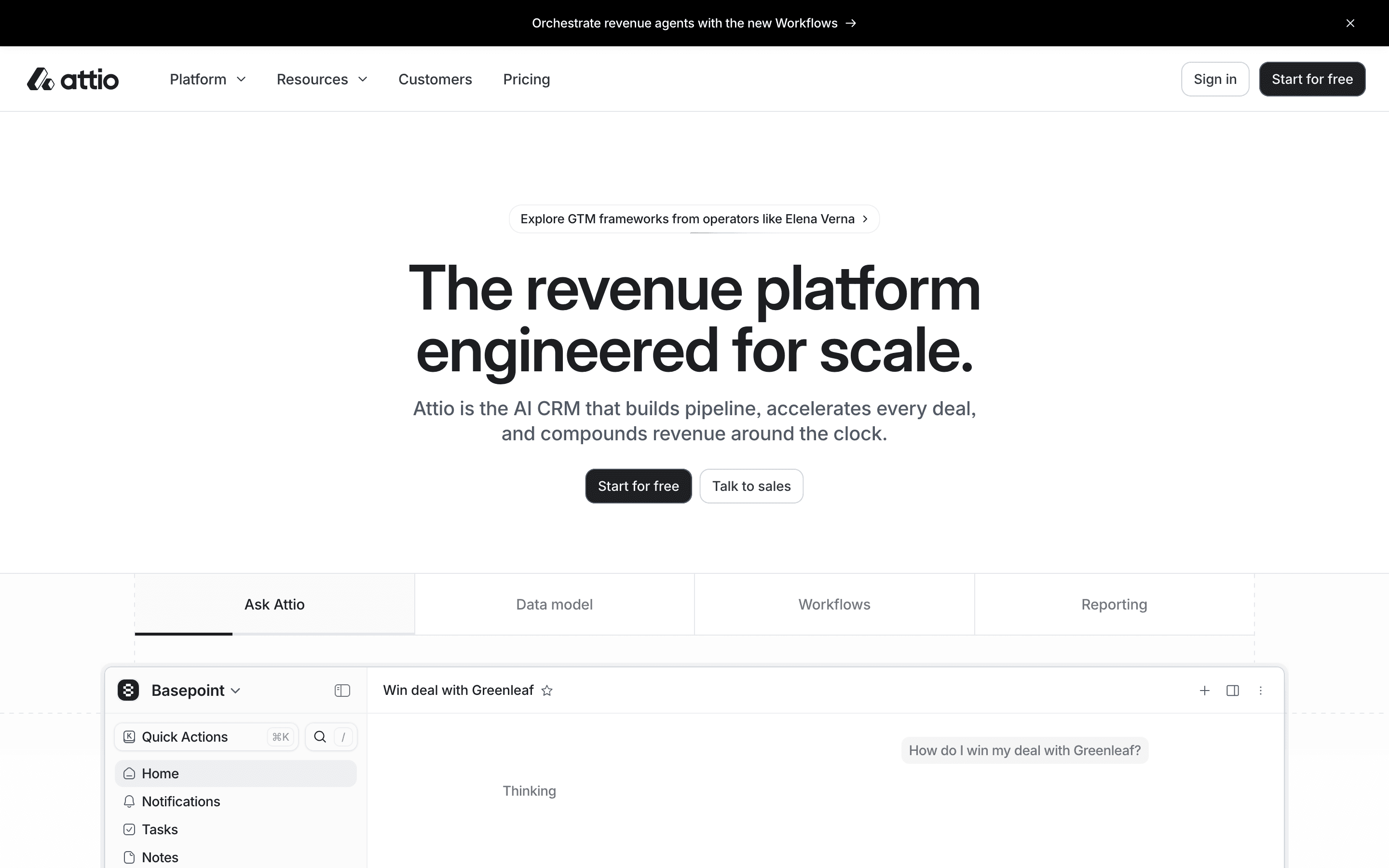
Attio is the closest thing to folk in spirit: a fast, AI-leaning CRM that doesn't force a rigid contact/company/deal template on you. You define your own objects, which suits teams whose data doesn't fit a standard pipeline any better than folk's does. Attio's Free plan supports up to 3 seats and 50,000 records, a real working tier folk simply doesn't offer at any price. Where folk relies on folkX to pull people off LinkedIn, Attio leans on inbox and calendar sync, automatic enrichment, and natural-language search through Ask Attio. The catch is Attio's credit system: seat and workspace credits meter AI and enrichment use, so a team leaning hard on AI can end up paying more than the advertised $29/seat Plus price, not unlike how folk's own enrichment credits are shared across the whole workspace.
Pros
- + Custom objects and a flexible data model instead of a fixed contact/company/deal structure
- + Connects to your inbox and calendar with built-in enrichment to keep records current
- + Free plan covers up to 3 seats with 50,000 records, enough to actually run a small team on
Cons
- – Call intelligence, sequences, and advanced permissions are locked behind the Pro tier, a 138% jump in per-seat price over Plus ($69 vs $29/seat/month billed annually)
- – The credit system means actual monthly cost can exceed the per-seat sticker price once AI and enrichment features are used heavily
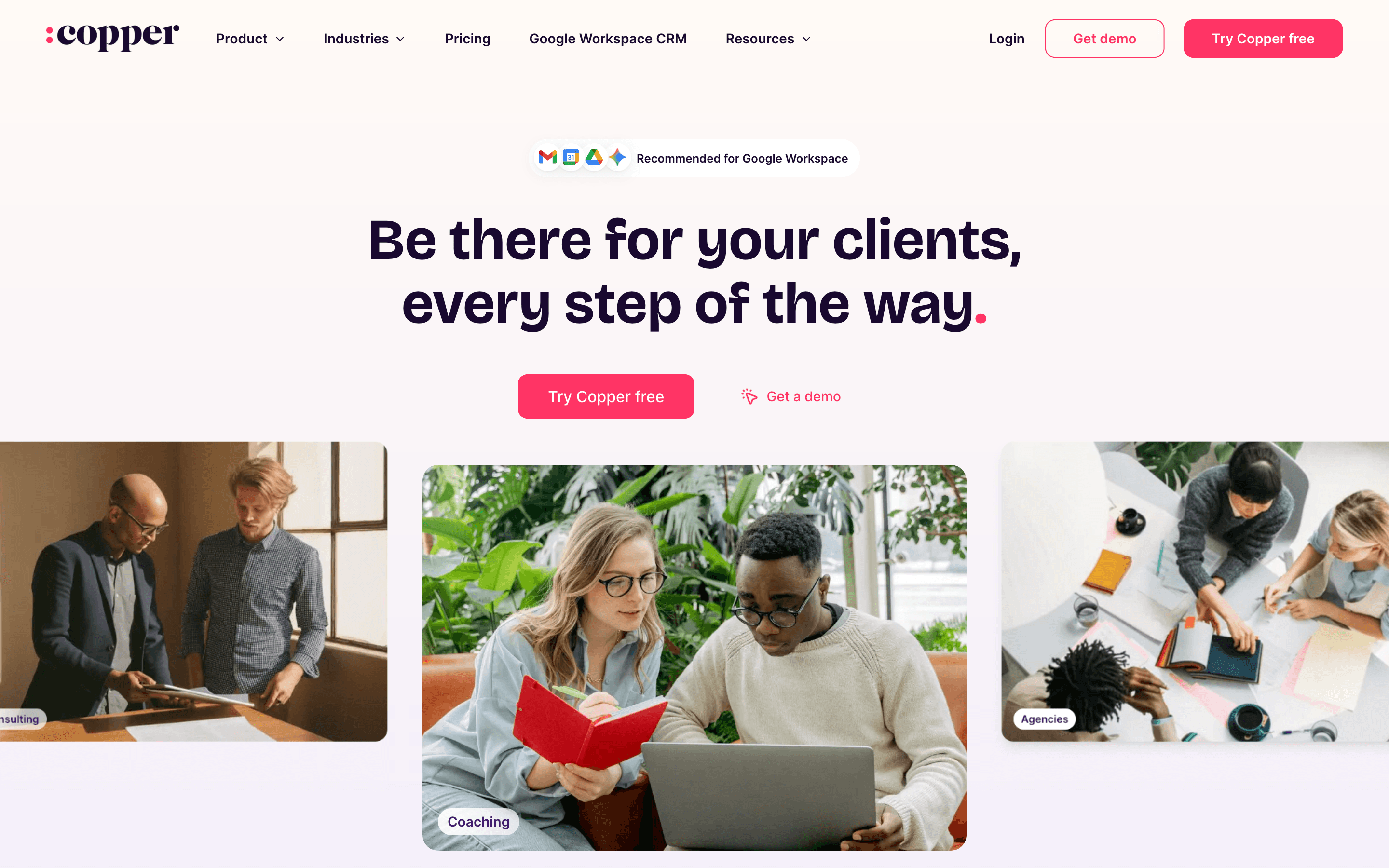
Copper is the CRM for teams whose real workflow already happens inside Gmail. It sits directly in Google Workspace and auto-logs email threads and calendar events onto contact records, the same 'the CRM fills itself in' pitch folk makes with LinkedIn instead of Gmail. At $23/seat/month annually, Copper sits close to folk's $24 Standard tier, but its cheapest Basic plan skips sales opportunities and pipeline stages entirely, so most teams end up paying for Professional at $59/seat just to track deals, similar to folk gating deal tracking behind Premium. Copper's native reporting has real gaps that push teams toward Looker Studio or Google Sheets exports, and reviewers describe a rigid auto-renewal process with support declining refunds on inactive seats. Pick Copper if Gmail, not LinkedIn, is where your contacts actually live.
Pros
- + Auto-logs email and calendar activity so reps spend less time on data entry
- + Clean, simple interface that's fast to learn for non-technical sales teams
- + Pricing is published up front, no sales call required to see what it costs
Cons
- – Basic plan includes basic pipelines but not Sales Opportunities, the deal record with a revenue rollup, so most teams end up needing Professional
- – Native reporting has real gaps (reviewers note not every field can be included in a report); Copper ships official Looker Studio and Google Sheets export connectors as the standard workaround for deeper analysis
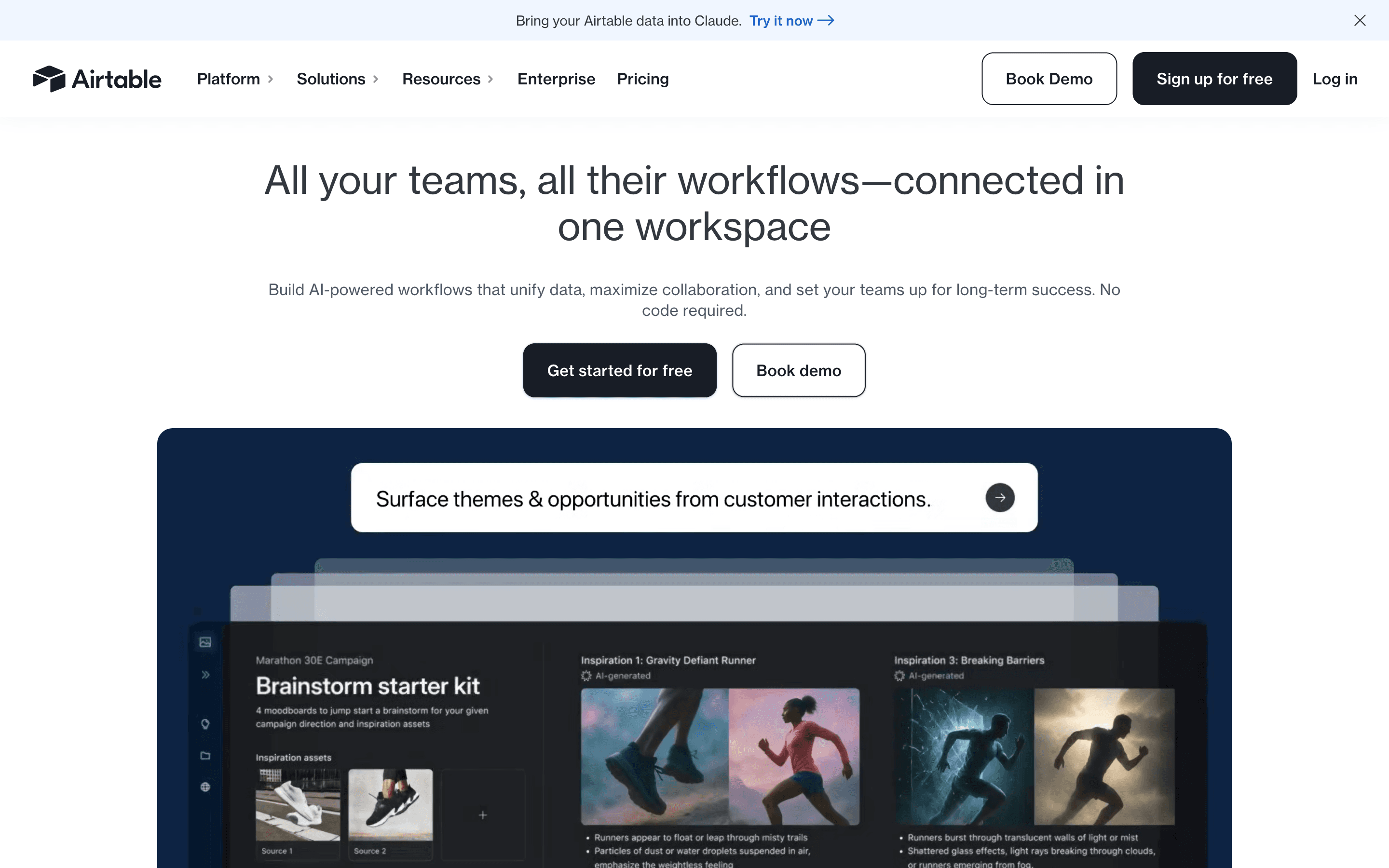
Airtable isn't a CRM out of the box, it's a spreadsheet-database you shape into one, which appeals to the same founders and small teams who might otherwise wire together a system from folk's Magic fields and workflows. Its Free plan is genuinely usable, not a demo, though it caps out at 1,000 records per base. Team jumps to $20/seat/month, double what it cost before Airtable retired its old Plus plan in 2025, and there is no built-in email sequencing or call logging, so you're building the sales features folk ships by default. The tradeoff for that setup work is total control over the data model and no workspace-wide credit caps to run into. Airtable fits teams willing to spend time building rather than pay for folk's instant, self-populating contact list.
Pros
- + Free plan is genuinely usable for small teams starting out, not just a demo
- + Linked records and views make it easy to reshape the same data into a pipeline, a calendar, or a report
- + Automations and the API cover most integration needs without extra tools
Cons
- – Record caps per base (1,000 free, 50,000 Team, 125,000 Business) force a plan upgrade or a data cleanup as you grow, not just a seat upgrade
- – Team plan price doubled from $10 to $20 per seat when Airtable retired the old Plus plan in Q3 2025
HubSpot
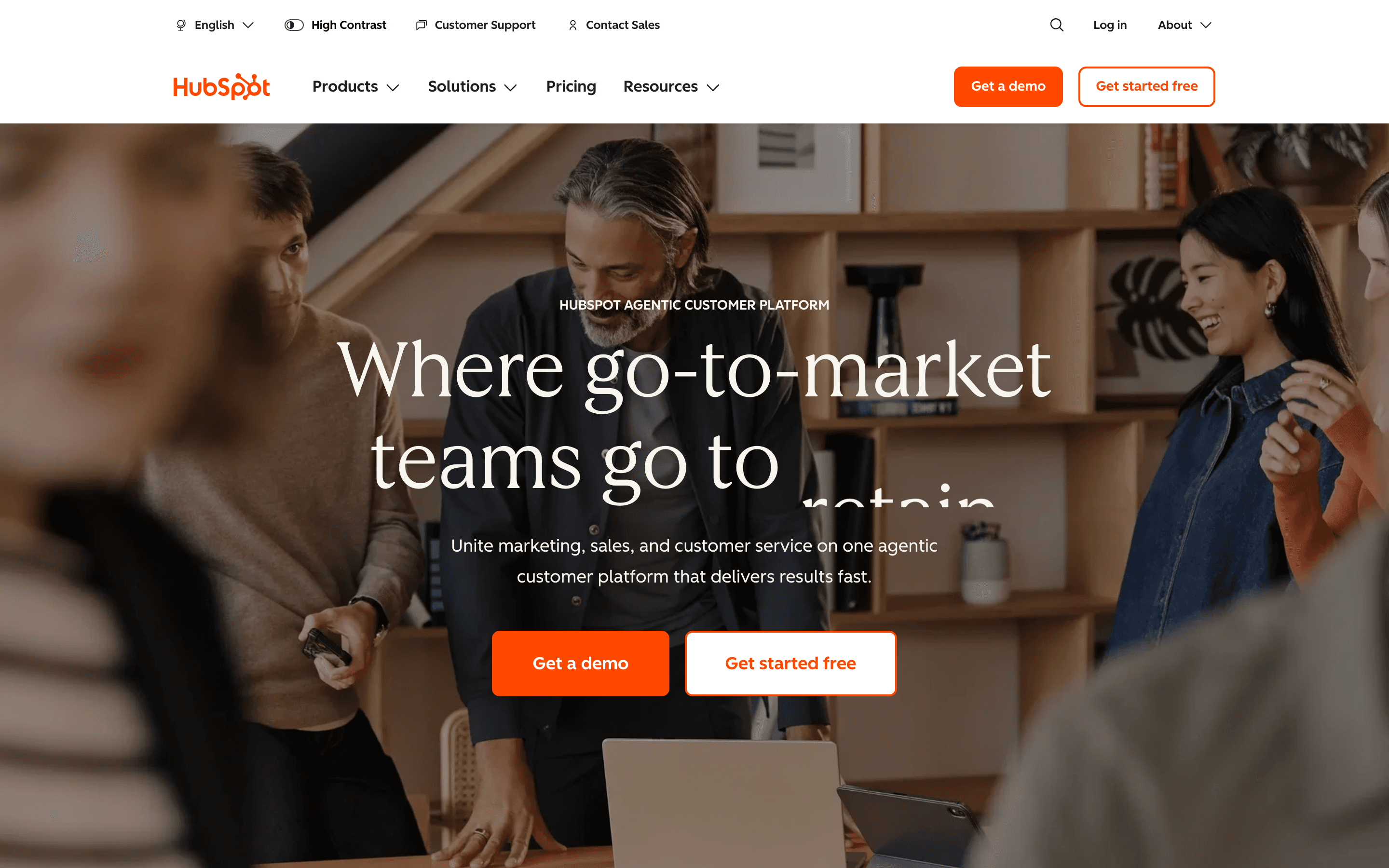
HubSpot is the obvious pick for a team that wants free forever rather than folk's 2-week trial. The free CRM covers 2 users with contact and deal management, live chat, and email tracking, no credit card, no expiration date. But HubSpot is a much bigger platform than folk: separate Marketing, Sales, Service, and Content Hubs are each sold and priced on their own, and the jump from free to Sales Hub Professional at $90/seat/month plus a $1,500 onboarding fee is a steep step compared with folk's flat per-seat Premium price. HubSpot has no equivalent to folkX's LinkedIn-native contact capture; its strength is one shared record across marketing, sales, and support once you're paying for multiple Hubs. Good for a team planning to grow into a full platform, more than a team that just wants a smart contact list.
Pros
- + One contact record shared across marketing, sales, and service cuts down on duplicate data entry
- + The free CRM plan has no time limit and needs no credit card to start
- + A large ecosystem of native integrations and a marketplace of third-party apps
Cons
- – Marketing Hub pricing tracks marketing contact volume, so costs can rise as your list grows even without adding seats
- – Professional and Enterprise tiers on Sales and Marketing Hub carry separate one-time onboarding fees, from $1,500 to $7,000 depending on hub and tier
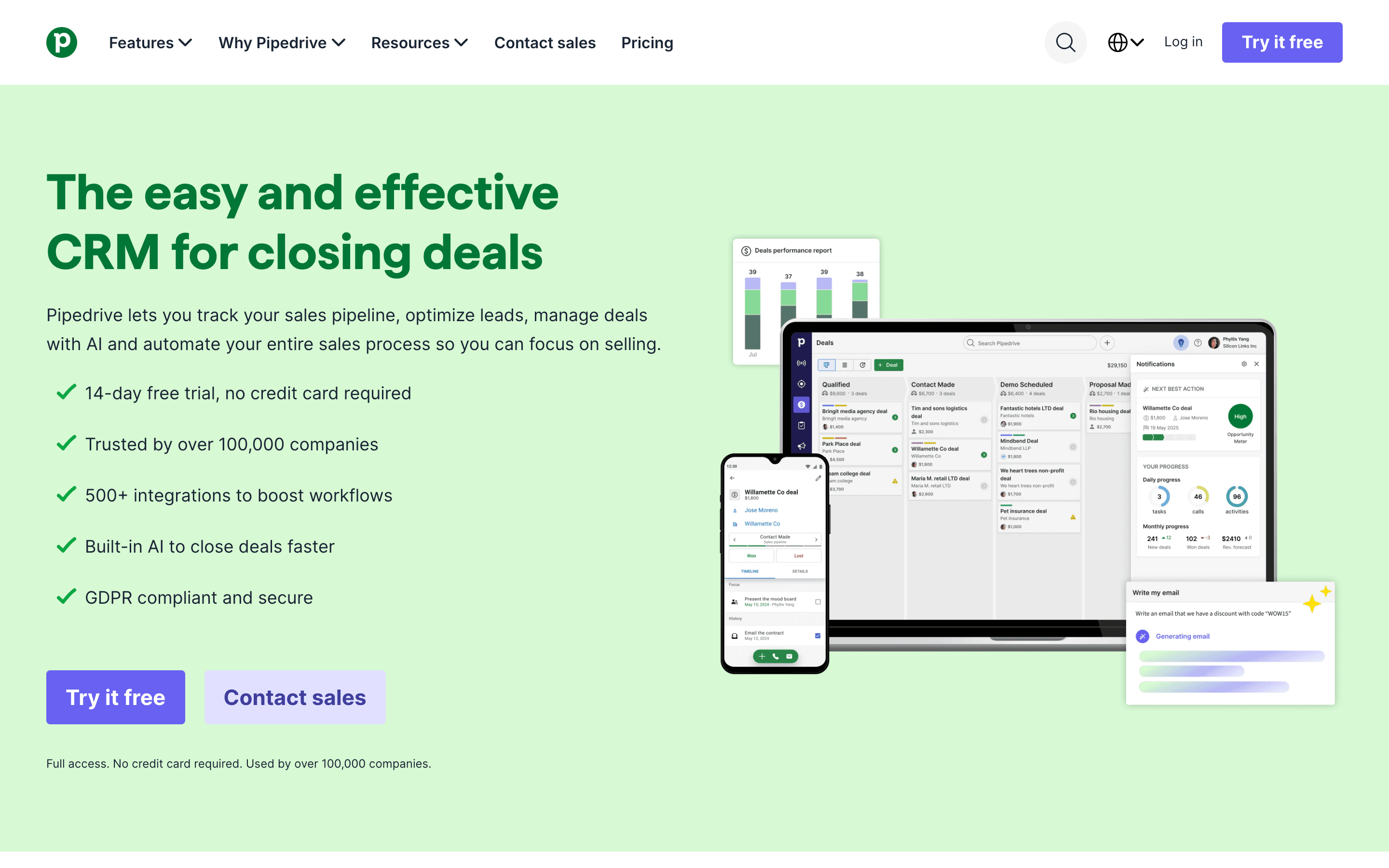
Pipedrive targets the same small and mid-sized sales teams folk does, but it leads with a visual, drag-and-drop pipeline rather than a contact list. Lite starts at $14/seat/month, cheaper than folk's $24 Standard tier, and includes an AI Sales Assistant and 500+ marketplace integrations from the entry plan, unlike folk which reserves its own deal pipeline for the pricier Premium tier. The tradeoff is two-way email sync and workflow automation don't appear until Growth at $39/seat, and lead-generation tools like LeadBooster cost extra unless you're on Premium or Ultimate. There's no LinkedIn-native capture the way folkX offers. Pick Pipedrive over folk once your team cares more about moving deals through stages than building an enriched contact list from LinkedIn and email.
Pros
- + The pipeline UI is fast to set up and easy for reps to learn with little training
- + AI Sales Assistant and AI-generated reports are included on the entry plans too, not held back for the top tier
- + 500+ marketplace integrations, plus a native MCP server added in June 2026 for connecting CRM data to ChatGPT and Claude
Cons
- – No permanent free plan, unlike some CRM competitors
- – Core revenue-generating features like LeadBooster's chatbot, live chat, and prospecting tools, plus Smart Docs and Campaigns, cost extra unless you're on Premium or Ultimate
Close
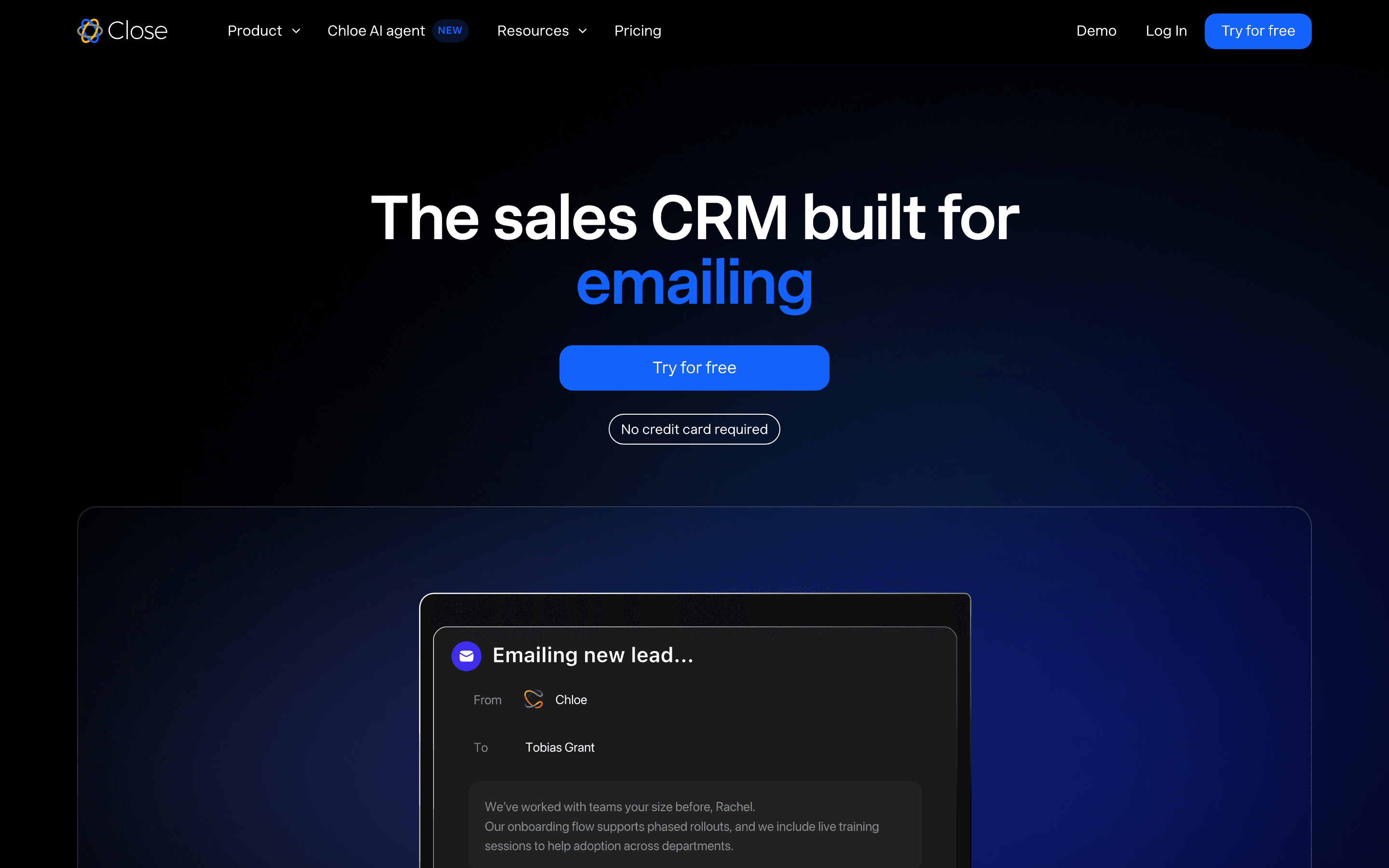
Close is built for small teams doing volume outbound by phone and email, a different job than folk's relationship-list focus. Calling, SMS, and email are native to the product and log straight to the lead record on every plan, but the power dialer itself doesn't show up until the $99/seat Growth tier, with a predictive dialer at $139/seat Scale. Solo and Essentials, at $9 and $35 a seat, only get basic calling, SMS, and email. Its own AI, Chloe, calls and qualifies leads and updates records on her own, running on a monthly credit allowance similar in spirit to folk's Research and Workflow assistants. Close has no LinkedIn-native capture like folkX, and its Solo plan caps at 1 user, so almost any real team lands on the $35/seat Essentials tier or above, with calling minutes billed separately on top. Choose Close over folk when your team's day is built around phone and email volume, not sourcing and enriching contacts from LinkedIn.
Pros
- + Calling, SMS, and email are built into the product, not bolted on, so call and message activity logs straight to the lead record
- + The power dialer speeds up high-volume outbound calling, and the predictive dialer on the Scale plan speeds it up further
- + Workflow automation, multi-step email, call, and SMS sequences with branching, comes starting on the Growth plan instead of a separate add-on product
Cons
- – There's no free-forever tier, only a 14-day trial, so teams can't run it long-term at zero cost the way they can with HubSpot's free CRM
- – The Solo plan caps out at 1 user and 10,000 leads, so almost any real team has to jump straight to the $35-a-seat Essentials tier
Should your product be on this crm & marketing list?
If you build a tool that belongs next to the ones above, submit it. A human reviews every submission. Approved products get their own page with pricing and screenshots, plus a place in the comparisons where they fit. It is free. You sign in with your work email so you can follow the decision, and there is no password to create.
folk alternatives: FAQ
What is the best folk alternative for a small team on a budget?+
Pipedrive's Lite plan starts at $14/seat/month billed annually, cheaper than folk's $24 Standard tier, and includes a real deal pipeline and AI Sales Assistant from the entry tier.
Is there a free alternative to folk?+
Yes. Attio's Free plan supports up to 3 seats and 50,000 records at no cost, and Airtable and HubSpot both have usable free plans too. folk has no free-forever tier, only a 2-week trial.
Which folk alternative comes closest to folkX's LinkedIn contact capture?+
None of these tools match folkX's LinkedIn and Sales Navigator extension directly. Copper and Attio come closest by auto-capturing contacts and activity from email and calendar sync instead.
Which alternative is best once my team needs to track deals and forecast revenue?+
Pipedrive is the pick for forecasting, but only from its $39/seat Growth tier up. Lite, at $14/seat, gets the pipeline itself, not forecasting. Close builds a real pipeline and call and email tracking into every plan, but doesn't offer sales forecasting at any tier. folk, meanwhile, locks deal tracking and custom objects behind its pricier Premium tier.
folk alternatives: pricing compared
Entry price, billing model, and whether pricing is public. 7 of 7 publish pricing you can check without talking to sales.
| Tool | Starting price | Billing | Free option | Pricing disclosed |
|---|---|---|---|---|
| folk | $24/seat/mo | per-seat | Trial (2 weeks, no credit card required) | Partly public |
| Attio | $29/seat/mo | per-seat | Yes | Partly public |
| Copper | $23/seat/mo | per-seat | Trial (14 days, no credit card required) | Public |
| Airtable | $20/seat/mo | per-seat | Yes | Partly public |
| HubSpot | $7/seat/mo | tiered | Yes | Public |
| Pipedrive | $14/seat/mo | per-seat | Trial (14 days, full access to the selected plan, no credit card required) | Public |
| Close | $9/seat/mo | per-seat | Trial (14 days, no credit card required) | Public |
How we made these picks. We compare tools on public pricing, features, and hands-on assessment, then verify every price against the vendor's own page. We never accept payment for rankings. Read the full methodology. Spotted an error? Report it.