Documenso Review
Open-source e-signature platform you can run in the cloud or self-host
Is this your product? Claim this page · Request a change
Looking for a Documenso alternative? See our ranked comparison.→What is Documenso?
Documenso is an e-signature tool built as an open-source alternative to DocuSign. You can use it as a hosted SaaS product or self-host it on your own server, since the full codebase is on GitHub under an AGPL license.
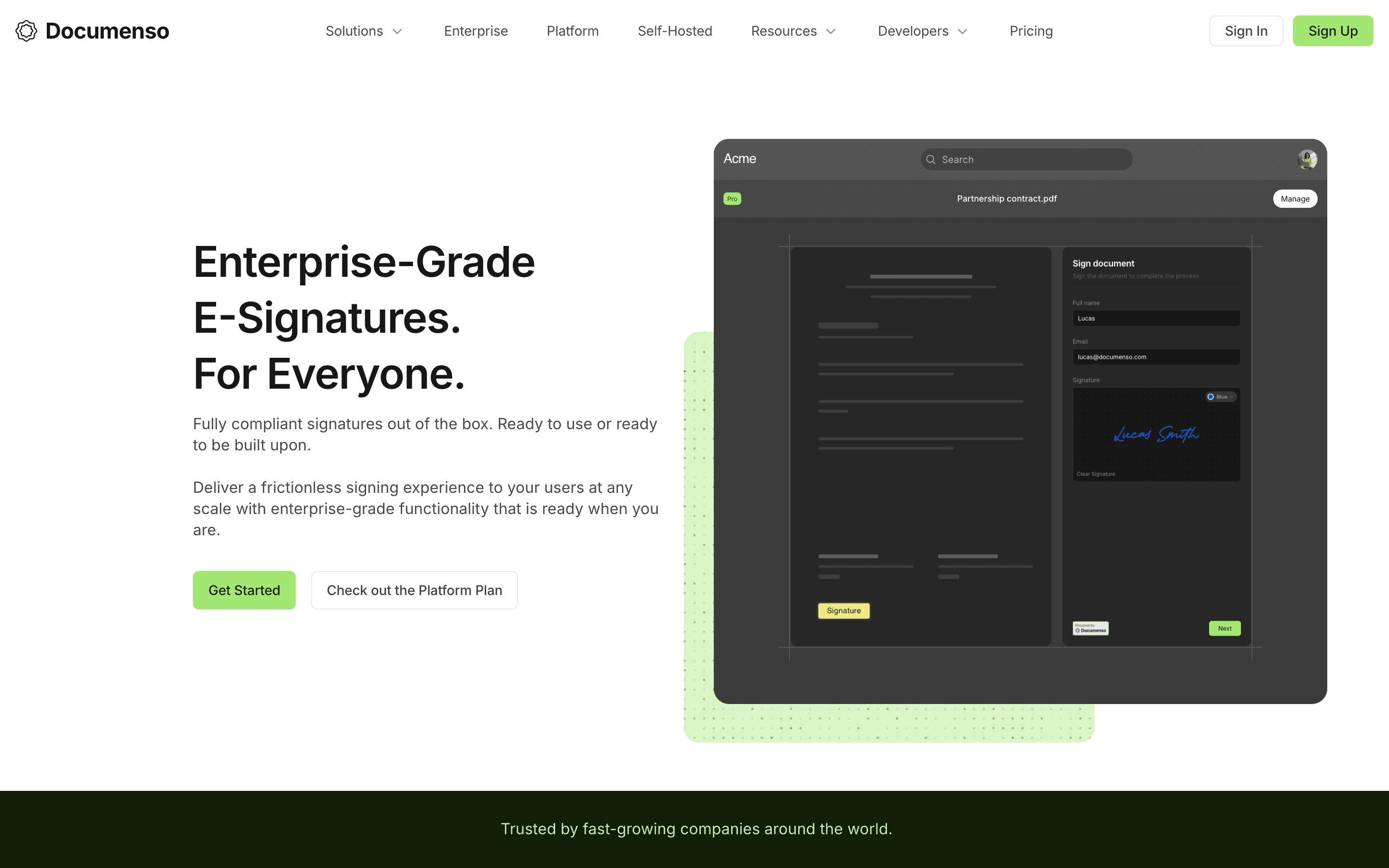
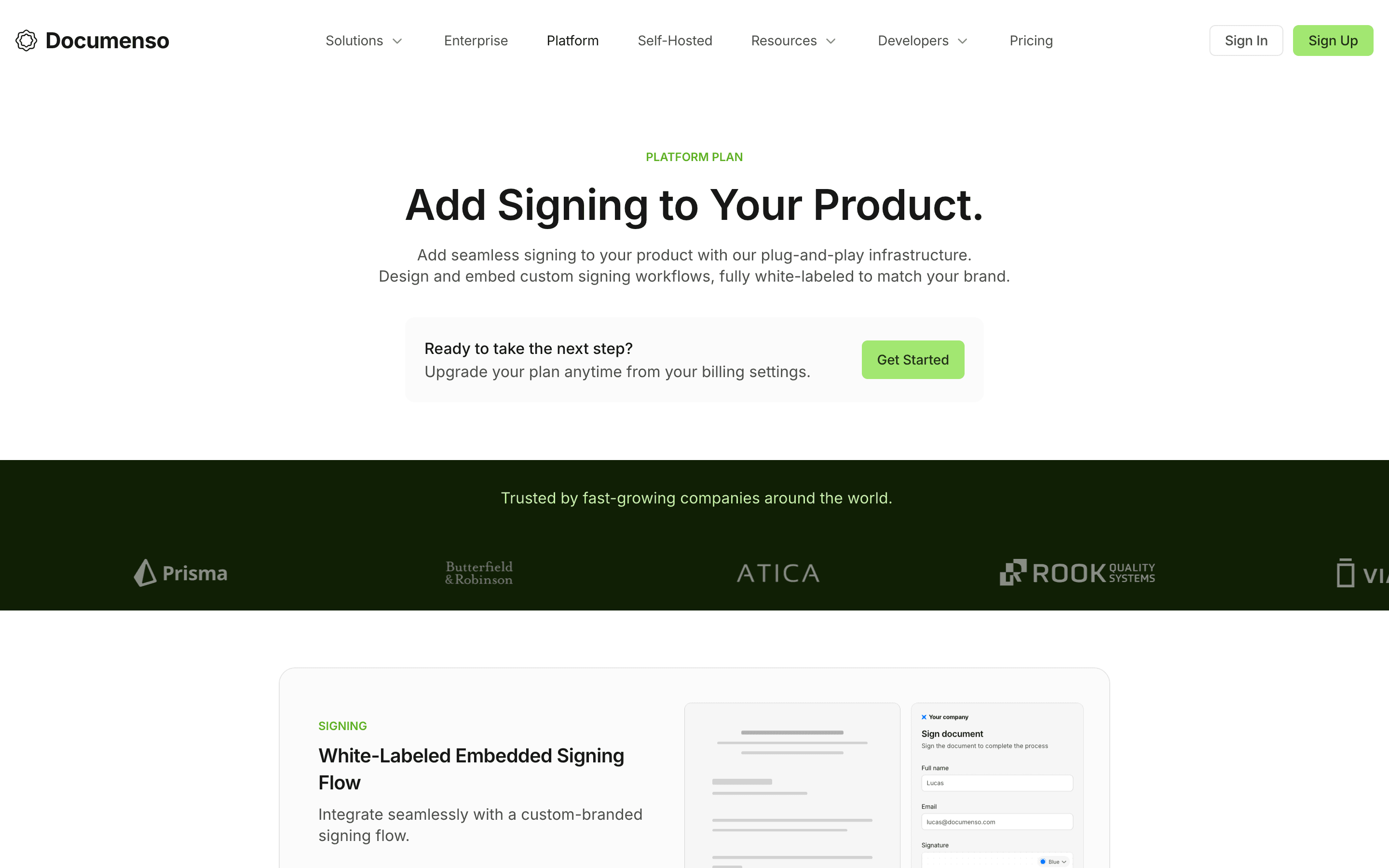
The product covers the core signing workflow: upload a document, place signature and date fields, send it to recipients, and get a signed, audit-trailed PDF back. It supports sequential and parallel signing order, an approver role, and bulk sending a template to many recipients from a CSV. It also has an API and embedded signing so developers can build signing into their own product rather than sending customers off-site.
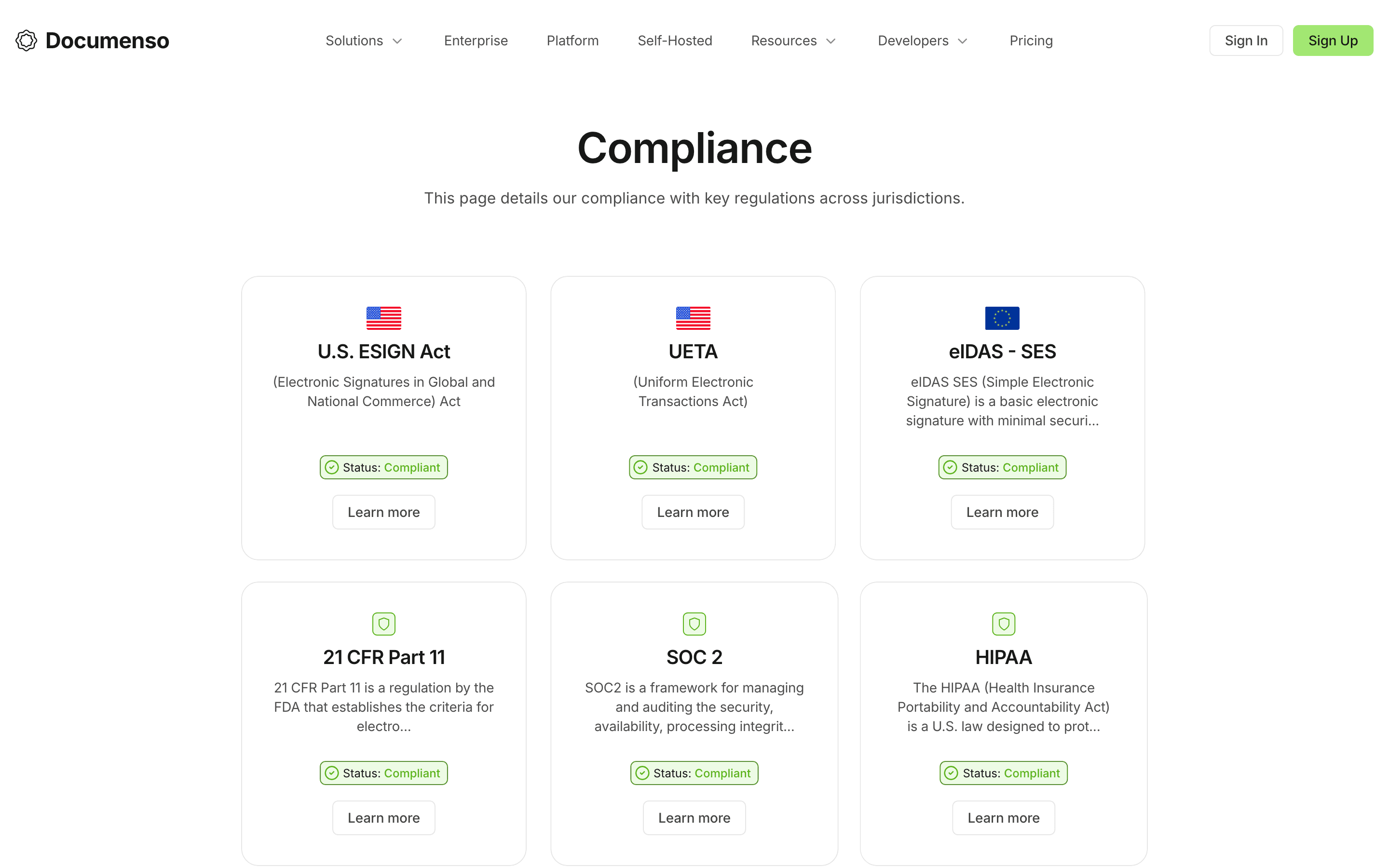
It does not try to be a full contract lifecycle platform. There is no native payment collection field, and signer identity checks are limited to account login, passkey, password, or two-factor codes rather than SMS or government ID verification. It already claims SOC 2 and HIPAA compliance, but eIDAS Advanced and Qualified Electronic Signatures are listed as planned for the second half of 2026, not shipped yet.
Documenso screenshots
Who it's for
- ✓ Startups and small teams that want e-signature without per-seat pricing that scales into hundreds of dollars a month
- ✓ Companies with an engineering team willing to self-host for full control of contract data
- ✓ Developers who want to embed signing into their own product via API rather than send customers to a third-party portal
Who should look elsewhere
- ✗ Regulated industries that need SMS verification, ID checks, or knowledge-based authentication for high-value contracts
- ✗ Companies that need eIDAS Advanced or Qualified Electronic Signatures today; Documenso lists these as planned for H2 2026 but has not shipped them yet
- ✗ Companies that want a large library of native integrations without custom development
Pros
- + Free plan and open-source self-hosting mean you can run it at close to zero licensing cost
- + Full source code is public, so you can audit exactly how your documents and signatures are handled
- + API access and embedded signing are included even on lower-priced plans, not locked to enterprise tiers
- + Supports sequential signing order, an approver role, and CSV-based bulk send out of the box
- + Already claims SOC 2 and HIPAA compliance alongside ESIGN Act, UETA, and 21 CFR Part 11
Cons
- – No SMS verification, knowledge-based authentication, or government ID checks, which some contracts and industries require
- – No native payment collection field in the signing flow
- – Free plan caps out at 5 documents a month, which is tight for regular business use
- – Far fewer native integrations than DocuSign; beyond Zapier and the API/webhooks you are largely building your own connections
- – eIDAS Advanced and Qualified Electronic Signatures are not live yet, only planned for H2 2026
Documenso pricing
At about $25/month to start, it sits at the higher end of E-signature & Document Workflow pricing.
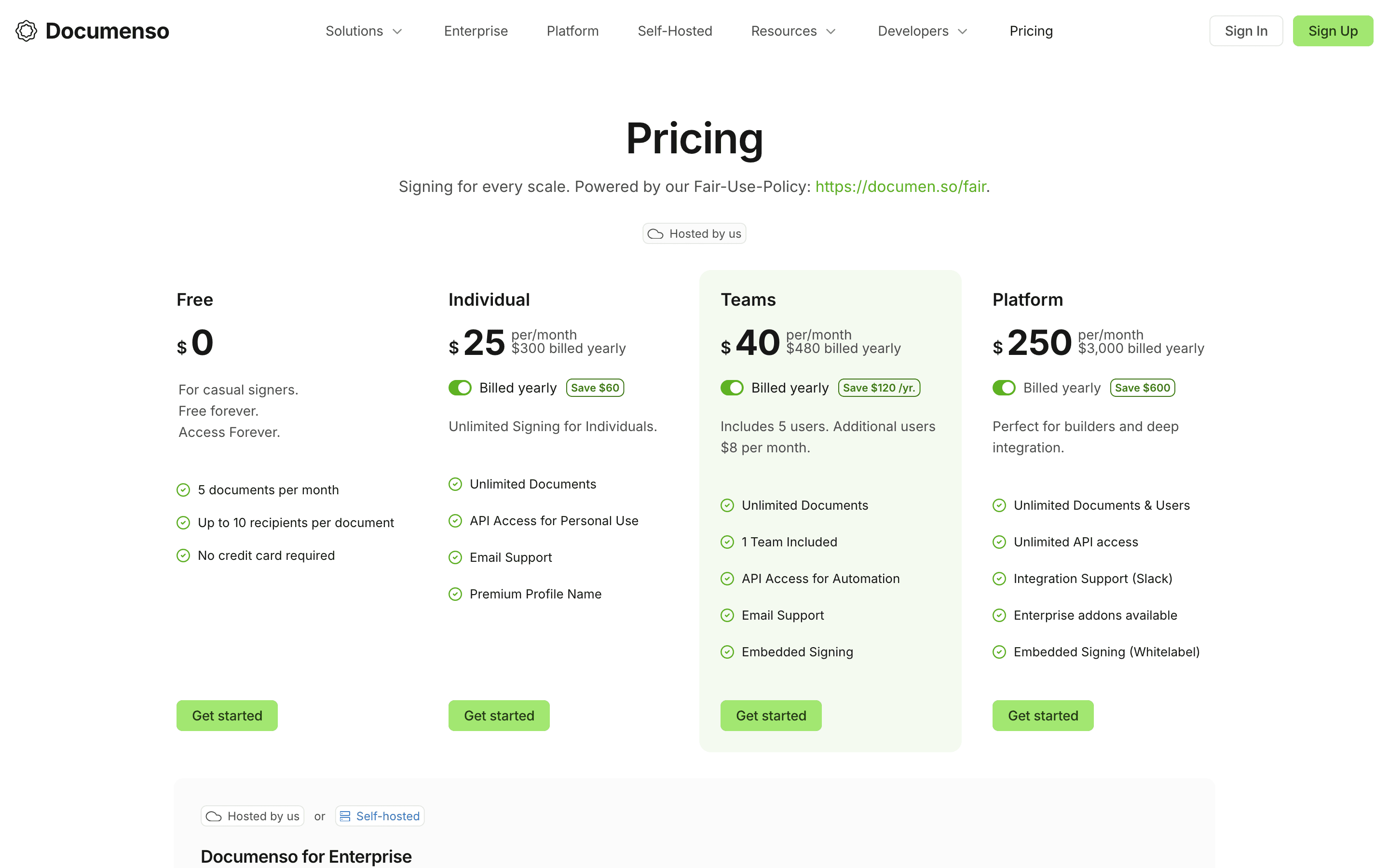
| Plan | Price | Highlights |
|---|---|---|
| Free | Free | 5 documents per month · Up to 10 recipients per document · No credit card required |
| Individual | $25/seat/mo | Unlimited documents · API access for personal use · Premium profile name |
| Teams | $40/seat/mo | 5 users included, additional users $8/month each · 1 team included · API access for automation · Embedded signing |
| Platform | $250/mo | Unlimited documents and users · Unlimited API access · White-labeled embedded signing |
| Enterprise | Custom | Cloud or self-hosted deployment · Advanced compliance, licensing, and support terms |
Individual, Teams, and Platform prices are the annual-billed monthly rate (Individual $300/yr, Teams $480/yr, Platform $3,000/yr). Documenso does not list a separate monthly-billing price on its pricing page. The code is also AGPL-licensed and free to self-host, so cost for a self-hosted team is mainly server hosting rather than a per-seat fee.
Pricing verified July 7, 2026 · source
How Documenso's pricing compares
Documenso next to its closest alternatives on entry price, billing, and whether pricing is public.
| Tool | Starting price | Billing | Free option | Pricing disclosed |
|---|---|---|---|---|
| Documenso | $25/seat/mo | tiered | Yes | Partly public |
| DocuSign | $11/seat/mo | per-seat | Trial (30 days free, no credit card required) | Partly public |
| PandaDoc | $19/seat/mo | per-seat | Yes | Partly public |
| Dropbox Sign | $15/seat/mo | per-seat | Yes | Partly public |
| SignNow | $8/mo | tiered | Trial (7 days, no credit card required) | Partly public |
Is Documenso still actively developed?
Last significant update: June 2026. Paused merging external pull requests as a security measure against supply-chain attacks targeting open-source projects
Top Documenso alternatives
Documenso FAQ
Is Documenso free?+
Yes, there is a free plan that includes 5 documents a month and up to 10 recipients per document, with no credit card required. Paid plans start at $25/month for one user, billed annually.
Can I self-host Documenso instead of paying for the cloud plan?+
Yes. Documenso's code is open source under an AGPL license, so you can self-host it on your own infrastructure for the cost of hosting rather than a per-seat fee. Documenso also sells a paid self-hosted Business Edition with unlimited features and dedicated support.
Does Documenso support advanced identity verification like SMS or ID checks?+
No. Signer authentication is limited to account login, passkey, password, and two-factor codes. There is no SMS verification, knowledge-based authentication, or government ID check, which limits its fit for high-value contracts or regulated industries that require those checks.
How does Documenso pricing compare to DocuSign?+
Documenso's cloud plans undercut DocuSign's per-seat plans (DocuSign Standard is $30/user/month and Business Pro is $45/user/month), and a self-hosted deployment can cost close to just server hosting fees. The tradeoff is fewer built-in integrations and shallower identity-verification options than DocuSign.