Top ActiveCampaign Alternatives in 2026
Here for ActiveCampaign itself? See the full ActiveCampaign profile, pricing & reviews →
Suggest a change- If you want ActiveCampaign's mix of email, automation, and CRM without contact-count pricing that jumps at every threshold, choose Brevo. Brevo bills by how many emails you send each month rather than by contacts stored, so a large, quiet list doesn't force you into a higher tier.
- If you're an ecommerce brand and want automation to react to real orders and browsing behavior, not just email opens, choose Klaviyo. Klaviyo syncs order and browsing data straight from Shopify and other store platforms, so segments and flows key off actual purchase behavior.
- If you need deep, multi-step behavioral journeys across email, SMS, push, and in-app, not just email and SMS, choose Customer.io. its workflow builder branches on real event data across five channels, going further into product-triggered messaging than ActiveCampaign's automation does.
- If you're a solo creator or newsletter writer who wants a real free plan and never used ActiveCampaign's CRM, choose Kit (ConvertKit). its free plan covers up to 10,000 subscribers with unlimited broadcasts, far past anything ActiveCampaign offers since it has no free tier at all.
- If your sales team actively runs deals through ActiveCampaign's built-in CRM and pipeline, choose stay on ActiveCampaign. none of these alternatives bundle a comparable CRM and sales pipeline into the same plan as their email marketing and automation.
ActiveCampaign packages email marketing, automation, and a built-in CRM into one tool, priced by plan tier and contact count with no free plan at any level. Most people who go looking for an alternative are reacting to one of two things: contact-count pricing that jumps sharply as a list grows, or an automation builder and CRM combo that costs more than they actually use.
The tools below range from close, general-purpose matches to specialists that beat ActiveCampaign at one specific job. Brevo and Mailchimp are the most direct swaps for teams that mainly used email and automation. Klaviyo fits ecommerce brands that want automation tied to store data, Customer.io fits teams whose behavior-based journeys have outgrown ActiveCampaign's builder, and MailerLite and Kit fit smaller budgets and solo creators who never touched ActiveCampaign's CRM side.
ActiveCampaign alternatives compared
| Tool | Best for | Starting price | Free option | Last update |
|---|---|---|---|---|
| Brevo | Small businesses and solo marketers who want email, SMS, and basic CRM without paying per contact | $9/mo | Yes | May 2026 |
| Mailchimp | Small businesses and solo marketers who want a free plan to start on | $13/mo | Yes | May 2026 |
| Customer.ioBest for complex behavioral automation | Product and lifecycle marketing teams that trigger messages off in-app events rather than list imports | $100/mo | No | June 2026 |
| KlaviyoBest for ecommerce brands | Ecommerce brands that want email and SMS automation tied directly to store data like purchases, browsing, and cart activity | $20/mo | Yes | June 2026 |
| MailerLiteBest value for simple automation | Small businesses and creators who want a free plan to start on and will grow into paid tiers | $12/seat/mo | Yes | June 2026 |
| Kit (ConvertKit)Best free alternative | Solo creators, newsletter writers, and course or digital product sellers who want automation without hiring a marketing ops person | $39/seat/mo | Yes | June 2026 |
Why teams switch from ActiveCampaign
ActiveCampaign has no free plan at any tier
The only way to try ActiveCampaign at no cost is a 14-day trial. There's no permanent free tier like Brevo, Mailchimp, Klaviyo, MailerLite, or Kit all offer.
Pricing jumps sharply at each contact-count threshold
ActiveCampaign prices by plan tier combined with contact count, and the whole plan moves to a higher band once you cross a threshold, not just the extra contacts.
New accounts are now billed on total stored contacts, not just active ones
As of November 3, 2025, new signups are billed for all contacts including unsubscribed and bounced ones. Accounts created before that date keep active-contact billing.
The automation builder has a steep learning curve
Reviewers commonly describe needing several weeks of regular use before feeling comfortable building branching workflows in ActiveCampaign.
The best ActiveCampaign alternatives, ranked
Brevo
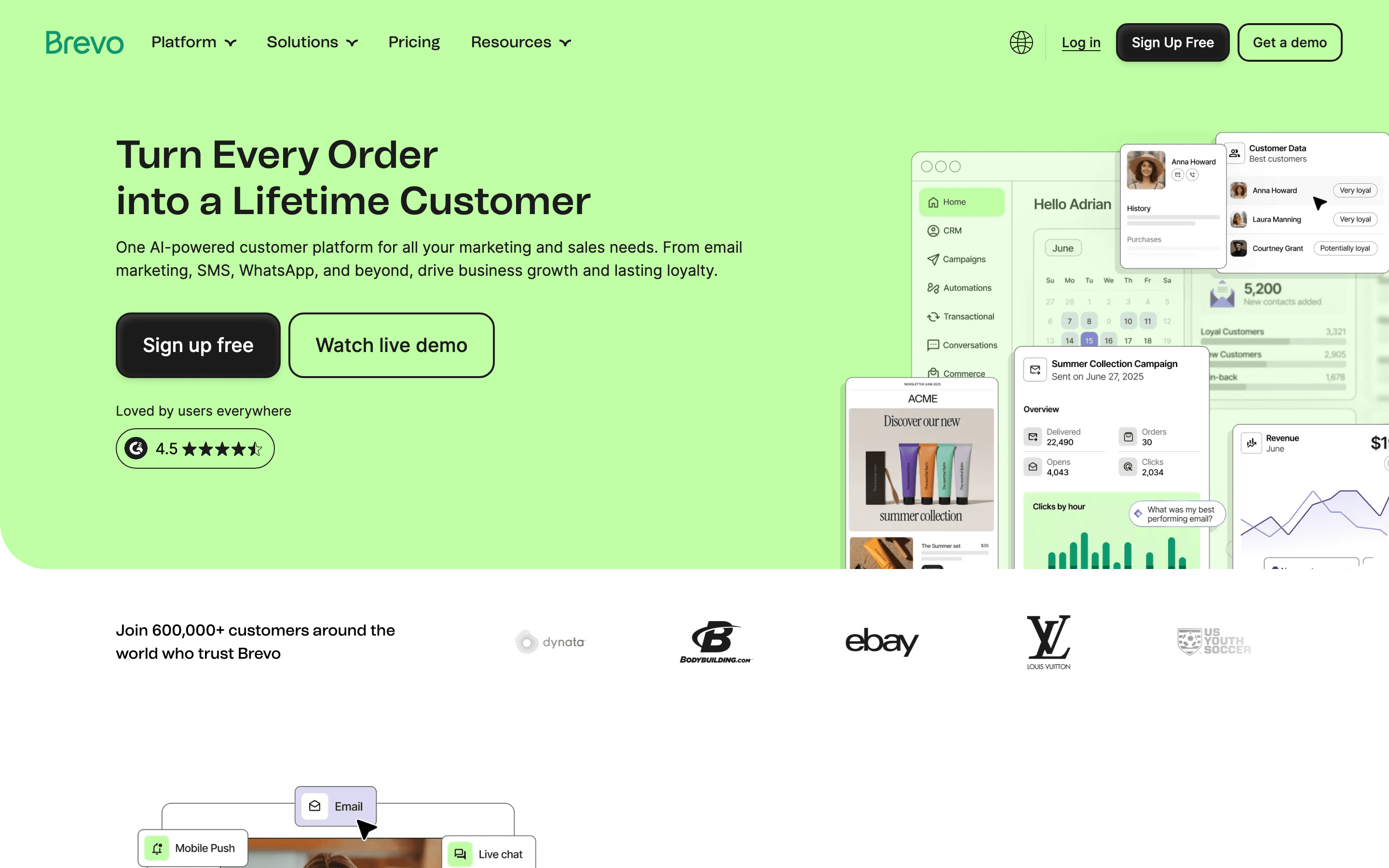
Brevo is the closest match to ActiveCampaign's all-in-one pitch: email, SMS, WhatsApp, and a CRM live under one login. The big difference is billing. ActiveCampaign charges by plan tier and contact count, so a growing list forces you into a higher tier even if you barely email those people. Brevo charges by how many emails you actually send each month, so a large, quiet list costs less to run.
The free plan is real too, covering SMS and WhatsApp access plus 300 emails a day, something ActiveCampaign never offers at any price since it has no free tier at all. The CRM and sales pipeline are separate paid add-ons on Brevo rather than bundled into every tier the way they are on ActiveCampaign's Plus and above, and Brevo's Professional tier jumps to $499 a month, a steep step up from Standard's $18. For teams that want automation and multi-channel messaging without contact-based pricing anxiety, Brevo is the strongest switch.
Pros
- + Pricing is based on email volume, not contact count, so large lists with low send frequency stay cheap
- + Free plan includes SMS, WhatsApp, and CRM access, not just email
- + Transactional email (API, SMTP, webhooks) is included on every plan, even the free one
Cons
- – The free and Starter plans still show the Brevo logo unless you pay extra to remove it
- – CRM and sales pipeline features are separate paid add-ons (Sales Essentials, Sales Advanced), not included in the core plans
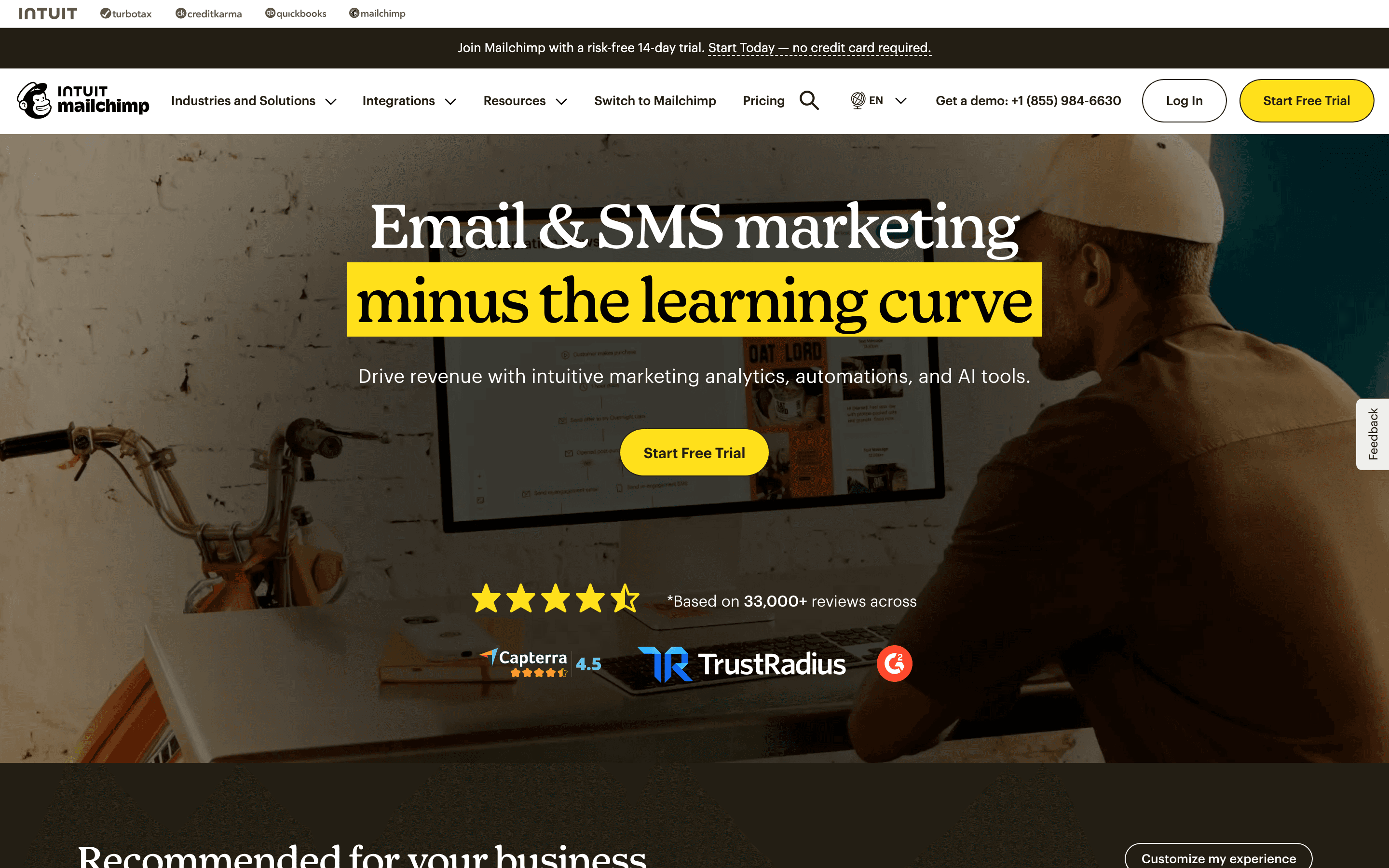
Mailchimp is the most familiar name to switch to, and it covers the same core ground as ActiveCampaign: campaigns, automation, and a free tier to start on. Its automation builder is simpler though, capped at 4 steps on the Essentials plan, so branching workflows require moving up to Standard at $20 a month.
Ecommerce integrations with Shopify, WooCommerce, and Wix are a real strength, with built-in revenue tracking that ActiveCampaign doesn't match out of the box. Pricing is also contact-count based here, so the same problem that pushes people off ActiveCampaign, list growth raising the bill, exists on Mailchimp too, and unsubscribed contacts still count against your limit unless you archive them manually. There's no built-in CRM or sales pipeline at all. Mailchimp suits teams that want a recognizable, well-supported tool and don't need ActiveCampaign's CRM or its deeper automation branching.
Pros
- + Genuinely free plan for very small lists, no credit card needed
- + Generative AI features included in Standard and Premium at no extra add-on cost
- + Broad e-commerce integrations (Shopify, WooCommerce, Wix) with built-in revenue tracking
Cons
- – Price scales with contact count, so a list of 5,000+ contacts costs far more than the advertised starting price
- – Free plan lost half its contact and send limits on February 17, 2026 (down to 250 contacts, 500 sends from 500 contacts, 1,000 sends)
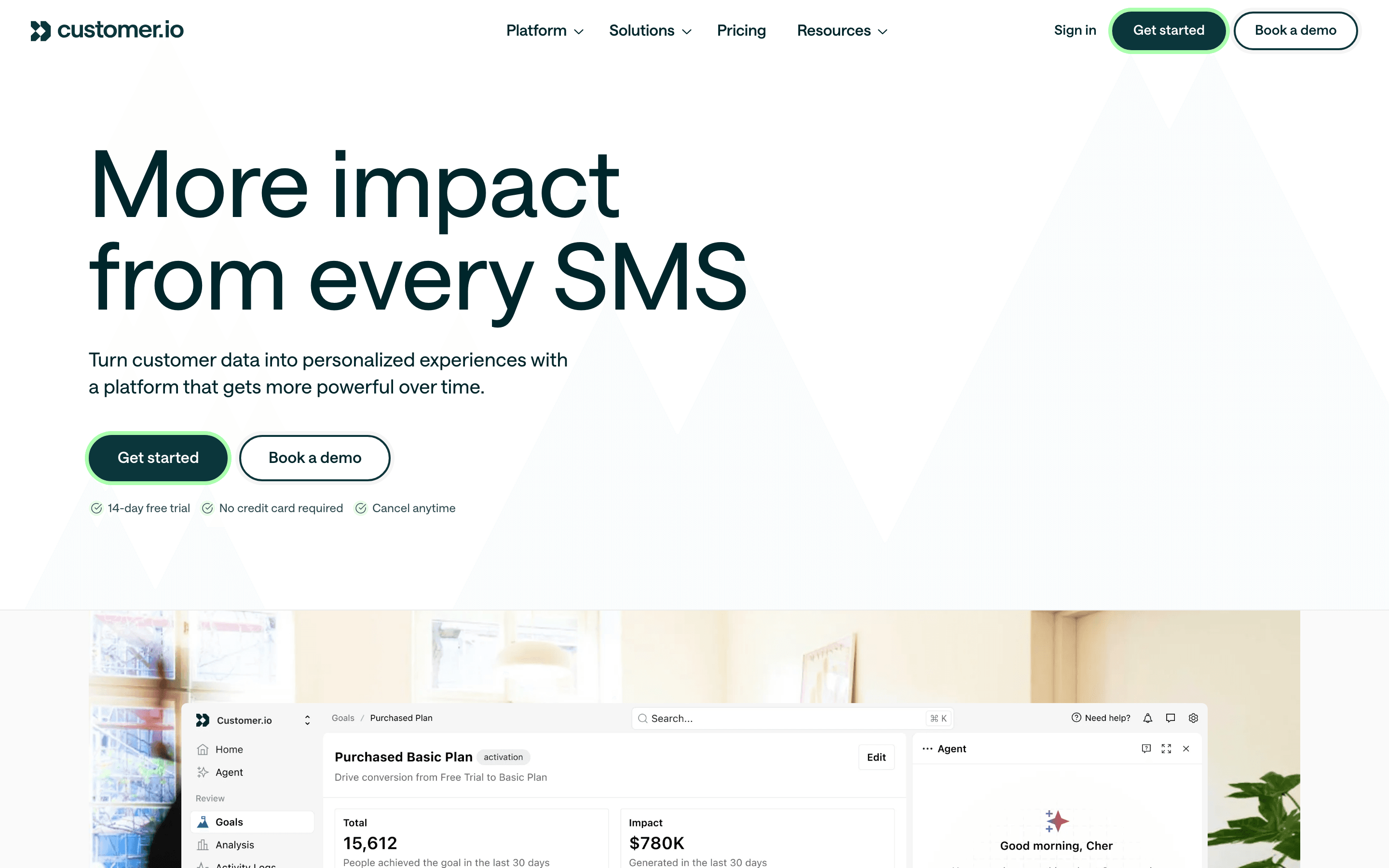
Customer.io matches ActiveCampaign's automation ambition and then goes further into product-triggered messaging: email, SMS, push, in-app, and webhooks, all branching on real event data rather than list membership. Its workflow builder handles the kind of complex, multi-step journeys ActiveCampaign's Pro tier is built for, and its profile and object data model works well for SaaS teams already tracking product usage.
The tradeoff is price and complexity. Essentials starts at $100 a month, more than six times ActiveCampaign's $15 Starter tier, and there's no free plan or CRM at all. Setup takes real engineering time to wire up events and data, more than ActiveCampaign typically needs from a small marketing team. Companies that raised under $10 million can get 12 months free through the Startup Program. Customer.io fits teams that outgrew ActiveCampaign's automation ceiling, not teams looking to spend less or keep a bundled CRM.
Pros
- + Workflow builder handles complex, multi-channel behavioral journeys well
- + Profile and object data model supports messaging based on product usage, not just list membership
- + Startup Program gives qualifying early-stage companies 12 months free
Cons
- – Pricing above Essentials is not posted; Premium and Enterprise require talking to sales
- – Cost scales with profile count, so it can get expensive fast as your user base grows
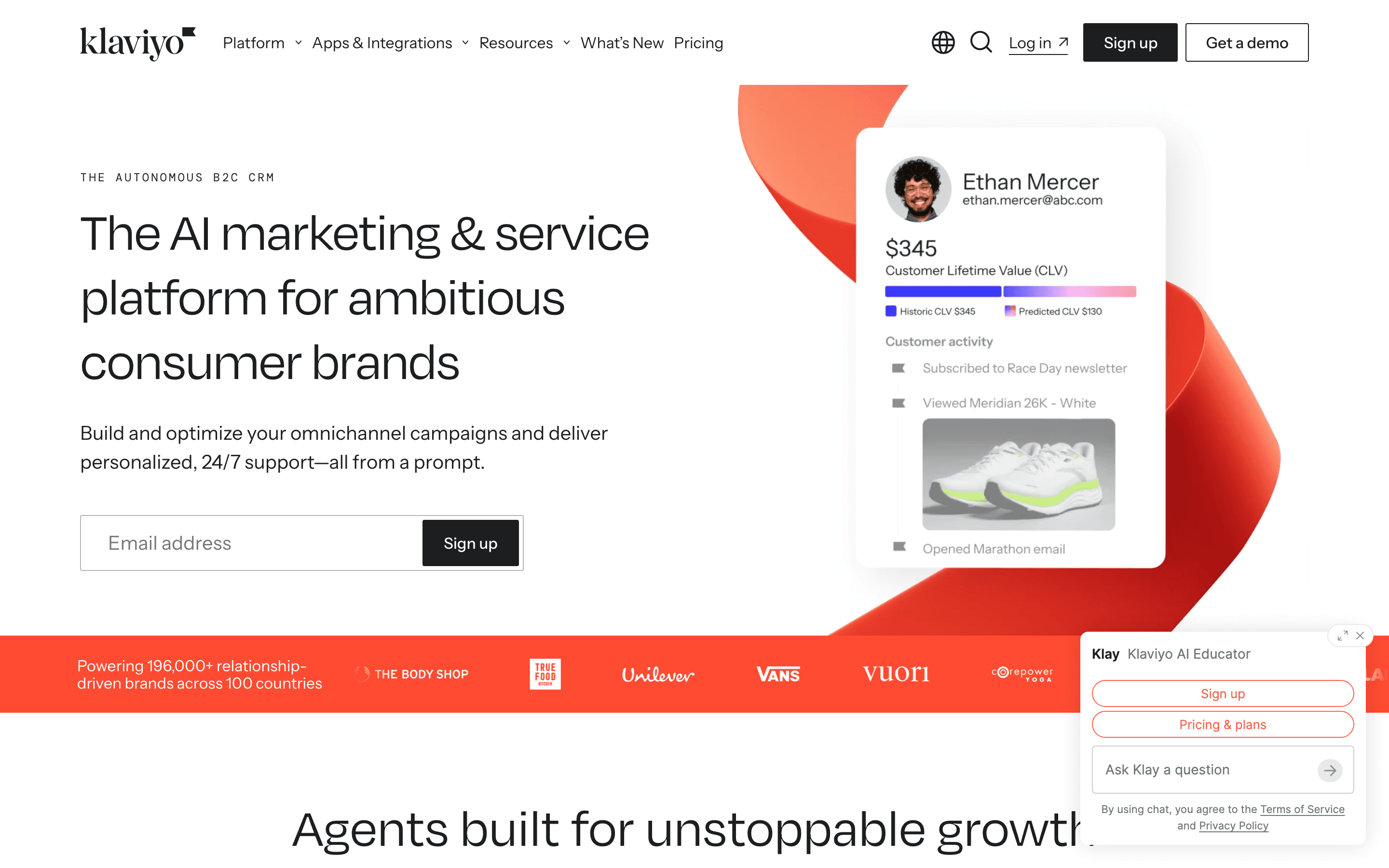
Klaviyo is the switch for ecommerce brands that picked ActiveCampaign but wish their automations reacted to actual store data. It syncs orders, browsing, and cart activity straight from Shopify and other platforms, so segments and flows key off real purchase behavior instead of just email engagement, something ActiveCampaign's integrations approximate but don't build in natively.
Every Email and Email+SMS tier ships the same feature set, so upgrading is about active profile count, not unlocking functionality, unlike ActiveCampaign's tier-gated features like predictive sending. There's no CRM or sales pipeline bundled in, and Klaviyo bills on total active profiles rather than contacts you actually message, so a large, disengaged list still costs money. For a non-ecommerce business, or one that values ActiveCampaign's bundled CRM, Klaviyo is a weaker fit despite its usable free tier and strong automation.
Pros
- + Deep, native integrations with Shopify and other ecommerce platforms, so segments and flows use real purchase and browsing data
- + Same core features at every Email/Email+SMS tier, so upgrading is mostly about list size, not unlocking functionality
- + Free plan is usable for very small lists (up to 250 profiles) before you need a card
Cons
- – Price is based on total active profiles, not just people you actively email, so a large stale list costs more even if you rarely message most of it
- – Newer products like Customer Hub, Helpdesk, Customer Agent, and Marketing Analytics are billed as separate add-ons on top of the core email plan, each with its own pricing basis (profiles, tickets, or conversations)
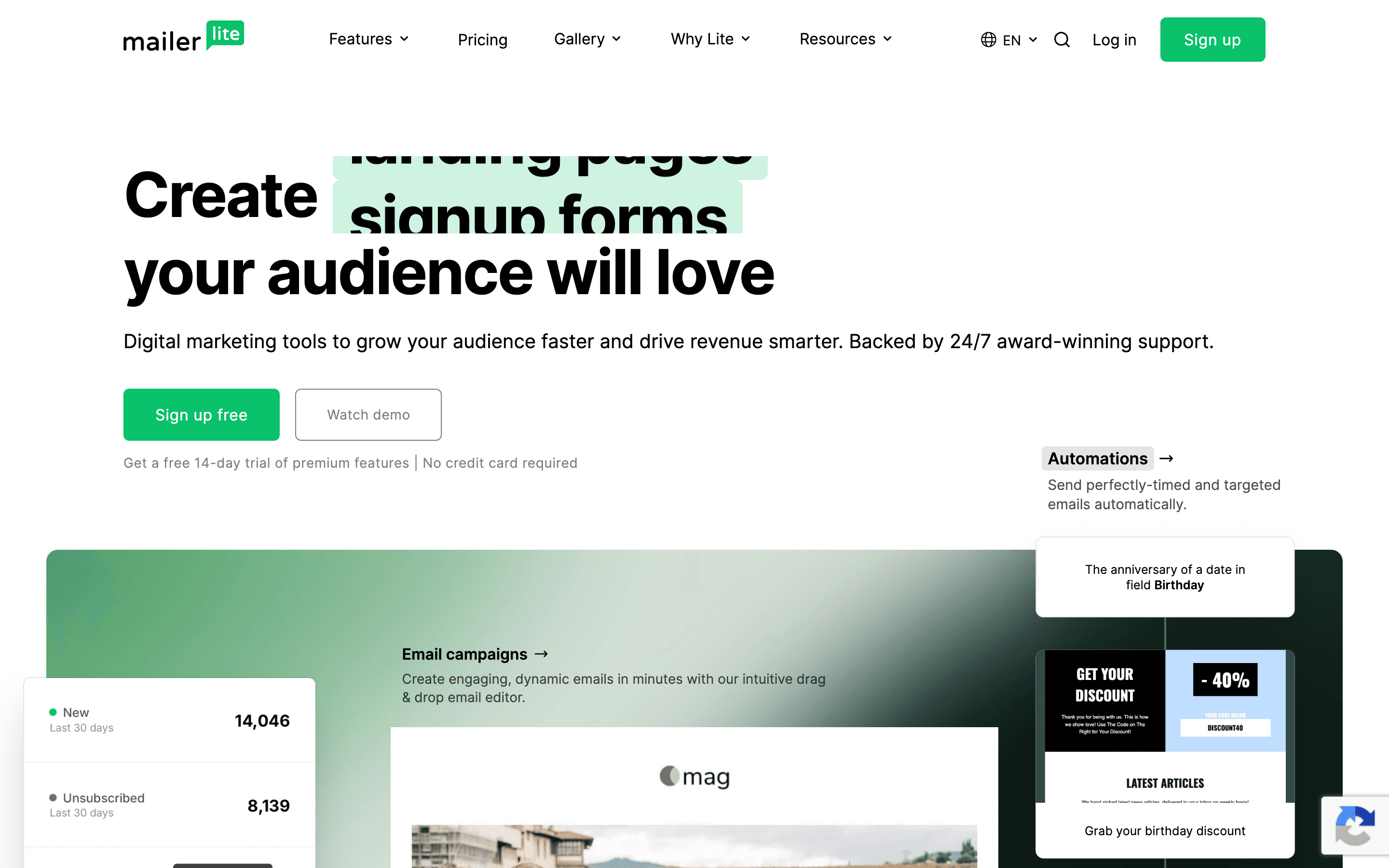
MailerLite is the budget pick for teams that found ActiveCampaign's automation builder and pricing more than they needed. Comfort starts at $12 a month and Power at $25, both with unlimited monthly sends once you're on them, well under ActiveCampaign's $49 Plus tier for roughly comparable automation depth.
The free plan still exists, though it shrank in June 2026 to 250 subscribers and 2,500 emails a month. Automation here covers the common cases, welcome series, abandoned cart, tagging, but doesn't reach the branching complexity ActiveCampaign's builder supports, and there's no CRM or sales pipeline at all. Support and reporting are lighter too. MailerLite works well for small businesses and creators who want one simple tool for email, forms, and a basic website, not a team replacing ActiveCampaign's sales-side automation.
Pros
- + Comfort and Power plans include unlimited monthly email sends once you're on them
- + AI writing assistant and an AI-driven custom HTML editor are included on paid plans
- + Nonprofits get 30% off any paid plan
Cons
- – The free plan was cut in June 2026 from 500 to 250 subscribers and from 12,000 to 2,500 monthly emails
- – Free plan lists caps of 3 automations, 3 forms, 1 landing page, 1 website, and 1 digital product, though MailerLite won't enforce those limits until August 13, 2026
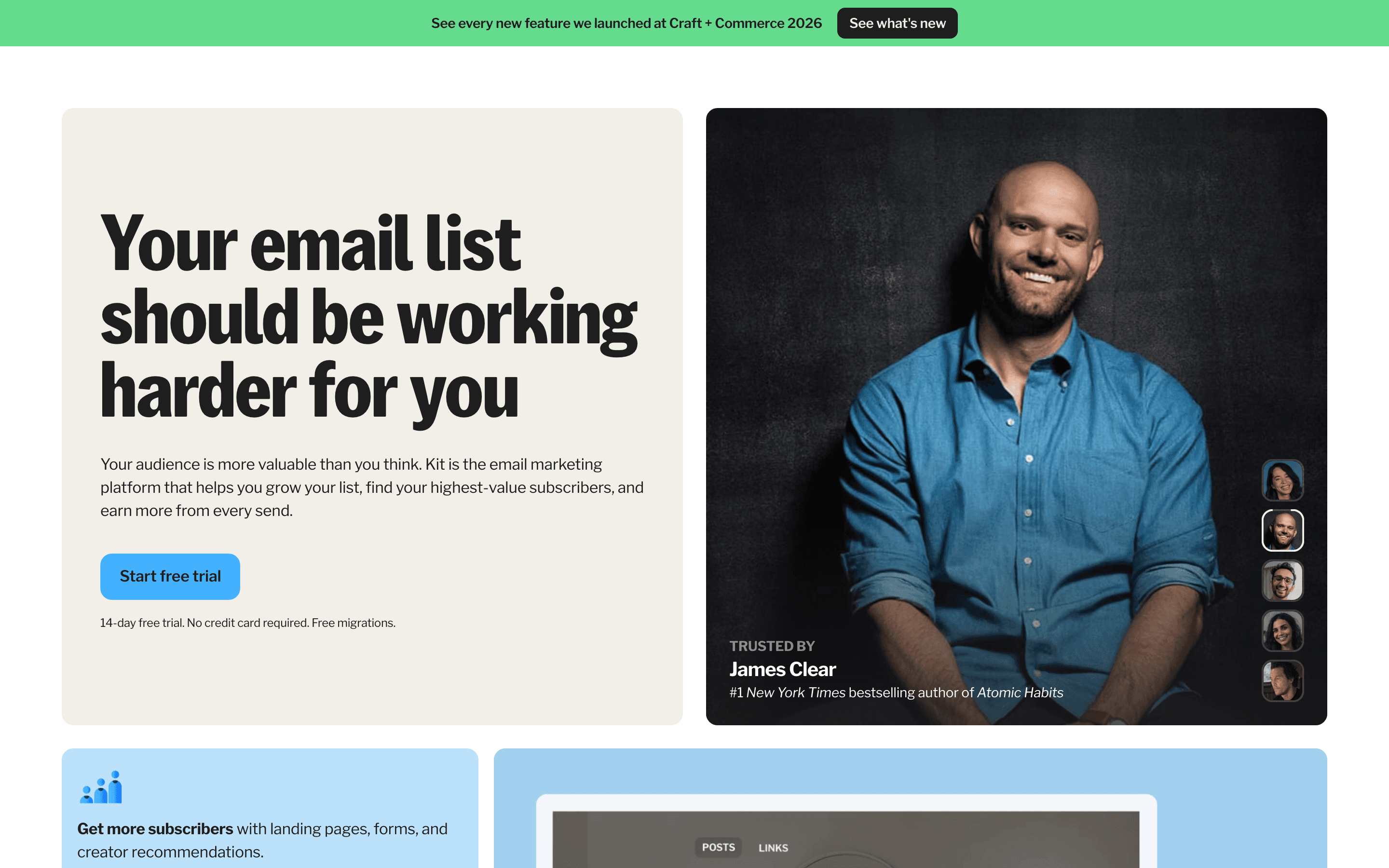
Kit, formerly ConvertKit, is built for solo creators, newsletter writers, and course sellers, a narrower audience than ActiveCampaign's small-business and sales-team focus. Its free plan is unusually generous, covering up to 10,000 subscribers with unlimited broadcasts, forms, and landing pages, far past what ActiveCampaign offers at any price since it has no free tier at all.
Paid plans add unlimited visual automations and SMS, but there's no CRM or sales pipeline, and enterprise features like multi-user permissions and predictive segmentation aren't part of the product. Pricing climbs quickly once a list passes 1,000 subscribers, similar in shape to ActiveCampaign's contact-based scaling. Kit is the right switch for a solo operator or creator business that picked ActiveCampaign for its automation but never touched the CRM side, not for a team that relies on ActiveCampaign's built-in sales pipeline.
Pros
- + Free plan supports up to 10,000 subscribers, far more than most competitors' free tiers
- + Visual automation builder is unlimited even on the entry paid plan
- + Built-in landing pages, forms, and a creator-focused CRM reduce the need for extra tools
Cons
- – Price climbs quickly once your list grows past 1,000 subscribers
- – No published enterprise or custom pricing tier for larger senders
Should your product be on this email marketing & automation list?
If you build a tool that belongs next to the ones above, submit it. A human reviews every submission. Approved products get their own page with pricing and screenshots, plus a place in the comparisons where they fit. It is free. You sign in with your work email so you can follow the decision, and there is no password to create.
ActiveCampaign alternatives: FAQ
What is the best free alternative to ActiveCampaign?+
Kit (ConvertKit) has the largest free plan of any alternative here, covering up to 10,000 subscribers with unlimited broadcasts, forms, and landing pages. ActiveCampaign has no permanent free tier, only a 14-day trial.
What's the best ActiveCampaign alternative for an ecommerce store?+
Klaviyo. It pulls order history and browsing behavior straight from Shopify and other store platforms, so automations react to what customers actually buy and browse, not just email opens.
Is there a cheaper alternative to ActiveCampaign with similar automation?+
MailerLite is the cheapest option with real automation, starting at $12 a month for unlimited sends. Brevo is also cheaper for teams with large, low-send lists since it bills by email volume rather than contact count.
Does any alternative include a CRM and sales pipeline like ActiveCampaign?+
Not to the same depth. Brevo sells a CRM as a separate Sales Essentials or Sales Advanced add-on rather than bundling it into the core plan, and none of the other tools here (Mailchimp, Klaviyo, Customer.io, MailerLite, Kit) include a sales pipeline at all.
ActiveCampaign alternatives: pricing compared
Entry price, billing model, and whether pricing is public. 7 of 7 publish pricing you can check without talking to sales.
| Tool | Starting price | Billing | Free option | Pricing disclosed |
|---|---|---|---|---|
| ActiveCampaign | $15/seat/mo | tiered | Trial (14 days, no credit card required) | Public |
| Brevo | $9/mo | tiered | Yes | Partly public |
| Mailchimp | $13/mo | tiered | Yes | Public |
| Customer.io | $100/mo | tiered | No | Partly public |
| Klaviyo | $20/mo | tiered | Yes | Partly public |
| MailerLite | $12/seat/mo | tiered | Yes | Partly public |
| Kit (ConvertKit) | $39/seat/mo | per-seat | Yes | Public |
How we made these picks. We compare tools on public pricing, features, and hands-on assessment, then verify every price against the vendor's own page. We never accept payment for rankings. Read the full methodology. Spotted an error? Report it.
More email marketing & automation comparisons
Further reading
- How to switch from ActiveCampaign to Brevo - ActiveCampaign bills by contacts, Brevo bills by email volume. Here's the real cost delta, what automations carry over, and when switching isn't worth it.