Top Kit (ConvertKit) Alternatives in 2026
Here for Kit (ConvertKit) itself? See the full Kit (ConvertKit) profile, pricing & reviews →
Suggest a change- If you want the closest dollar-for-dollar swap with a similar free plan and built-in digital product sales, choose MailerLite. Comfort and Power start at $12 and $25 a month, both cheaper than Kit's $39 Creator plan at the same list size, and MailerLite still bundles a website builder and digital product sales the way Kit does.
- If you've outgrown simple broadcasts and need a real CRM plus branching automation, choose ActiveCampaign. its automation builder handles complex, multi-step workflows and the Plus plan and above bundle a full CRM and sales pipeline, something Kit's basic automations and light creator CRM don't match.
- If your business now sells physical products through a store like Shopify, choose Klaviyo. it syncs order history and browsing behavior natively, letting you segment and automate off real purchase data instead of open and click rates alone.
- If you've pivoted into building an actual software product and need messages triggered by in-app behavior, choose Customer.io. its workflow engine triggers email, SMS, push, and in-app messages off product events and profile data, a job Kit's list-based automations were never built for.
- If you're a solo creator or newsletter writer under 10,000 subscribers, choose stay on Kit (ConvertKit). Kit's free plan already covers that size at no cost, and its unlimited automations, sequences, and digital product sales cover the core job without the cost or hassle of switching.
Kit, formerly ConvertKit, is built for solo creators, newsletter writers, and course sellers who want automation without hiring a marketing ops team. Its free plan covers up to 10,000 subscribers, which is generous, but the Creator and Pro paid plans price by subscriber count and climb fast once your list grows past 1,000 people.
The tools below cover the real reasons creators leave Kit: wanting a cheaper or more generous free plan, wanting a real CRM and deeper automation as the business grows, wanting ecommerce-grade segmentation for a store, or wanting message triggers based on product behavior rather than list membership. None of them do everything Kit does for creators specifically, so match the pick to the reason you're actually leaving.
Kit (ConvertKit) alternatives compared
| Tool | Best for | Starting price | Free option | Last update |
|---|---|---|---|---|
| MailerLiteBest free alternative | Small businesses and creators who want a free plan to start on and will grow into paid tiers | $12/seat/mo | Yes | June 2026 |
| Mailchimp | Small businesses and solo marketers who want a free plan to start on | $13/mo | Yes | May 2026 |
| BrevoBest for large, low-engagement lists | Small businesses and solo marketers who want email, SMS, and basic CRM without paying per contact | $9/mo | Yes | May 2026 |
| ActiveCampaignBest for automation and CRM | Small and mid-size businesses that want email marketing and marketing automation in one tool without stitching together separate apps | $15/seat/mo | Trial (14 days, no credit card required) | March 2026 |
| KlaviyoBest for ecommerce | Ecommerce brands that want email and SMS automation tied directly to store data like purchases, browsing, and cart activity | $20/mo | Yes | June 2026 |
| Customer.io | Product and lifecycle marketing teams that trigger messages off in-app events rather than list imports | $100/mo | No | June 2026 |
Why teams switch from Kit (ConvertKit)
Price climbs quickly once your list grows past 1,000 subscribers
Kit's Creator and Pro plans price by subscriber count, and the $39 and $79 monthly figures on Kit's pricing page are both quoted at just 1,000 subscribers, so larger lists cost significantly more.
No enterprise or custom pricing tier
Kit's pricing page lists only the free Newsletter plan and the Creator and Pro paid plans, with no published option for larger senders who need volume pricing or custom terms.
Ecommerce and deep behavioral segmentation are thin
Kit is built for creators and course sellers rather than online stores, so it lacks the native purchase and browsing-data sync that ecommerce-focused tools build in by default.
SMS marketing is a newer, less full-featured addition
Kit added SMS marketing as a newer capability that reviewers and the vendor's own materials describe as less developed than dedicated SMS or multi-channel platforms.
The best Kit (ConvertKit) alternatives, ranked
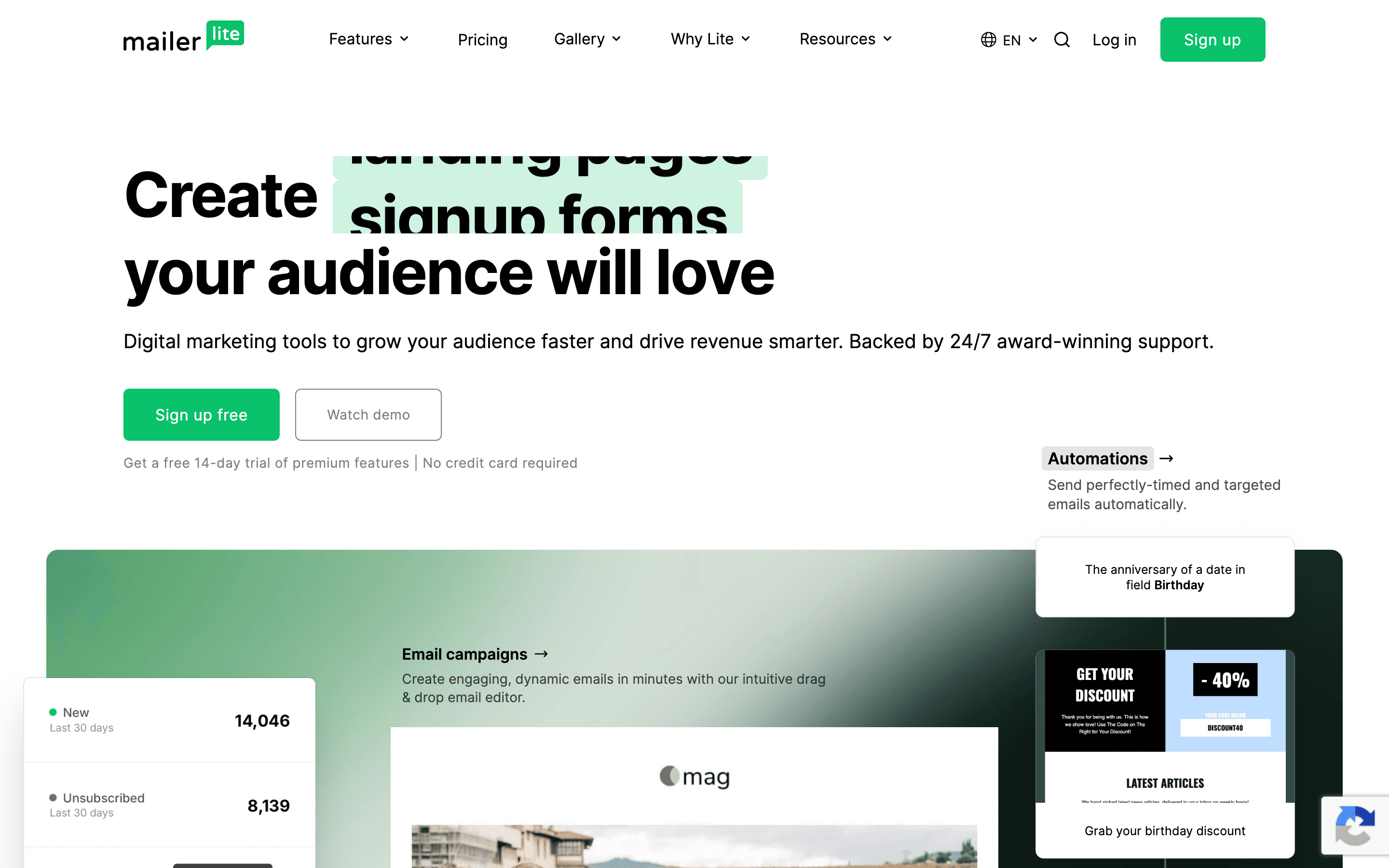
MailerLite is the alternative that feels most like Kit day to day. Both are built for creators and small businesses rather than enterprise marketing teams, and both offer a real free plan: MailerLite's free tier covers up to 250 subscribers and 2,500 emails a month, smaller territory than Kit's 10,000-subscriber free plan but still genuinely free. Where MailerLite pulls ahead is price at the low end. Comfort starts at $12/month and Power, with unlimited automations and seats, starts at $25/month, both cheaper than Kit's $39 Creator plan at the same list size. You also get a website builder and digital product sales built in, matching Kit's own creator-monetization angle. The tradeoff: MailerLite's free plan shrank in June 2026, and its automation builder isn't as deep as Kit's on the Creator and Pro tiers. For most solo creators, this is the closest dollar-for-dollar swap available.
Pros
- + Comfort and Power plans include unlimited monthly email sends once you're on them
- + AI writing assistant and an AI-driven custom HTML editor are included on paid plans
- + Nonprofits get 30% off any paid plan
Cons
- – The free plan was cut in June 2026 from 500 to 250 subscribers and from 12,000 to 2,500 monthly emails
- – Free plan lists caps of 3 automations, 3 forms, 1 landing page, 1 website, and 1 digital product, though MailerLite won't enforce those limits until August 13, 2026
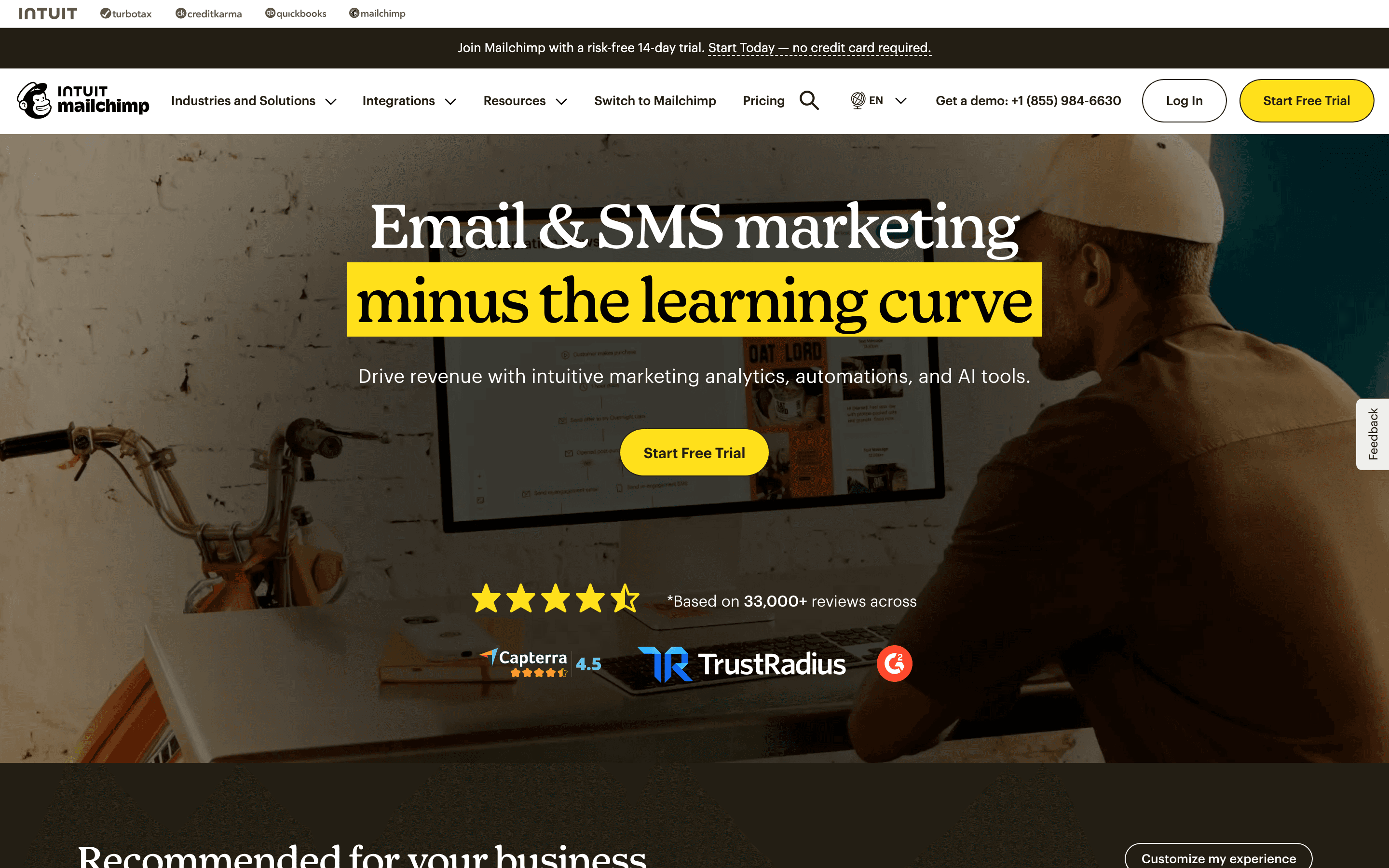
Mailchimp is the generalist alternative most creators already know by name. It matches Kit's free-tier instinct with its own free plan (250 contacts, 500 sends a month) and paid tiers starting at $13/month for Essentials, undercutting Kit's $39 Creator plan at small list sizes. Where it differs from Kit is breadth: Mailchimp bundles SMS, landing pages, predictive segmentation, and generative AI content tools at no extra cost on Standard and Premium, plus deep ecommerce tracking for Shopify, WooCommerce, and Wix. That makes it a better fit for creators who also run a store. The catch is that Mailchimp's free plan was cut in February 2026 and automation caps out at 4 steps on Essentials, so full branching flows need Standard or above. Annual pricing also isn't published, you need a sales quote. For creators who want name recognition and store integrations over Kit's creator-specific tools, Mailchimp is a solid, well-supported swap.
Pros
- + Genuinely free plan for very small lists, no credit card needed
- + Generative AI features included in Standard and Premium at no extra add-on cost
- + Broad e-commerce integrations (Shopify, WooCommerce, Wix) with built-in revenue tracking
Cons
- – Price scales with contact count, so a list of 5,000+ contacts costs far more than the advertised starting price
- – Free plan lost half its contact and send limits on February 17, 2026 (down to 250 contacts, 500 sends from 500 contacts, 1,000 sends)
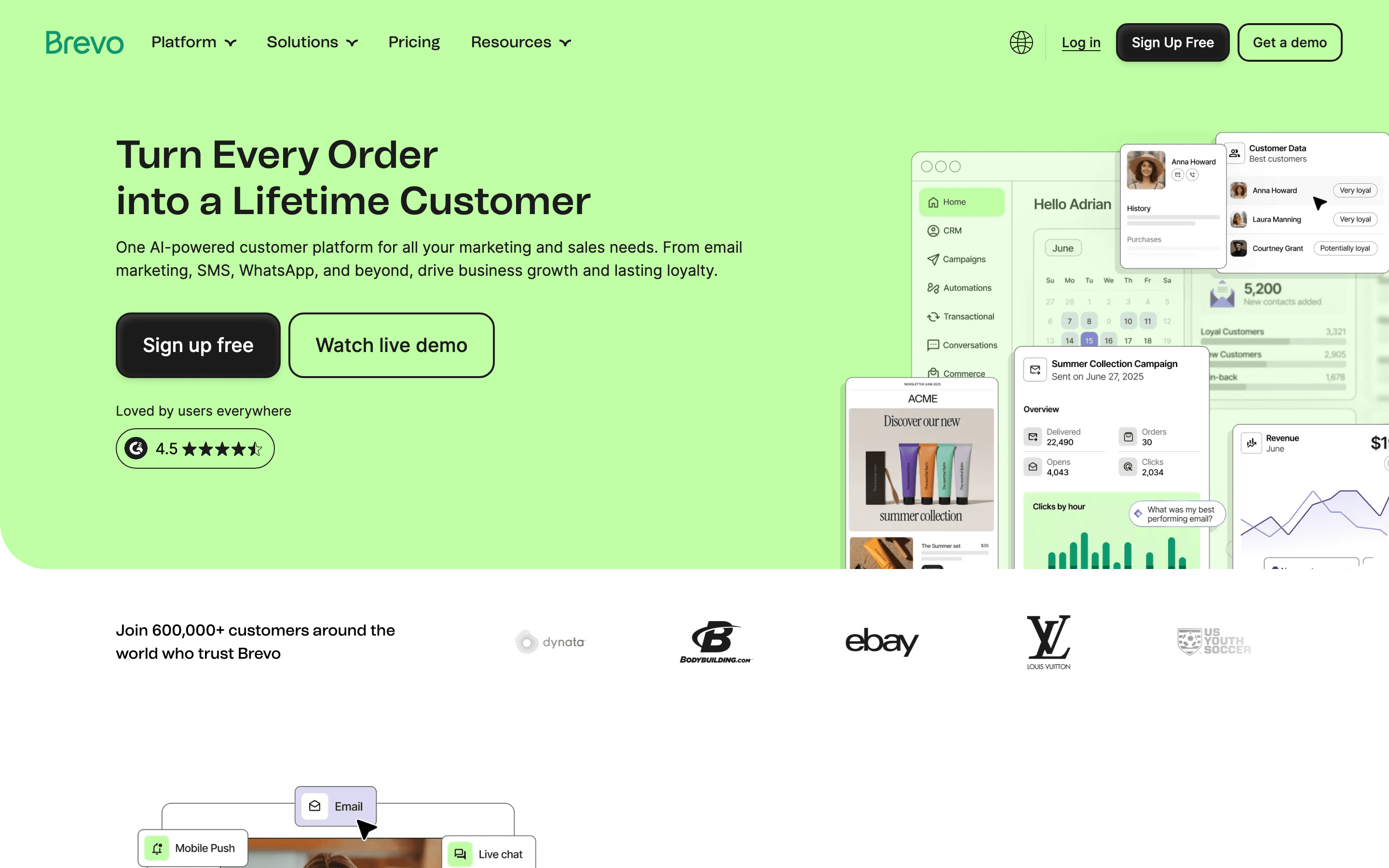
Brevo suits creators whose contact list has outgrown what they want to pay for, since it prices by email volume sent rather than list size or seats. The free plan includes 300 emails a day plus SMS, WhatsApp, and basic CRM access, more channels than Kit's free Newsletter plan offers. Starter is $9/month with no daily cap, a lower entry point than Kit's $39 Creator tier. The difference from Kit shows up in focus: Brevo is built as a broader small-business marketing and sales stack, with a CRM and sales pipeline sold as separate add-ons, not a creator-specific tool with landing pages and digital product sales baked in the way Kit is. Its logo also stays on emails until you pay to remove it, even on the paid Starter tier. For a creator with a big, low-engagement list who wants multi-channel messaging cheaply, Brevo is a strong, budget-friendly alternative to Kit.
Pros
- + Pricing is based on email volume, not contact count, so large lists with low send frequency stay cheap
- + Free plan includes SMS, WhatsApp, and CRM access, not just email
- + Transactional email (API, SMTP, webhooks) is included on every plan, even the free one
Cons
- – The free and Starter plans still show the Brevo logo unless you pay extra to remove it
- – CRM and sales pipeline features are separate paid add-ons (Sales Essentials, Sales Advanced), not included in the core plans
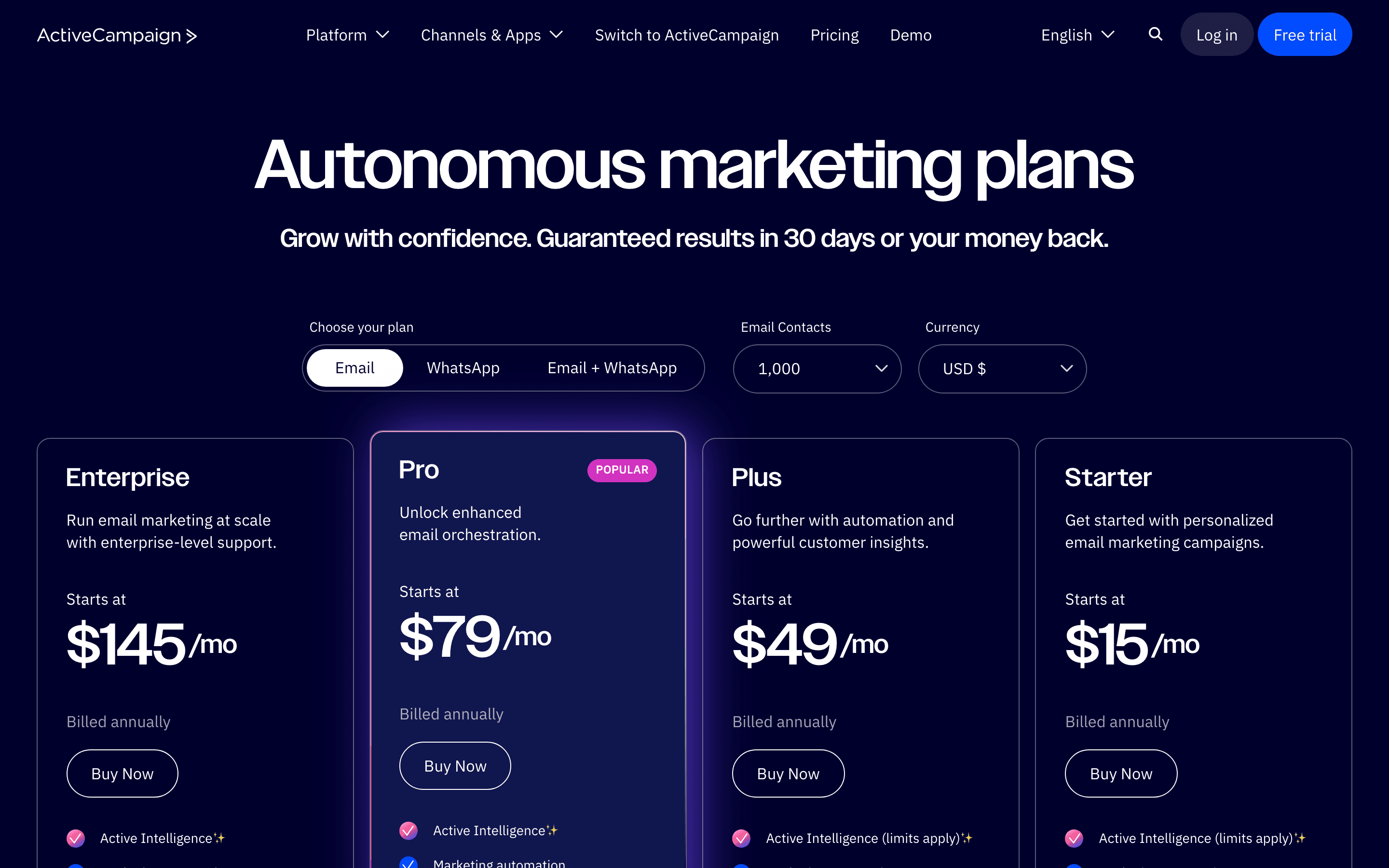
ActiveCampaign is the pick for creators who have outgrown Kit's automation and want a real CRM and sales pipeline alongside their email. Its visual automation builder handles branching, multi-step workflows well beyond Kit's sequences, and Pro and Enterprise plans add predictive sending and lead scoring. The gap from Kit is stark on price and access: ActiveCampaign has no free plan at all, starting at $15/month for Starter (1,000 contacts, 1 user, only 5 automation actions), and the CRM only becomes useful on Plus and above at $49/month. Since November 2025 new customers are also billed on total contacts, including unsubscribed and bounced ones, which can push costs higher than expected. Reviewers consistently note a real learning curve, often several weeks before the automation builder feels comfortable. This is not a lateral move from Kit, it's a step up in complexity and cost for creators turning their audience into an actual sales operation.
Pros
- + Automation builder handles complex, branching workflows better than most email-only tools
- + CRM and sales pipeline are included on paid plans instead of requiring a separate purchase
- + Wide integration library, over 1,000 listed connections including e-commerce and ad platforms
Cons
- – No free forever plan, unlike Mailchimp, Brevo, or MailerLite
- – Pricing is contact-count based and jumps in large steps at each threshold, so renewal costs can rise sharply as a list grows
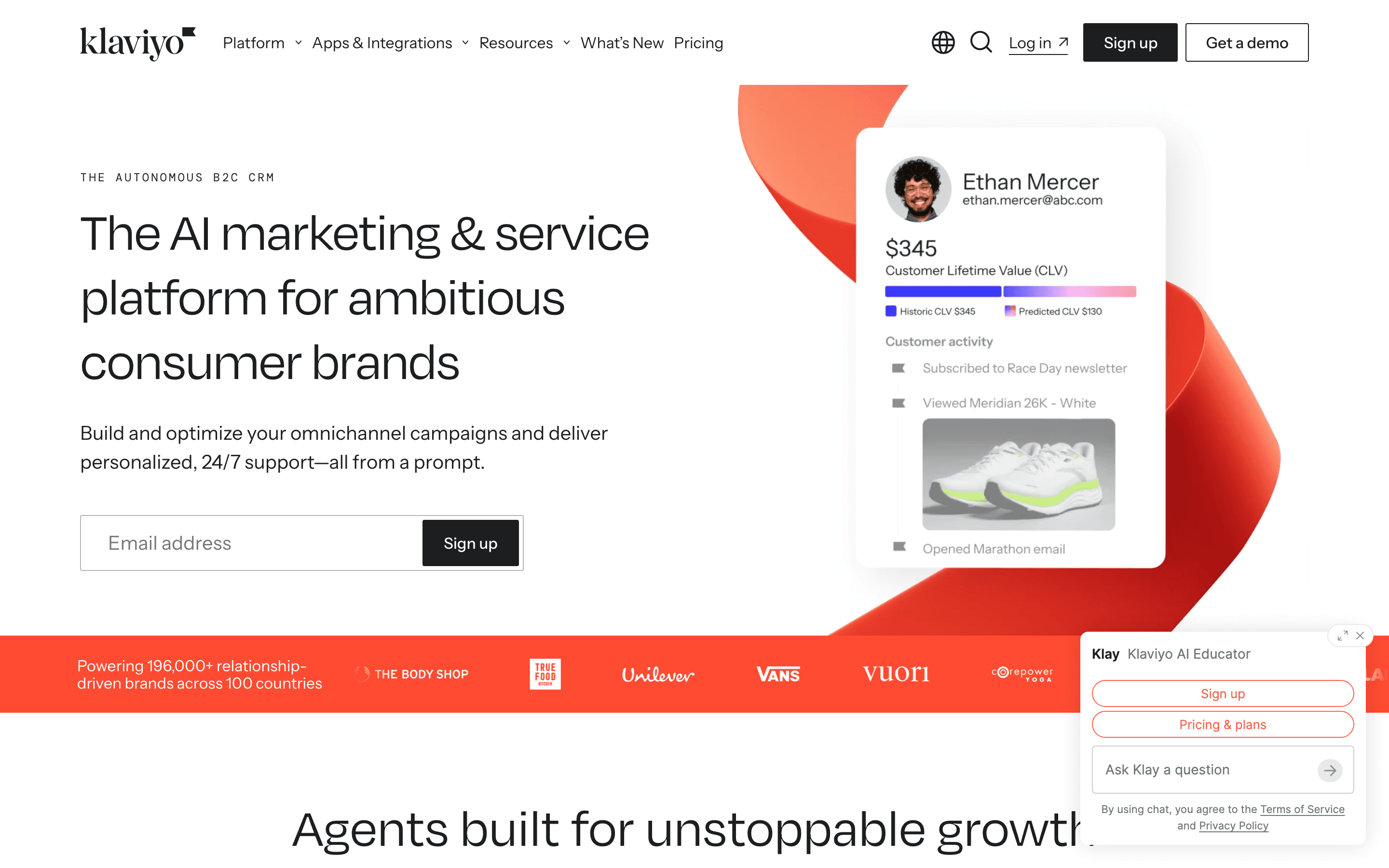
Klaviyo only makes sense as a Kit alternative once a creator's business has shifted toward selling physical products through a store like Shopify. Its whole design centers on syncing order history and browsing behavior so segments and flows react to what customers buy, not just whether they opened an email, something Kit's creator-first tool doesn't attempt. Pricing starts at $20/month for 251-500 active profiles on the Email plan, or $35/month for Email + SMS, and every tier gets the same core features, so you're paying for list size, not functionality. The free plan caps out at 250 active profiles. The catch for a typical newsletter-writing Kit user: Klaviyo bills on total active profiles rather than contacts you actually message, and its added products (Customer Hub, Helpdesk, Marketing Analytics) are all separate paid add-ons. For an ecommerce creator, it's a genuine upgrade in behavioral data. For a pure newsletter or course creator, it's overbuilt.
Pros
- + Deep, native integrations with Shopify and other ecommerce platforms, so segments and flows use real purchase and browsing data
- + Same core features at every Email/Email+SMS tier, so upgrading is mostly about list size, not unlocking functionality
- + Free plan is usable for very small lists (up to 250 profiles) before you need a card
Cons
- – Price is based on total active profiles, not just people you actively email, so a large stale list costs more even if you rarely message most of it
- – Newer products like Customer Hub, Helpdesk, Customer Agent, and Marketing Analytics are billed as separate add-ons on top of the core email plan, each with its own pricing basis (profiles, tickets, or conversations)
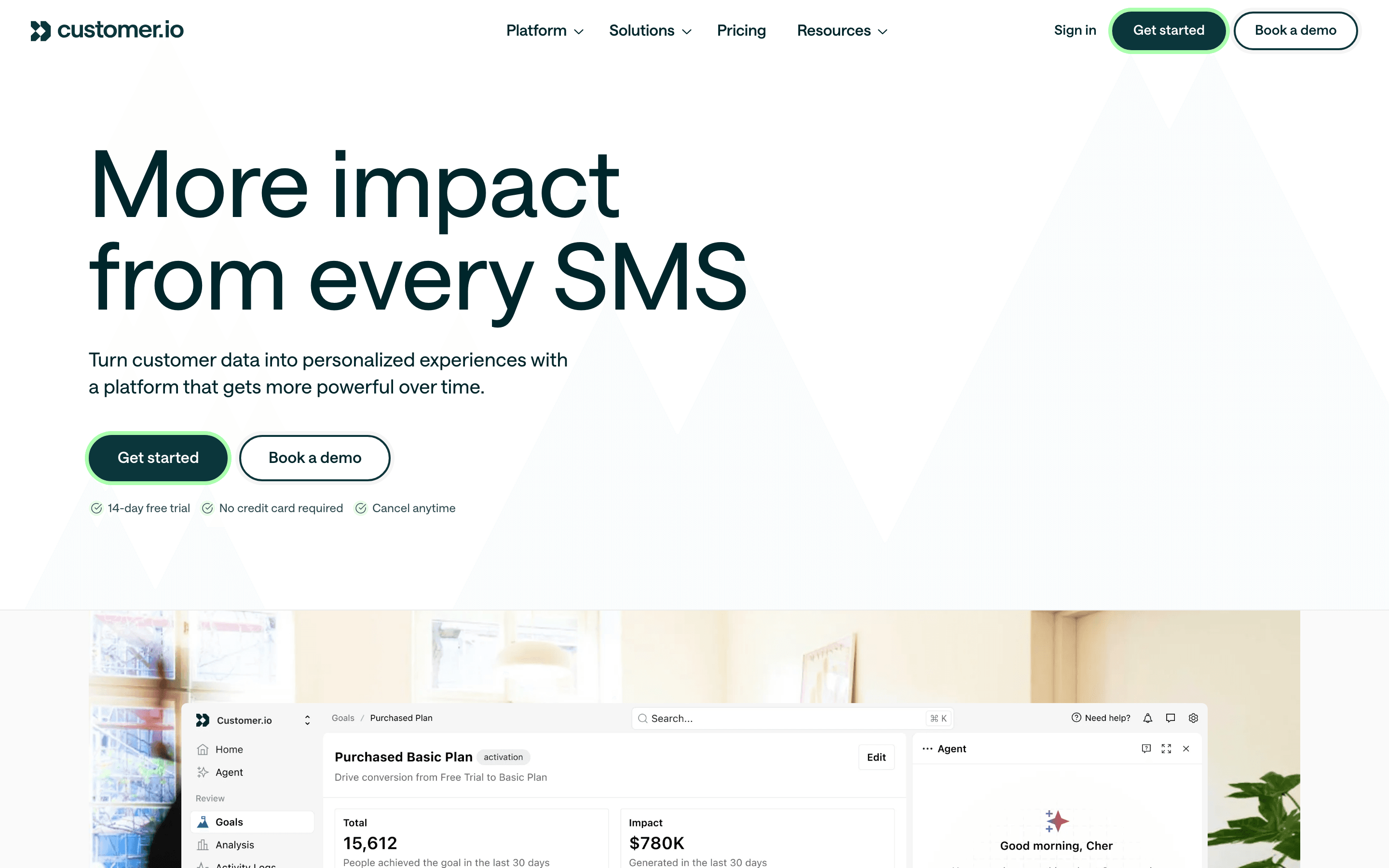
Customer.io is the furthest reach on this list and fits only a narrow slice of former Kit users, typically a creator who has pivoted into building an actual software product or app. It triggers email, SMS, push, and in-app messages off product events and profile data rather than list membership, using a visual workflow builder aimed at product and lifecycle teams. There is no free plan, Essentials starts at $100/month for 5,000 profiles and 1 million emails, and Premium jumps to $1,000/month billed annually, both far above Kit's $39 entry point. Setting it up also assumes engineering support for event tracking and data integrations, not something a solo newsletter writer typically has on hand. The one upside for qualifying early-stage companies: the Startup Program gives 12 months free. Unless a creator's business has become an actual software product with real event data to trigger on, this is a poor substitute for what Kit does.
Pros
- + Workflow builder handles complex, multi-channel behavioral journeys well
- + Profile and object data model supports messaging based on product usage, not just list membership
- + Startup Program gives qualifying early-stage companies 12 months free
Cons
- – Pricing above Essentials is not posted; Premium and Enterprise require talking to sales
- – Cost scales with profile count, so it can get expensive fast as your user base grows
Should your product be on this email marketing & automation list?
If you build a tool that belongs next to the ones above, submit it. A human reviews every submission. Approved products get their own page with pricing and screenshots, plus a place in the comparisons where they fit. It is free. You sign in with your work email so you can follow the decision, and there is no password to create.
Kit (ConvertKit) alternatives: FAQ
What is the best free alternative to Kit (ConvertKit)?+
MailerLite is the closest match, with a free plan for up to 250 subscribers and paid plans starting at $12/month that still include a website builder and digital product sales, similar to what Kit offers creators.
Which Kit alternative is best for an ecommerce store?+
Klaviyo, since it syncs order history and browsing behavior directly from platforms like Shopify and BigCommerce, letting you segment and automate off actual purchase data rather than email engagement alone.
Is there a cheaper alternative to Kit if my list is large but I don't email often?+
Brevo, because it charges based on how many emails you send per month rather than how many contacts you store, so a large, low-frequency list can cost much less than it would on Kit's per-subscriber pricing.
Do any Kit alternatives include a built-in CRM?+
ActiveCampaign includes a CRM and sales pipeline on its Plus plan and above, giving creators a place to track deals and contacts that Kit's lighter creator CRM doesn't fully replace.
Kit (ConvertKit) alternatives: pricing compared
Entry price, billing model, and whether pricing is public. 7 of 7 publish pricing you can check without talking to sales.
| Tool | Starting price | Billing | Free option | Pricing disclosed |
|---|---|---|---|---|
| Kit (ConvertKit) | $39/seat/mo | per-seat | Yes | Public |
| MailerLite | $12/seat/mo | tiered | Yes | Partly public |
| Mailchimp | $13/mo | tiered | Yes | Public |
| Brevo | $9/mo | tiered | Yes | Partly public |
| ActiveCampaign | $15/seat/mo | tiered | Trial (14 days, no credit card required) | Public |
| Klaviyo | $20/mo | tiered | Yes | Partly public |
| Customer.io | $100/mo | tiered | No | Partly public |
How we made these picks. We compare tools on public pricing, features, and hands-on assessment, then verify every price against the vendor's own page. We never accept payment for rankings. Read the full methodology. Spotted an error? Report it.
More email marketing & automation comparisons
Further reading
- Best email marketing tool for creators - Kit's free plan covers 10,000 subscribers, the most of any tool here. MailerLite is cheaper once you outgrow it, and Brevo suits big, quiet lists.