Top Mixpanel Alternatives in 2026
Here for Mixpanel itself? See the full Mixpanel profile, pricing & reviews →
Suggest a change- If you want the closest like-for-like swap, with feature flags and experiments bundled into the same bill, choose PostHog. It matches Mixpanel's funnel-and-retention playbook while including session replay, feature flags, and experiments in the same per-event bill, and you can cap spend per product so a traffic spike can't create a surprise invoice.
- If you want a more established, mature Mixpanel-style vendor and can negotiate enterprise pricing at scale, choose Amplitude. It runs the same event-based funnel and cohort model as Mixpanel with a larger free tier, but its real cost past the Plus plan only becomes clear once you are in a sales-negotiated Growth or Enterprise contract.
- If your event tracking keeps falling out of date because engineers forget to instrument new buttons and flows, choose Heap. Heap auto-captures every click and page view so you can build a funnel retroactively instead of waiting for someone to add a tracking call.
- If you want to pair user-behavior analytics with in-app guides, walkthroughs, and NPS under one contract, choose Pendo. Pendo bundles funnels and adoption analytics with guide-building and feedback tools that Mixpanel does not offer at all, billed on monthly active users instead of events.
- If you need to go from a metric that moved straight to the exact session where it broke, choose Fullstory. Fullstory indexes every session as structured, searchable data with rage-click and error detection built in, so you can query broken sessions instead of building a funnel report first.
- If your event volume is moderate, you already rely on Mixpanel Agent for root-cause analysis, and you've paid for the Experimentation add-on, choose stay on Mixpanel. Switching means re-instrumenting your event schema elsewhere and giving up the AI root-cause tooling and experimentation setup you have already built and paid for.
Mixpanel is built for product and growth teams who want self-serve funnels, retention, and cohort analysis without waiting on a data team. Teams start looking elsewhere for two main reasons: event-based billing that jumps sharply once you outgrow the free 1M-event tier, and feature flags or experimentation that only ship as a paid add-on rather than being part of the core plan.
The tools below all do the same core job Mixpanel does: turn raw user events into funnels and retention you can act on. Where they differ is how they price that job (per event, per session, per monthly active user, or a sales quote) and what they bundle alongside it, from PostHog's all-in-one usage pricing to Pendo's guides and NPS to Fullstory's session-level debugging.
Mixpanel alternatives compared
| Tool | Best for | Starting price | Free option | Last update |
|---|---|---|---|---|
| PostHogClosest like-for-like swap | Engineering-led product teams that want analytics, replay, flags, and experiments in one tool instead of stitching several together | Free tier + custom | Yes | June 2026 |
| Amplitude | Product and growth teams that need funnels, retention, and cohort analysis on real user event data, not just page-view counts | $49/mo | Yes | June 2026 |
| HeapBest for retroactive analytics | Teams that want retroactive analytics without shipping a tracking plan first | Free tier + custom | Yes | April 2026 |
| PendoBest for product adoption, not just analytics | Product teams that want analytics, in-app guides, and NPS feedback under one vendor instead of stitching together three tools | Free tier + custom | Yes | March 2026 |
| FullstoryBest for session-level debugging | Product and growth teams that need to go from 'a metric moved' to 'here is the exact session where it broke' without switching tools | Free tier + custom | Yes | — |
Why teams switch from Mixpanel
Event-based billing gets expensive fast once you're past the free tier
One team reported paying around $60,000 a month at 300 million events, since cost scales directly with event volume rather than seats.
Enterprise features are locked behind a sales quote
SSO, HIPAA compliance tools, and unlimited events only ship on the Enterprise tier, which Mixpanel does not publish a price for.
Feature flags and experimentation cost extra on every plan
Mixpanel sells Experimentation 2.0 and feature flags as a paid add-on rather than bundling them into Growth or Enterprise pricing.
The best Mixpanel alternatives, ranked
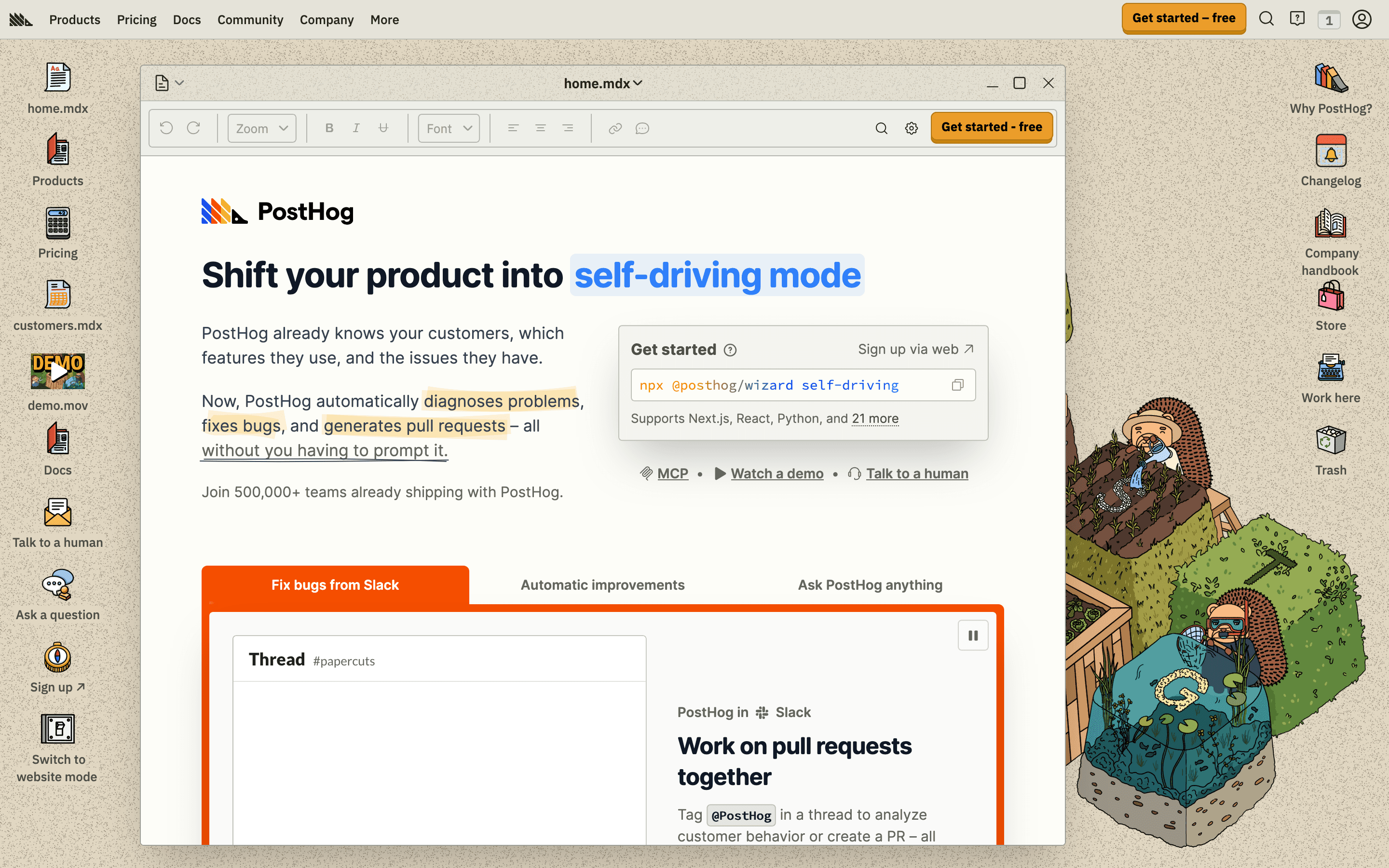
PostHog is the closest like-for-like swap for Mixpanel. Both are built around raw event data, funnels, and retention, but PostHog bundles session replay, feature flags, A/B experiments, surveys, and error tracking into the same per-event bill instead of selling flags and experiments as an add-on the way Mixpanel does. The free tier resets every month forever: 1M events, 5K session recordings, and 1M feature flag requests, with no card required. Pay-as-you-go pricing then charges roughly $0.00005 per event past that, and you can set a hard billing limit on each product separately, so a tracking bug or traffic spike cannot blow past what you are willing to spend. The tradeoff is that support beyond community and email costs an extra $250 or $750 a month, and self-hosting is available but adds ops work most teams skip by staying on PostHog Cloud.
Pros
- + One tool covers analytics, session replay, flags, experiments, and error tracking, so you avoid stitching together separate vendors
- + Free tier resets every month and never expires, with 1M events and 5K recordings included at no cost
- + You can set a hard billing limit on each product separately, so a traffic spike can't blow past what you're willing to spend
Cons
- – Usage-based pricing means your bill moves with traffic, which makes it harder to budget than a flat per-seat plan
- – Without setting billing limits up front, a viral spike or misconfigured tracking call can generate a large bill fast
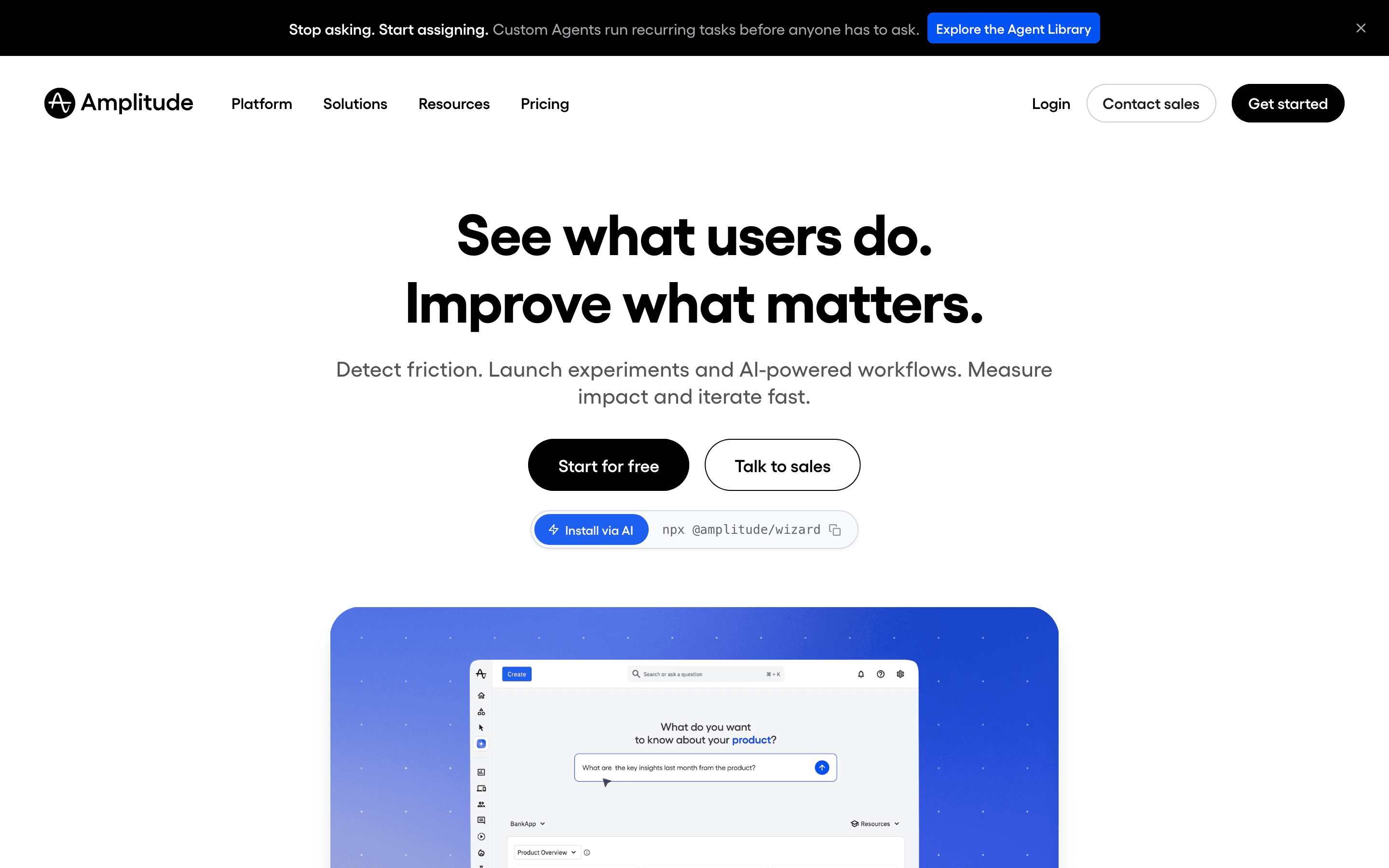
Amplitude is the most direct head-to-head competitor to Mixpanel: same event-based model, same funnels, retention, and cohort toolkit, and a free plan (2M events a month, unlimited seats, forever) that is actually larger than Mixpanel's 1M-event cap. Plus starts at $49 a month and scales automatically with volume up to 70M events, so budgeting is straightforward at small-to-mid scale. Past that, Growth and Enterprise are quote-only, and third-party deal data puts real contracts anywhere from $40K to $250K a year, so the jump from self-serve to sales-negotiated pricing is steep. Feature flags and web experimentation ship in the product, but experimentation and CDP features are commonly sold as separate line items once you are on Growth or Enterprise, echoing the same add-on pattern that frustrates Mixpanel buyers. Pick Amplitude when you want Mixpanel's core job done by a more established vendor and you are ready to negotiate at scale.
Pros
- + Free plan is free forever at 2M events/month, not a time-limited trial
- + Unlimited seats on every plan, including paid ones, so cost isn't tied to headcount
- + Combines analytics, session replay, feature flags, and experimentation in one product
Cons
- – No published prices for Growth or Enterprise, the tiers most teams past the startup stage end up needing
- – Plus plan's price scales automatically with event volume, so bills grow without a new sales conversation
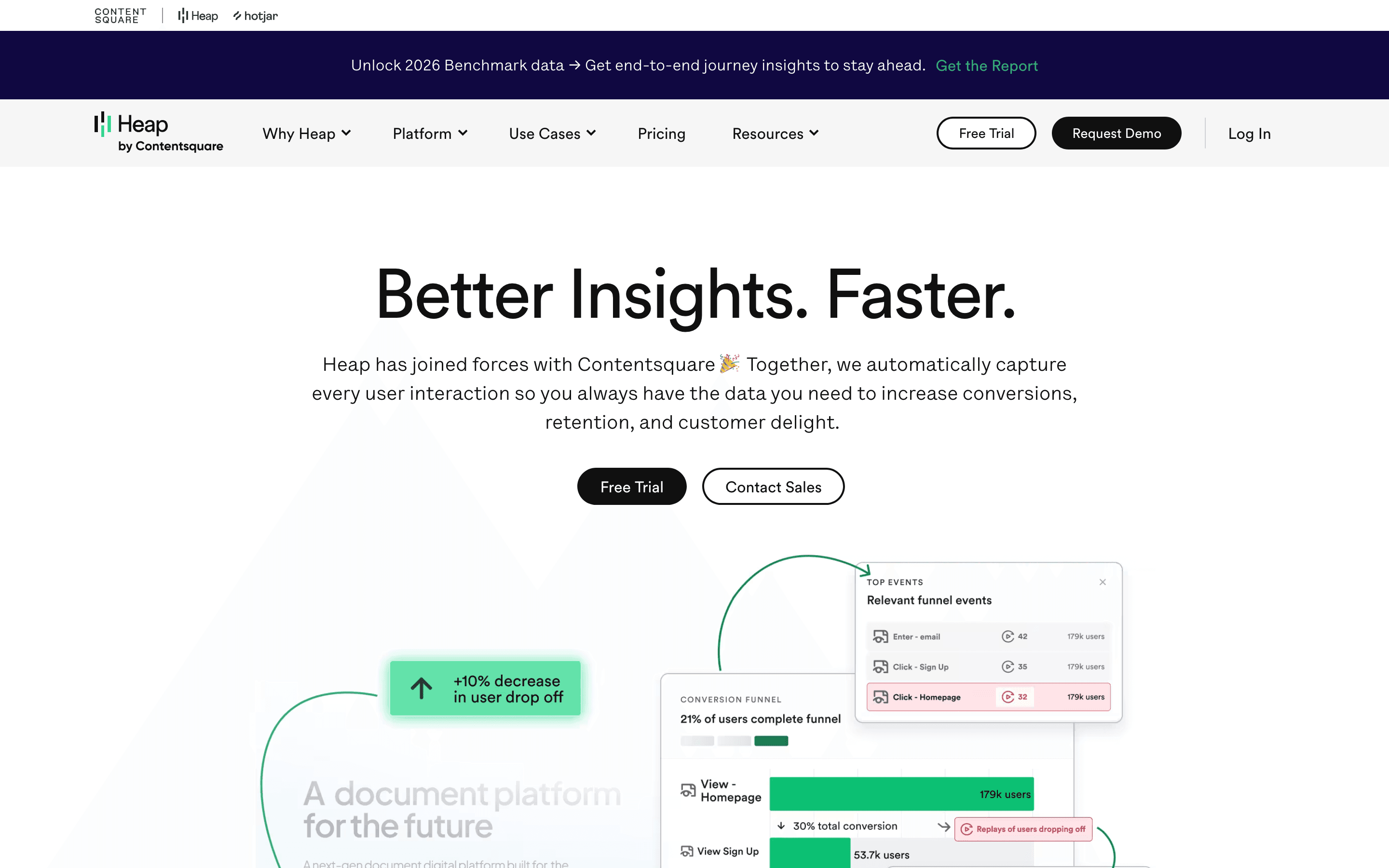
Heap's pitch is auto-capture: it records every click and page view without you defining events first, so you can build a funnel for a metric you never explicitly instrumented. That matters if your Mixpanel setup keeps breaking because a PM ships a new button and nobody adds the tracking call. The free plan covers 10,000 monthly sessions with 6 months of history and SSO included, unusual for a free analytics tier. The catch is that every paid tier, Growth, Pro, and Premier, is quote-only, with no public price list, and Vendr's deal data puts the median contract at $41,360 a year with renewals often carrying automatic 3-7% increases. Session Replay is also a paid add-on rather than bundled. Heap was acquired by Contentsquare in December 2023, and new capability investment is increasingly built into Contentsquare's combined platform rather than shipped as standalone Heap.
Pros
- + Auto-capture means you can analyze old data for events you never explicitly instrumented
- + Free plan includes SSO and 6 months of history, unusual for a product analytics free tier
- + Session-based (not event-based) billing means a single user going wild doesn't blow up your bill
Cons
- – No public pricing past the Free plan; every paid tier requires a sales call and quote
- – Growth, Pro, and Premier contracts commonly carry 3-7% automatic price increases at renewal
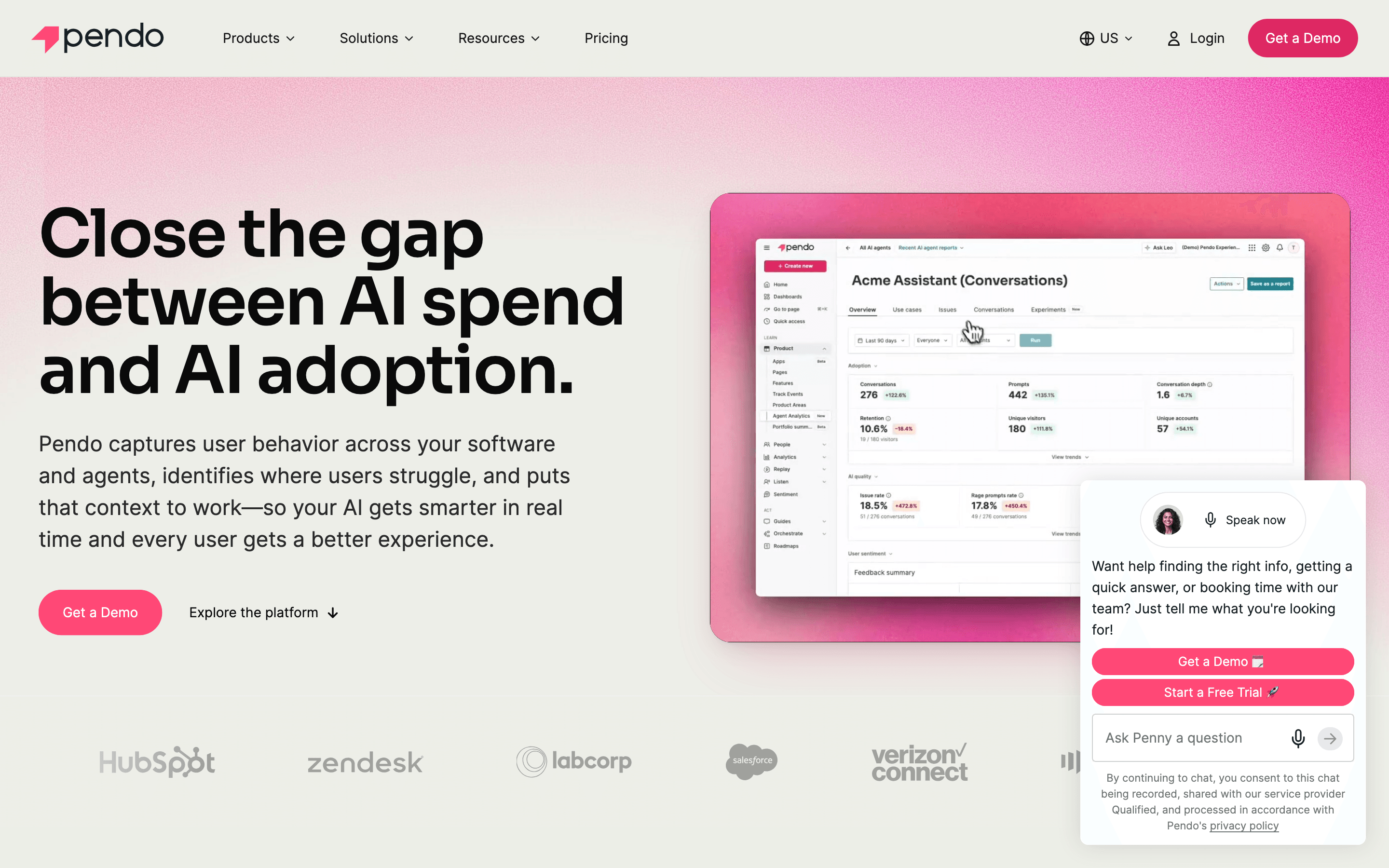
Pendo does the Mixpanel job of tracking funnels, retention, and feature adoption, but bundles it with in-app guides, walkthroughs, and NPS or feedback surveys that Mixpanel does not offer at all. That makes it the pick if you want one vendor for measuring behavior and then acting on it with a guided tour or a targeted survey, rather than stitching Mixpanel to a separate guide tool. Pricing is based on monthly active users rather than events or seats, and every paid tier is a custom quote. Vendr's buyer data shows real contracts from about $17,600 to $150,090 a year, with a median around $49,000, and list prices have reportedly risen 9 to 16 percent year over year depending on segment. Sentiment surveys and journey orchestration stay paid add-ons until the top Ultimate tier, though session replay is bundled in starting at Core, Pendo's most popular tier, so the full package still costs more than the headline analytics story suggests.
Pros
- + One platform covers analytics, in-app guides, and feedback collection, cutting down on tool sprawl
- + Free plan supports up to 500 MAUs with real product analytics and in-app guides, not just a trial
- + App Health and similar dashboards give product leaders a fast cross-app view without custom reporting
Cons
- – No published price for any paid tier. You go through a sales demo to find out what it costs
- – Your bill scales with product growth, not a fixed seat count. Vendr's buyer data shows moving from the roughly 500-2,000 MAU range (about $7,000-$15,000/year) into the 2,000-10,000 MAU range (about $20,000-$60,000/year) can multiply the bill 3-4x
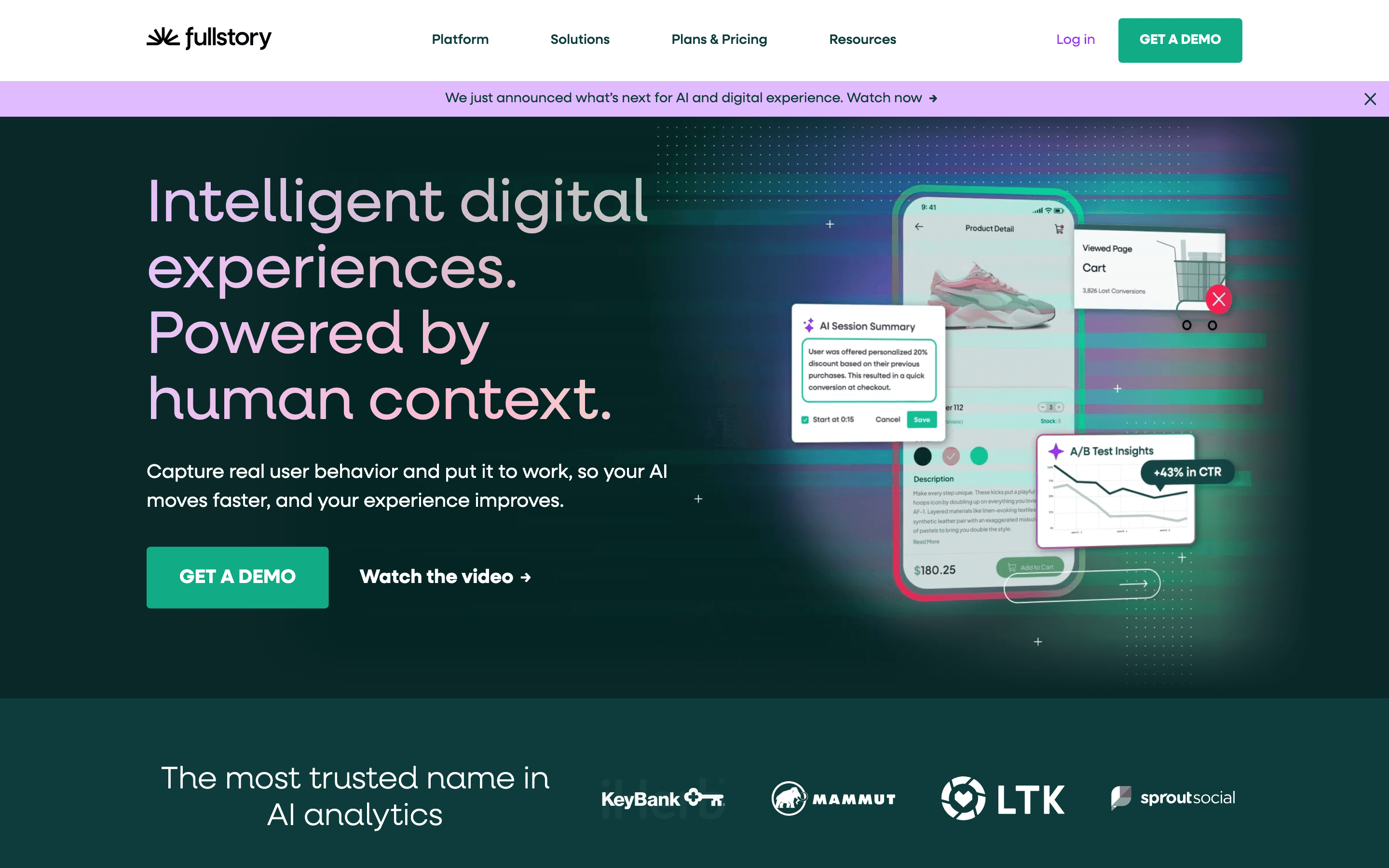
Fullstory answers a different half of the same problem: instead of aggregate funnels, it indexes every session as structured, searchable data, so when a Mixpanel-style funnel shows a drop-off, you can pull up the exact sessions where checkout broke. Rage clicks, dead clicks, and JS errors surface automatically, which a pure event-analytics tool like Mixpanel will not catch unless you have explicitly instrumented for it. The free plan covers 30,000 sessions a month, 12 months of retention, and 10 users, generous for evaluation. Every paid tier, Business, Advanced, and Enterprise, is quote-only, and aggregated contract data puts typical annual spend between $10,000 and $116,000, with SMB renewals climbing roughly 30 percent year over year. Choose Fullstory when session-level debugging matters more than self-serve cohort analysis, and budget for a sales negotiation rather than a published price.
Pros
- + Session replay is tied directly to structured event data, so you can search and segment sessions instead of scrubbing through video manually
- + Rage click, dead click, and error detection surface friction you would not think to look for
- + Generous free plan (30,000 sessions/month, 12 months retention, 10 users) for evaluating the product before committing to a paid contract
Cons
- – No public pricing above the free tier. Every paid plan (Business, Advanced, Enterprise) requires a sales call
- – Third-party contract data shows wide, unpredictable pricing (roughly $10K to $116K/year) driven by session volume, and SpendHound's benchmark data shows SMB renewal prices climbing about 30% year over year on average, versus about 11% for enterprise accounts
Should your product be on this product analytics list?
If you build a tool that belongs next to the ones above, submit it. A human reviews every submission. Approved products get their own page with pricing and screenshots, plus a place in the comparisons where they fit. It is free. You sign in with your work email so you can follow the decision, and there is no password to create.
Mixpanel alternatives: FAQ
What is the best free Mixpanel alternative?+
PostHog. Its free plan includes 1M analytics events, 5,000 session recordings, and 1M feature flag requests every month, with unlimited team members and no card required, and it never expires. Amplitude's free plan allows more raw events (2M a month) but bundles fewer other products at no cost.
Which Mixpanel alternative avoids surprise bills at scale?+
PostHog lets you set a hard billing limit on each product separately (analytics, replay, flags), so a traffic spike or tracking bug cannot generate a bill you did not expect. Mixpanel and most of its alternatives do not offer that per-product cap.
Which alternative includes feature flags and experiments without a paid add-on?+
PostHog. Feature flags and A/B experiments are part of its usage-priced core product. Mixpanel always sells experimentation as a separate paid add-on, and Amplitude does too once you're on a quote-only Growth or Enterprise contract.
Which alternative doesn't require re-instrumenting your event tracking?+
Heap. It auto-captures every click and page view in your app, so you can build funnels and retention on data you never explicitly instrumented, instead of redefining a tracking plan when you switch tools.
Mixpanel alternatives: pricing compared
Entry price, billing model, and whether pricing is public. 3 of 6 publish pricing you can check without talking to sales.
| Tool | Starting price | Billing | Free option | Pricing disclosed |
|---|---|---|---|---|
| Mixpanel | Usage-based | usage-based | Yes | Partly public |
| PostHog | Free tier + custom | usage-based | Yes | Partly public |
| Amplitude | $49/mo | usage-based | Yes | Partly public |
| Heap | Free tier + custom | usage-based | Yes | Not disclosed |
| Pendo | Free tier + custom | quote-only | Yes | Not disclosed |
| Fullstory | Free tier + custom | quote-only | Yes | Not disclosed |
How we made these picks. We compare tools on public pricing, features, and hands-on assessment, then verify every price against the vendor's own page. We never accept payment for rankings. Read the full methodology. Spotted an error? Report it.