Top Notion Alternatives in 2026
Here for Notion itself? See the full Notion profile, pricing & reviews →
Suggest a change- If you want the closest one-tool swap for Notion's docs, tasks, and light chat combo, choose ClickUp. ClickUp bundles docs, whiteboards, and chat with tasks in one product, and adds native Gantt charts and time tracking that Notion still lacks.
- If your team needs dependencies, Gantt charts, and portfolio-level reporting across many projects, choose Asana. Timeline and Gantt views are built into Asana's entry-level Starter tier, and workload management and portfolio reporting are available on the $24.99/seat Advanced tier, none of which Notion offers natively.
- If you want a visual board system your own team can configure without engineering help, choose monday.com. monday's boards, columns, and Sidekick AI let non-technical teams build and rearrange their own workflows the way Notion's blocks do, but with dedicated Gantt and automation views included.
- If your team wants simple message boards, to-dos, and shared files without sprint machinery, choose Basecamp. Basecamp replaces Notion's freeform pages with a fixed, simple structure and, once a team passes about 20 people, its flat $299/month Pro Unlimited plan removes per-seat billing entirely.
- If you just want cards, checklists, and due dates at the lowest price, with no doc or wiki ambitions, choose Trello. Trello starts at $5/seat/month, the cheapest paid plan of any tool here, in exchange for giving up Notion's doc and wiki side entirely.
- If your engineering team has been using Notion as an improvised bug tracker, choose Linear. Linear is a purpose-built issue tracker with cycles, fast search, and AI-assisted triage that Notion's general-purpose databases were never designed to match.
- If your Notion workspace was really a company wiki and knowledge base, not a project tracker, choose Slite. Slite is a dedicated knowledge base with AI search and a verification workflow that keeps docs current, though it drops Notion's databases and project management entirely.
- If your team's core need is one flexible place for docs, a wiki, and light tracking, not a dedicated PM system, choose stay on Notion. No ranked alternative matches Notion's combination of freeform pages, nested databases, and general-purpose flexibility for docs-first teams.
This page is for teams leaving Notion because they outgrew its improvised task-tracking side, not its docs or wiki side. If your Notion pages have turned into a project board with checkboxes and due dates bolted on, the tools below are built for that job directly. Most add dependencies, Gantt charts, or resourcing views Notion lacks, though a couple, Basecamp and Trello, go the other direction and strip PM machinery down instead. If what you actually need is a stronger docs and wiki system, most of these don't solve that. The exception is Slite, a dedicated knowledge base for teams whose Notion was really a company wiki. The rest trade Notion's freeform pages for structured project management instead.
The alternatives below span from all-in-one work platforms like ClickUp and monday.com to focused tools like Linear for engineering, Basecamp for simple client work, and Slite for a dedicated knowledge base. None of them copy Notion's freeform page-building exactly, so the right pick depends on which piece of your Notion setup, the tasks, the tracking, the reporting, or the wiki, is driving the switch.
Notion alternatives compared
| Tool | Best for | Starting price | Free option | Last update |
|---|---|---|---|---|
| ClickUpBest all-in-one replacement | Teams that want one tool for tasks, docs, and light chat instead of stitching several apps together | $7/seat/mo | Yes | July 2026 |
| AsanaBest for cross-project reporting | Team leads coordinating projects across marketing, ops, and other non-engineering functions | $10.99/seat/mo | Yes | — |
| monday.com | Cross-functional teams that want one visual system for many different workflows instead of separate tools per department | $9/seat/mo | Yes | June 2026 |
| BasecampBest for simple client and team communication | Small agencies and services teams that want one shared space for client work without a lot of setup | $15/seat/mo | Yes | May 2026 |
| Trello | Small teams and individuals who want a visual board with almost no setup | $5/seat/mo | Yes | January 2026 |
| LinearBest for engineering teams | Software and product teams who want a fast, opinionated issue tracker over a flexible one | $10/seat/mo | Yes | July 2026 |
| SliteBest for a dedicated wiki or knowledge base | Ops and eng teams whose docs drift out of sync with Slack threads, Linear tickets, and GitHub PRs and want an agent to catch that instead of a human stumbling on it later | $10/seat/mo | Trial (14 days, no credit card required) | June 2026 |
Why teams switch from Notion
Full AI access now requires the $20/seat/month Business plan
Notion removed the older, cheaper AI add-on, so teams that want AI features but not Business-tier admin controls end up paying for a bigger plan than they need.
Custom Agents add a second, unpredictable bill
Custom Agents run on a separate credit system priced at $10 per 1,000 monthly credits, charged on top of regular seat costs.
No native project management structure
Notion has no built-in Gantt chart, dependency tracking, or resource management, so real project tracking needs a template workaround or a plugin.
The best Notion alternatives, ranked
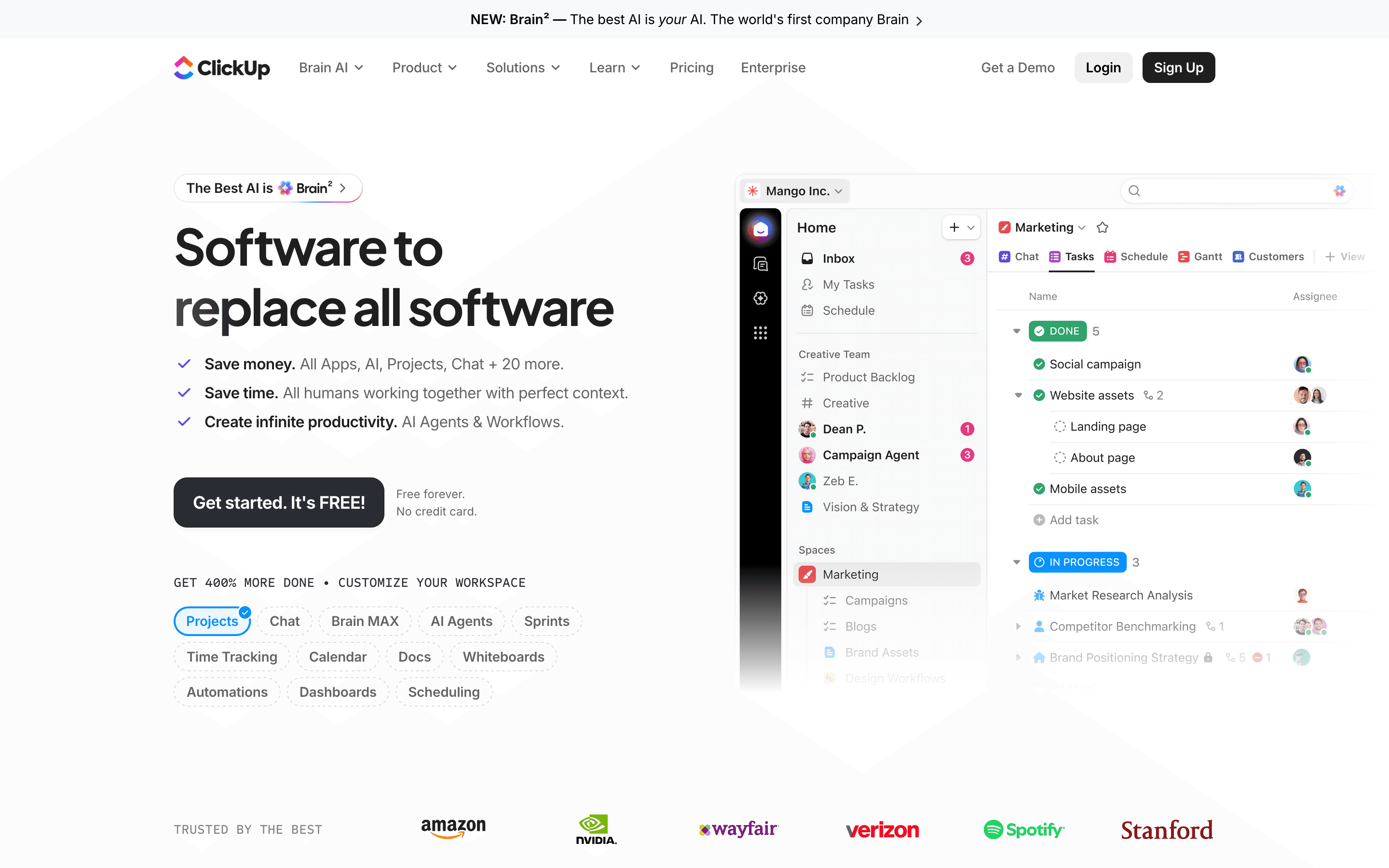
ClickUp is the closest match to what Notion buyers are used to: one app for tasks, docs, whiteboards, and chat instead of three or four separate tools. Its Free Forever plan supports unlimited members and tasks, though the whole team shares a single 60MB storage cap, which fills up fast once you add attachments. Where it beats Notion is native Gantt charts, time tracking, and goals on the entry-level Unlimited plan ($7/seat/month annually), none of which Notion has a built-in equivalent for. The catch is AI: Brain is a separate add-on starting at $9/user/month, and automation runs are capped per plan and pause once you hit the limit. Teams that liked building their own structure in Notion will find ClickUp's custom fields and views familiar, with more project management scaffolding underneath.
Pros
- + Free plan supports unlimited members and tasks, not just a small seat count
- + One app covers tasks, docs, whiteboards, chat, and dashboards, cutting down on tool switching
- + Automation and custom field system is genuinely flexible for teams with non-standard workflows
Cons
- – Free plan's 60MB storage cap is shared across the whole team, not per user, so it fills up fast
- – AI features are a separate paid add-on on top of a core plan, not included at any tier
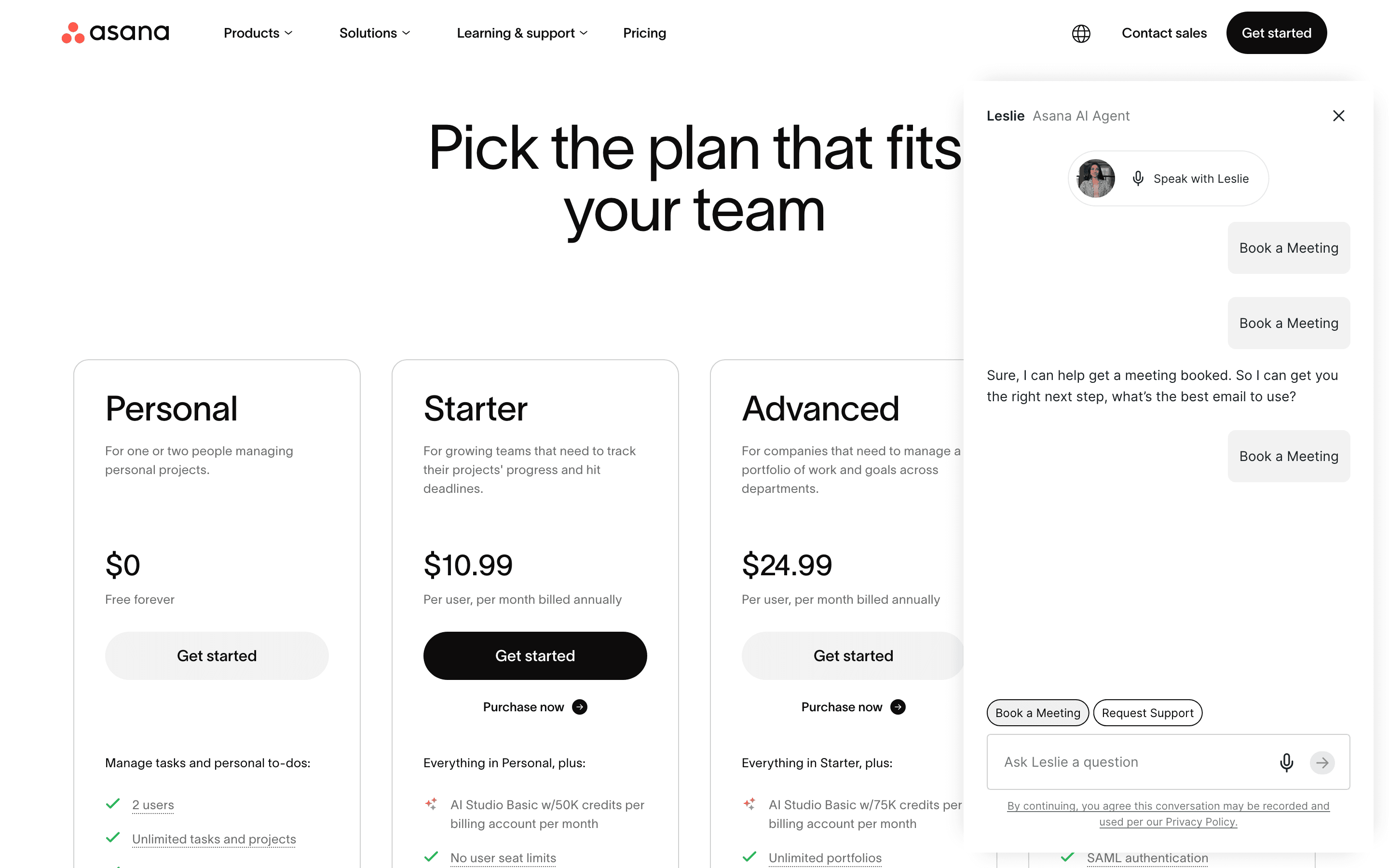
Asana is the pick for teams that outgrew Notion's databases and need real portfolio-level tracking. Timeline and Gantt views, plus unlimited automations, are included on the entry Starter plan at $10.99/seat/month billed annually, and Advanced ($24.99/seat/month) adds workload management and goals across projects. Unlike Notion, there is no way to get full functionality on a free plan. The Personal tier caps out at 2 users, so any real team lands on a paid plan and needs at least 2 seats to leave the free tier. Reviewers report costs climbing fast once a team scales up on Advanced, and Enterprise pricing is quote-only. If your problem with Notion is a lack of dependencies, timelines, and cross-project reporting, Asana solves it directly, at a real price.
Pros
- + Free Personal plan works fine for very small teams of up to 2 people
- + Timeline and Gantt views are already included on the entry-level Starter plan, with workload and goal-tracking views adding real cross-project visibility on Advanced
- + Automation and forms are unlimited even on the entry-level Starter plan
Cons
- – No paid plan for a single user, teams need at least 2 seats to leave the free tier
- – Time tracking and approvals are locked behind the pricier Advanced plan, where several competitors include time tracking lower down
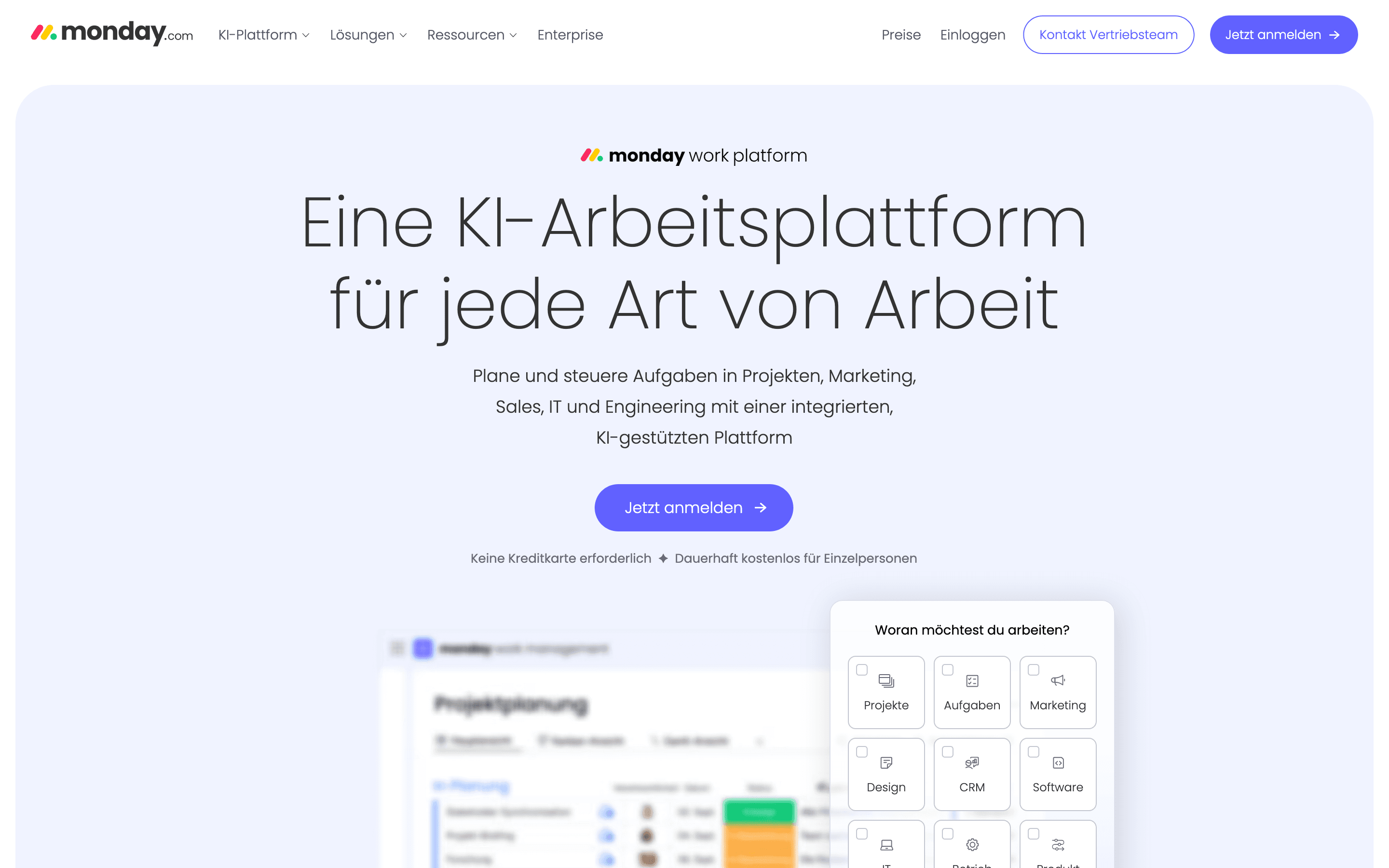
monday.com replaces Notion's block-building with color-coded boards, columns, and views (Kanban, timeline, Gantt, calendar) that non-technical teams can rearrange on their own. Standard ($12/seat/month annually) adds Gantt views and guest access, and Sidekick AI summarizes boards and builds charts without a separate credits purchase for basic use, unlike Notion's Business-plan AI gate. The catch is the 3-seat minimum on every paid plan, so a 2-person team pays for a seat it isn't using, and seats above that scale in fixed blocks rather than one at a time. Reviewers also flag slow support and billing disputes around seat changes. For teams that liked Notion's flexibility but wanted more visual, less freeform structure, monday is the natural next step, seat-bucket pricing aside.
Pros
- + Very visual, color-coded boards that non-technical team members pick up fast
- + Automations and views (Gantt, timeline, calendar, Kanban) are strong even on the Standard plan
- + One platform can cover project management, a lightweight CRM, and dev/service workflows if you buy the matching products
Cons
- – Every paid plan has a 3-seat minimum, so small teams pay for seats they don't use
- – Seats are sold in buckets above the minimum (e.g. rounding 4 users up to a 5-seat block), which pushes real cost above the advertised per-seat price
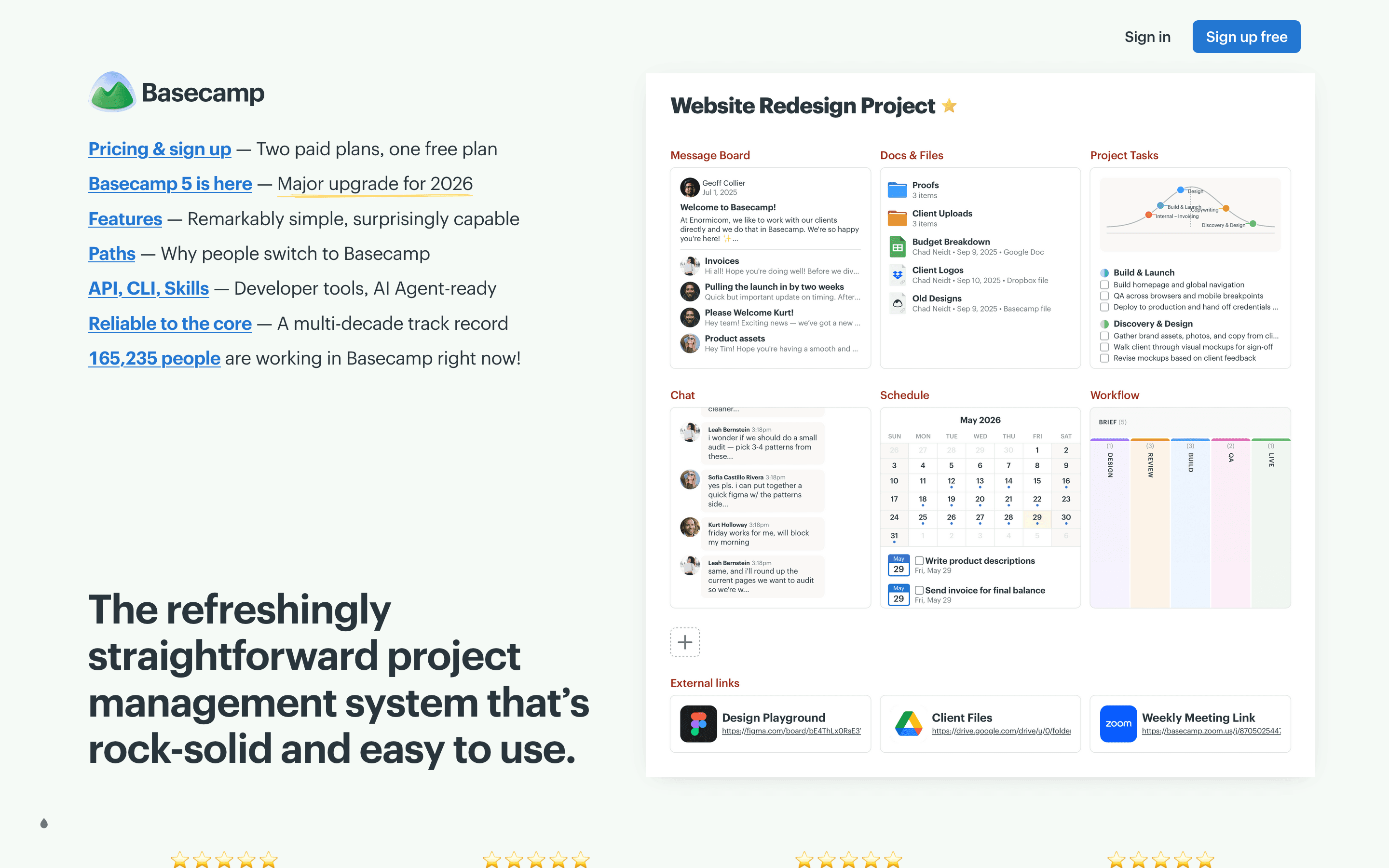
Basecamp is the alternative for teams that found Notion, and most PM tools, over-engineered for what they need: share updates, assign to-dos, and keep files in one place. Message boards and Campfire chat replace the scattered comments and mentions Notion pages accumulate, and clients or contractors don't count toward the Pro plan's per-seat billing. Once a team passes about 20 people, Pro Unlimited's flat $299/month for unlimited users beats per-seat pricing outright, a structure none of the other ranked tools offer. The tradeoff is real: no dependencies, no Gantt charts, no built-in time tracking (that's a $50/month add-on), so teams doing sprint planning will outgrow it the same way they outgrew Notion for that purpose. It's a move toward simplicity, not toward more PM depth.
Pros
- + Pro Unlimited's flat $299/month for unlimited users is a real deal once a team passes about 20 people
- + Clients and contractors don't count toward billing on the Pro plan, so client-facing agencies pay less
- + Message boards and Campfire chat cut down on scattered email and Slack threads for project discussion
Cons
- – No task dependencies, Gantt charts, or automations, so teams doing sprint planning outgrow it fast
- – Time tracking isn't included on Pro. It's a separate $50/month add-on
Trello
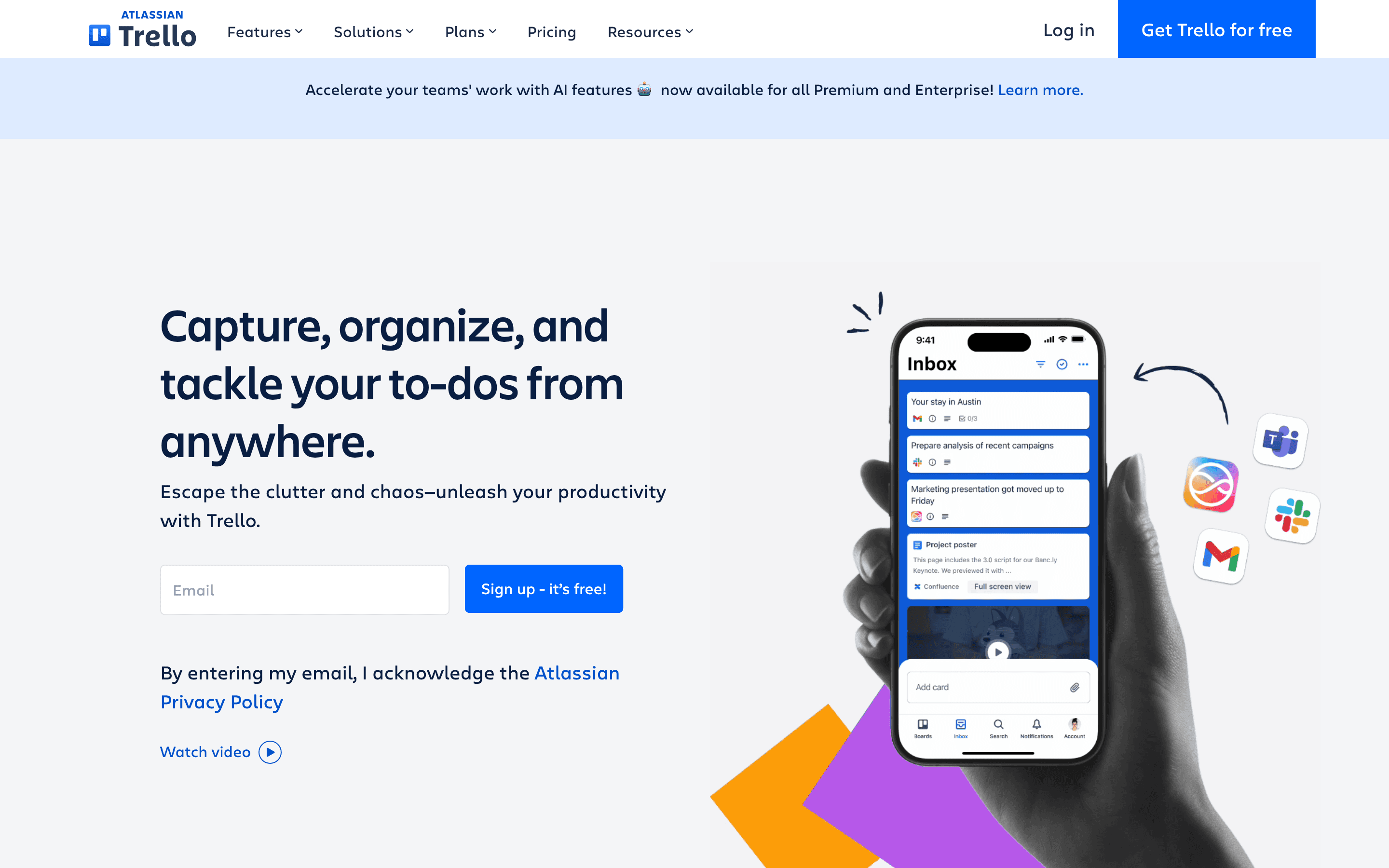
Trello is the cheapest, simplest step away from Notion for teams that want lists, cards, and due dates without either tool's flexibility overhead. Standard runs $5/seat/month billed annually, and the free plan (up to 10 boards, 10 collaborators per Workspace, unlimited cards) covers a lot of small-team use on its own. Card mirroring lets one task show up on multiple boards, and the Power-Up marketplace covers most integrations a small team asks for. What you give up versus Notion is the doc and wiki side entirely. Trello cards hold checklists and attachments, not the freeform pages Notion is built around, and Gantt, Timeline, and Calendar views are gated to the $10/seat/month Premium plan. It's the right call for teams whose Notion setup was a board with extra steps.
Pros
- + Free plan includes unlimited Power-Ups per board and unlimited cards, generous for how most small teams actually use Trello
- + Standard plan is cheap ($5/seat/month annually) for what most small teams actually use
- + Card mirroring lets one task appear on multiple boards without duplicating it
Cons
- – Free plan caps Workspaces at 10 boards and 10 collaborators, which smaller teams hit faster than expected
- – No native Gantt/timeline view below Premium; Table, Calendar, Timeline, and Map views are all gated to Premium
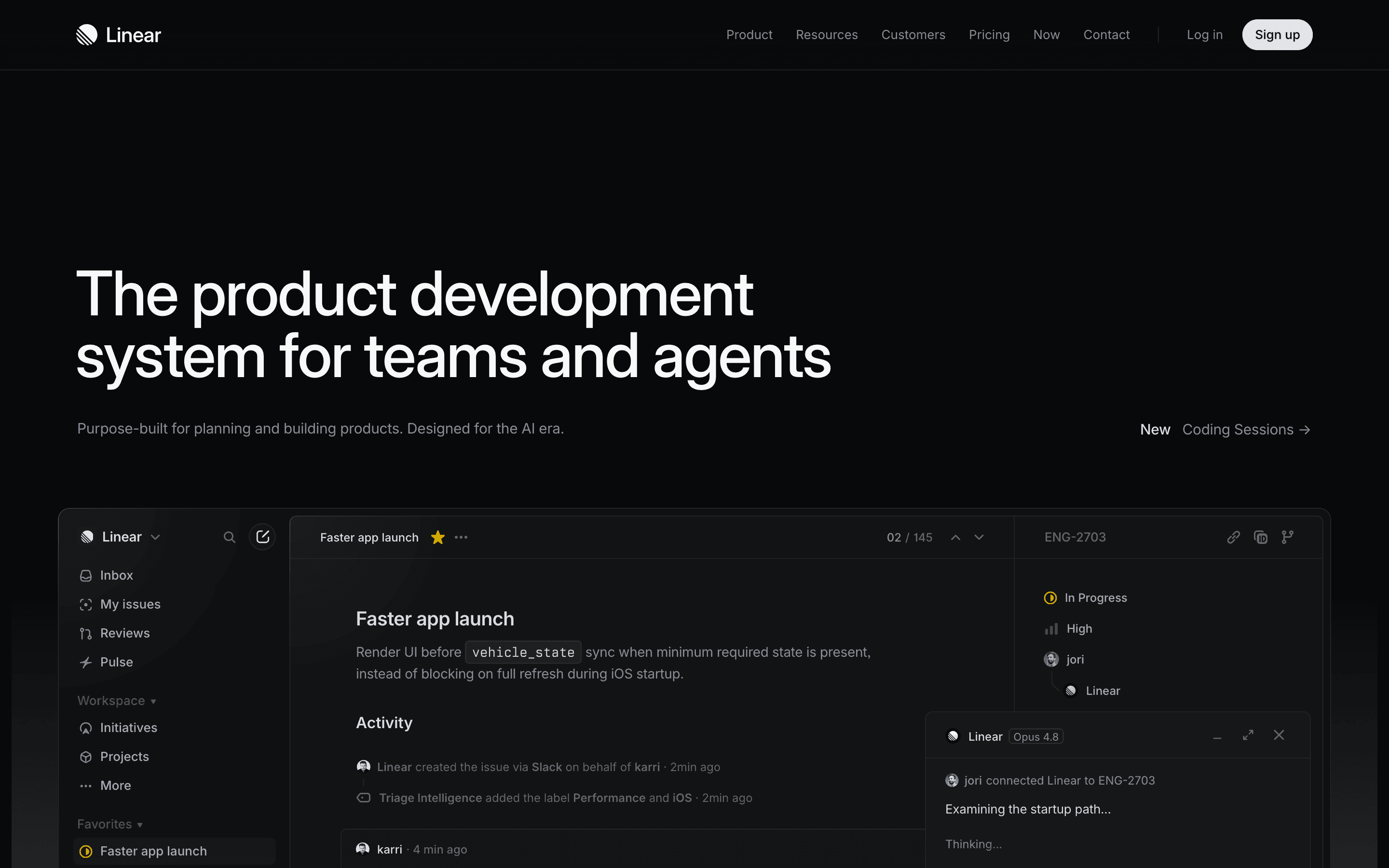
Linear fits teams using Notion as an improvised bug tracker or backlog: a purpose-built issue tracker with cycles, projects, and a keyboard-first interface that stays fast as issue counts grow. Free covers unlimited members but caps at 2 teams and 250 issues; Basic ($10/seat/month annually) removes the issue cap. Its Linear Agent features, agent-written code via Claude Code and Codex, drafted updates, are built for engineering workflows in a way Notion's general-purpose databases never were, and Business ($16/seat/month annually) adds Triage Intelligence for AI-assisted issue triage. The tradeoff is scope: no Gantt charts, no resourcing views, and no real doc or wiki system beyond basic team documents, so non-engineering functions that also lived in your Notion workspace won't have a home here. Guest access also requires a full paid seat. This is a switch for the engineering slice of a Notion workspace, not the whole thing.
Pros
- + Fast, keyboard-first interface that stays responsive at scale
- + Free plan is usable for small teams, not just a trial gate
- + AI agent features (Triage Intelligence, agent-written code, agent-drafted updates) are shipping fast and are core to the product, not bolted on
Cons
- – Per-seat pricing gets expensive fast for teams above 10-15 people, since there are no volume discounts published
- – Security and compliance basics like SAML/SCIM only ship on Enterprise, which is quote-only
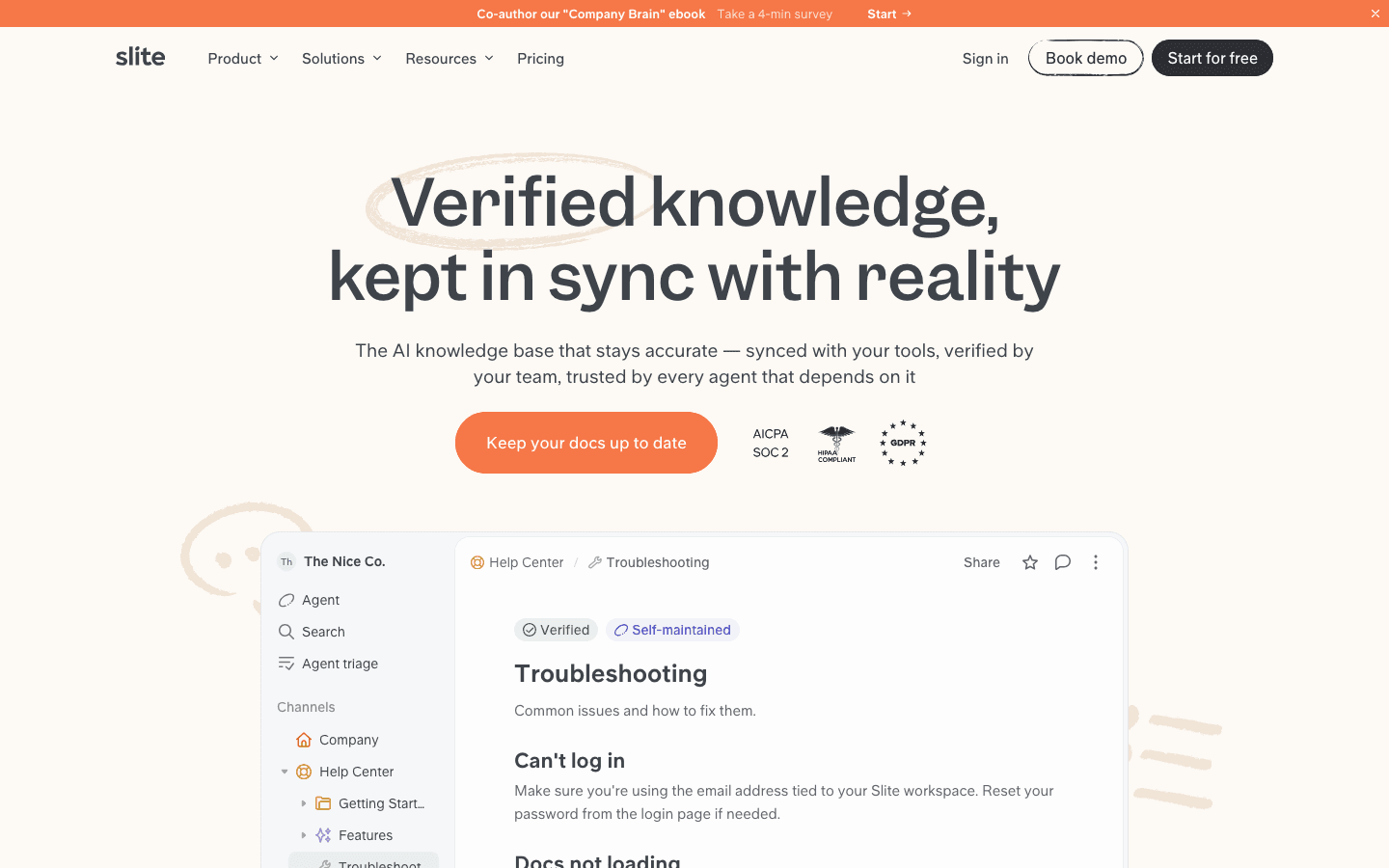
Slite is the pick if the part of Notion you relied on was the company wiki, not the task boards. It's a dedicated knowledge base: unlimited docs, AI search and Q&A across your workspace, and a verification workflow that gives every doc an owner and flags it when it drifts out of date. Its Agent watches connected tools like Slack, Linear, and GitHub, drafts fixes for stale docs, and routes them for approval, and an MCP and API layer lets Claude or ChatGPT search and edit docs under your existing permissions. Moving knowledge out of Notion is the use case it's built for, so it lands lower here only because this page ranks Notion's project-management replacements. The tradeoff is scope: Slite has no databases, no project management, and none of Notion's all-in-one range, so it covers the docs-and-wiki slice only, not the tracking side. There's no free-forever plan, just a 14-day trial. Basic runs $10/seat/month and the document-fixing Agent sits on the $20/seat Pro tier, both billed annually.
Pros
- + Slite Agent catches doc drift automatically instead of relying on someone to notice a doc is outdated
- + Verification workflow gives every doc a clear owner and an audit trail of who confirmed it's still accurate
- + MCP and API access mean Claude, ChatGPT, or your own agents can search and update docs through the same permission model your team uses
Cons
- – No free-forever plan, only a 14-day trial, so there's no way to run it long-term at zero cost
- – The published $10/$20 per-seat prices are annual-billing prices only; the site doesn't show what monthly billing costs
Should your product be on this project management list?
If you build a tool that belongs next to the ones above, submit it. A human reviews every submission. Approved products get their own page with pricing and screenshots, plus a place in the comparisons where they fit. It is free. You sign in with your work email so you can follow the decision, and there is no password to create.
Notion alternatives: FAQ
What is the best Notion alternative for project management?+
ClickUp is the closest match. It bundles docs, tasks, whiteboards, and chat the way Notion does, while adding native Gantt charts and time tracking Notion lacks.
Is there a free alternative to Notion for project tracking?+
ClickUp's Free Forever plan supports unlimited members and tasks, though storage is a single 60MB cap shared by the whole team. Trello's free plan covers up to 10 boards and 10 collaborators per Workspace with unlimited cards.
Which Notion alternative is cheapest?+
Trello's Standard plan starts at $5 per seat per month billed annually, the lowest entry price among these alternatives.
Do any of these alternatives include Notion-style docs and wikis?+
ClickUp and Basecamp both build docs into the same product as tasks and communication, though neither offers Notion's freeform nested-database flexibility. For a dedicated wiki without the project-management side, Slite is a purpose-built knowledge base with AI search and a doc verification workflow.
Notion alternatives: pricing compared
Entry price, billing model, and whether pricing is public. 8 of 8 publish pricing you can check without talking to sales.
| Tool | Starting price | Billing | Free option | Pricing disclosed |
|---|---|---|---|---|
| Notion | $10/seat/mo | per-seat | Yes | Partly public |
| ClickUp | $7/seat/mo | per-seat | Yes | Partly public |
| Asana | $10.99/seat/mo | per-seat | Yes | Partly public |
| monday.com | $9/seat/mo | per-seat | Yes | Partly public |
| Basecamp | $15/seat/mo | tiered | Yes | Public |
| Trello | $5/seat/mo | per-seat | Yes | Public |
| Linear | $10/seat/mo | per-seat | Yes | Partly public |
| Slite | $10/seat/mo | per-seat | Trial (14 days, no credit card required) | Partly public |
How we made these picks. We compare tools on public pricing, features, and hands-on assessment, then verify every price against the vendor's own page. We never accept payment for rankings. Read the full methodology. Spotted an error? Report it.