Modal Review
Serverless compute for running Python code and GPUs in the cloud, billed by the second
Is this your product? Claim this page · Request a change
Looking for a Modal alternative? See our ranked comparison.→What is Modal?
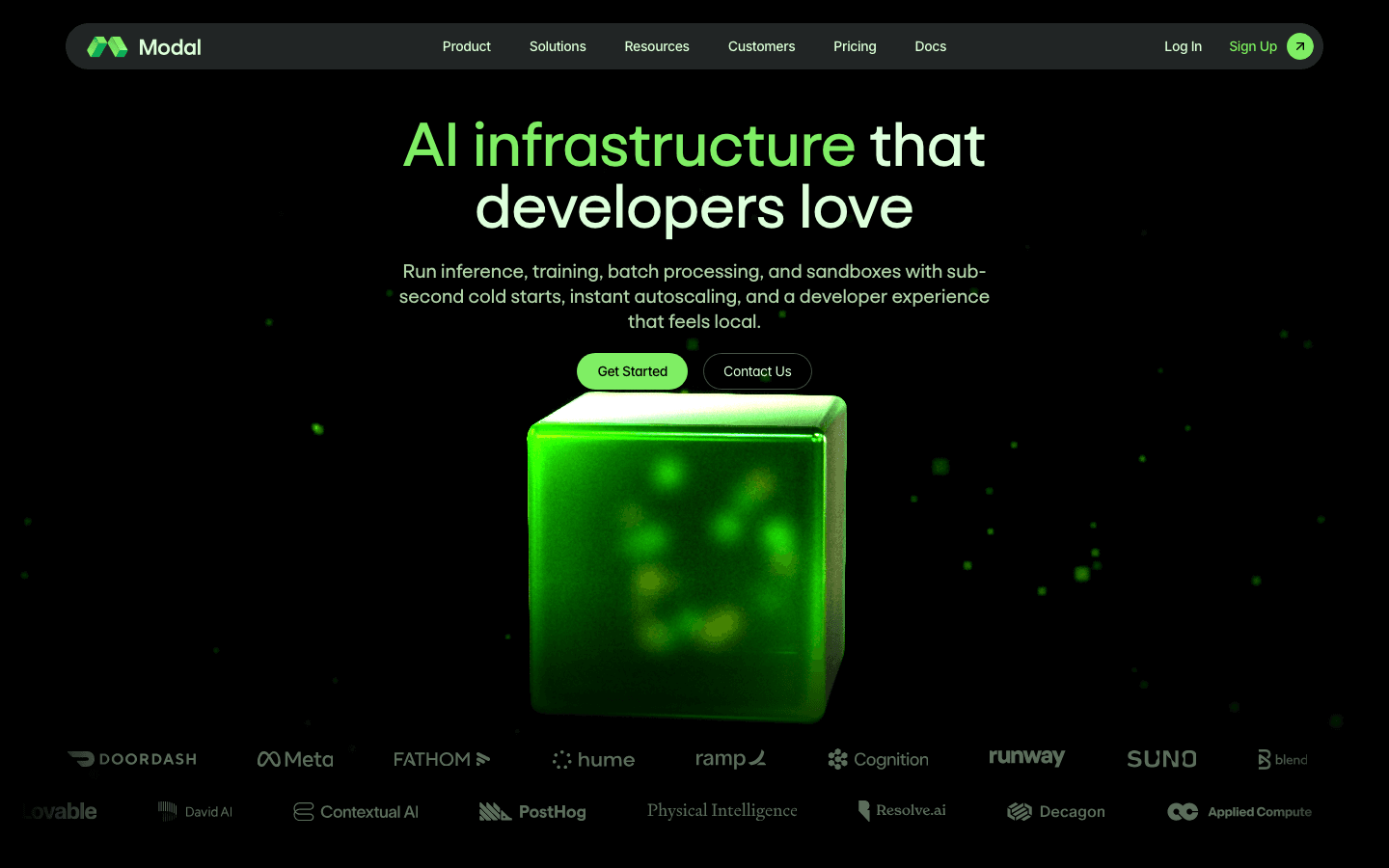
Modal is a serverless platform for running Python code in the cloud without managing servers or containers yourself. You write a normal Python function, decorate it, and Modal handles building the image, provisioning CPU or GPU workers, and scaling them up and down, including to zero.
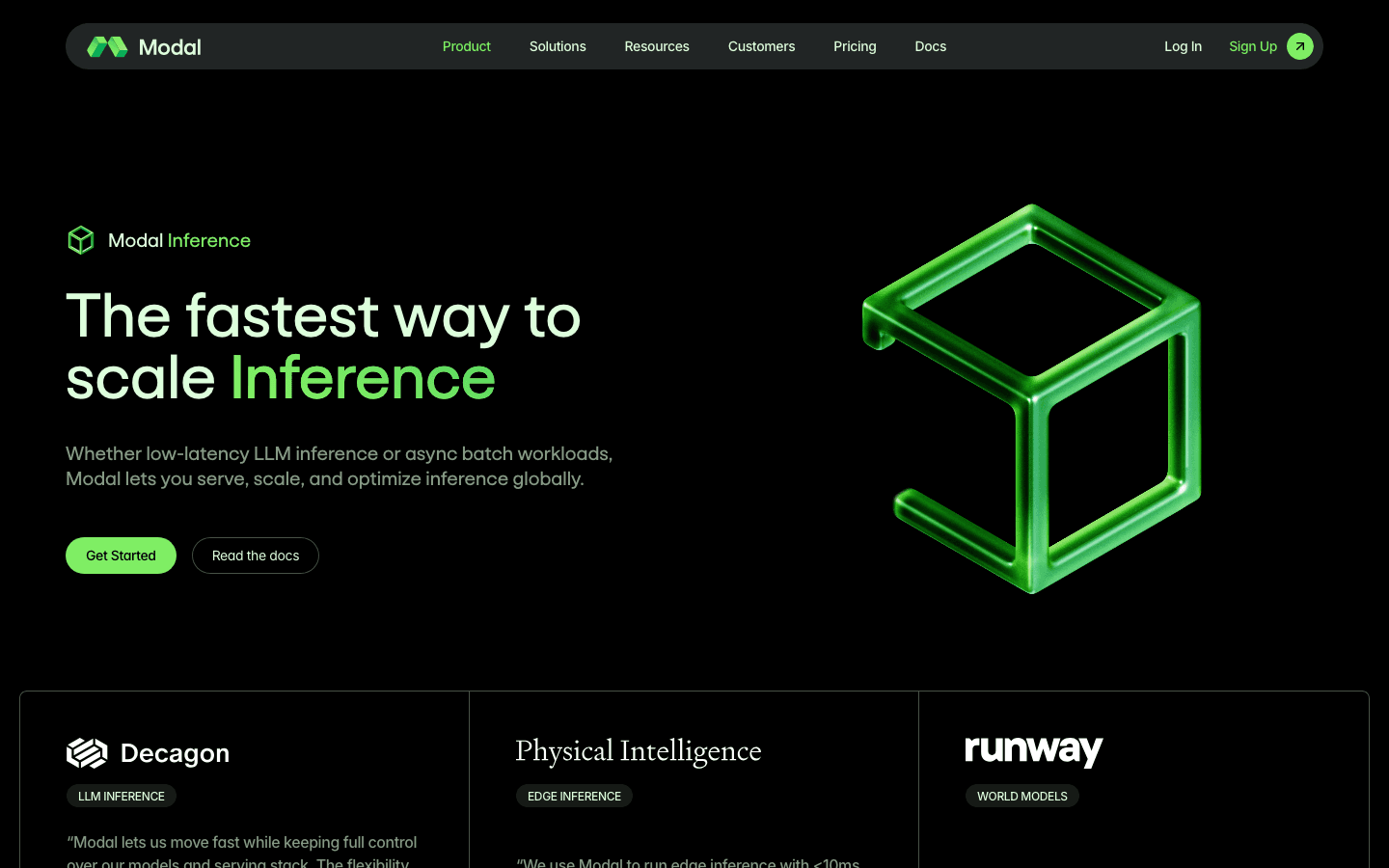
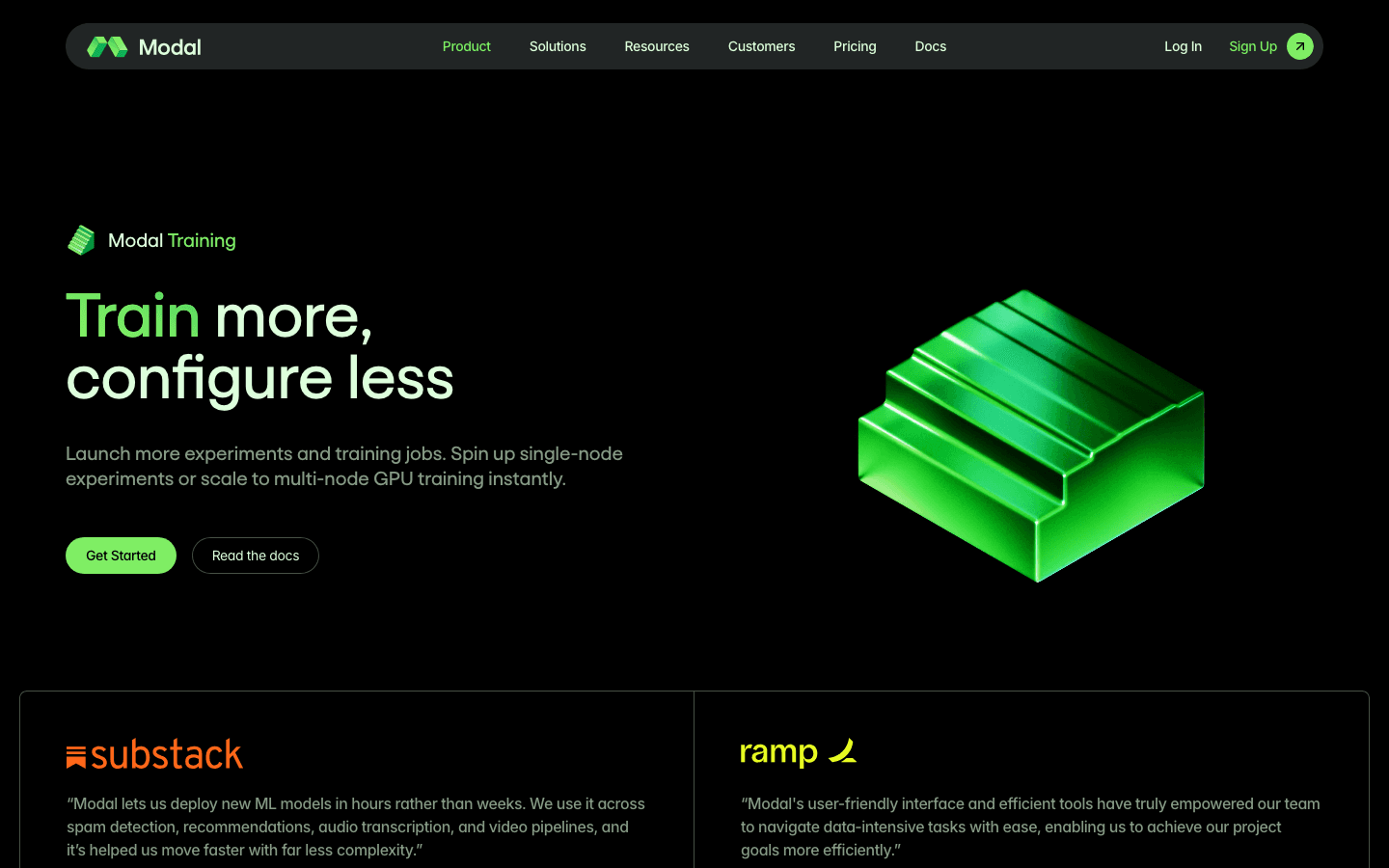
It's built around fast cold starts and per-second billing, which makes it a common choice for batch inference, fine-tuning jobs, and bursty workloads where you don't want to keep a GPU box running between requests. It also ships Sandboxes, isolated ephemeral environments used for running coding agents and untrusted code.
Modal Labs was founded in 2021 by Erik Bernhardsson (previously at Spotify) and is headquartered in New York.
Modal screenshots
Who it's for
- ✓ Teams running bursty or batch GPU workloads (fine-tuning, batch inference, data pipelines) who don't want to manage idle capacity
- ✓ ML engineers who want to deploy a Python function as an autoscaling endpoint without writing Kubernetes YAML
- ✓ Teams building coding agents or RL environments that need fast, isolated sandboxes
Who should look elsewhere
- ✗ Teams that want a flat, predictable monthly bill instead of usage-based compute pricing
- ✗ Small hobby projects that are extremely cost-sensitive, since per-second GPU rates run higher than raw cloud GPU rental
Pros
- + Per-second billing across CPU, GPU, and memory with no charge for idle time
- + Fast cold starts and container reuse, which matters for bursty inference and agent workloads
- + Straightforward Python decorator API instead of managing Docker/Kubernetes directly
- + Pricing for compute is published and itemized, not hidden behind a sales call
Cons
- – Team plan adds a $250/month platform fee on top of compute usage, which is a real jump from the free Starter tier
- – GPU per-second rates are higher than renting the same GPU directly from a bare-metal cloud
- – Workspace-level spend limits and billing alerts have tripped up some users with low usage, according to Trustpilot reviews
- – Enterprise pricing is quote-only, so larger teams can't see final costs without contacting sales
Modal pricing
What you pay for
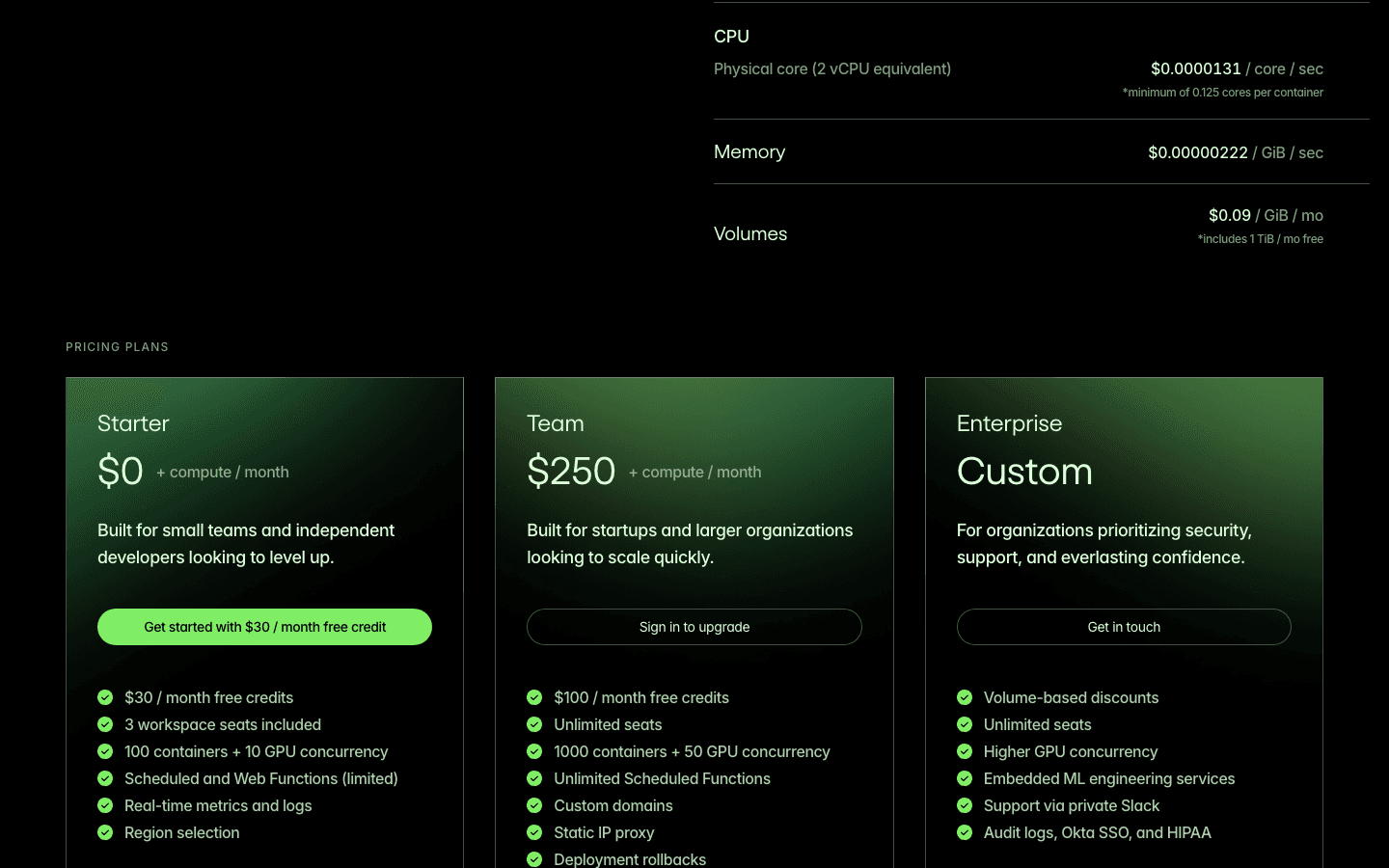
You pay for compute time by the second, not for a seat or a flat subscription. The Starter plan is free with $30/month in credits, Team adds a $250/month platform fee on top of usage, and Enterprise is quote-only with volume discounts. All the per-second GPU, CPU, memory, and storage rates are published on the pricing page, so this isn't quote-only pricing overall, only the Enterprise tier is.
You pay for what you consume rather than a per-seat fee, so cost scales with usage.
| Plan | Price | Highlights |
|---|---|---|
| Starter | Free | $30/month in free compute credits · 3 workspace seats · 100 containers · 10 GPU concurrency |
| Team | $250/mo | $250/month platform fee plus compute · $100/month free compute credits · Unlimited seats · 1,000 containers · 50 GPU concurrency |
| Enterprise | Custom | Volume discounts on compute · Custom limits and support |
There's no flat per-seat price. The $250/month figure is the Team plan's platform fee, not a full bill: on top of it you pay per-second for compute (CPU, memory, GPU). Sample per-second GPU rates from the pricing page: T4 $0.000164, A100 80GB $0.000694, H100 $0.001097, B300 $0.001972. CPU is $0.0000131 per core-second, memory $0.00000222 per GiB-second, storage $0.09 per GiB-month with 1 TiB free. Enterprise is quote-only. Sandbox and notebook compute is billed at a higher rate than regular Functions.
Pricing verified July 7, 2026 · source
How Modal's pricing compares
Modal next to its closest alternatives on entry price, billing, and whether pricing is public.
| Tool | Starting price | Billing | Free option | Pricing disclosed |
|---|---|---|---|---|
| Modal | $0.0000131/core-second | usage-based | Yes | Partly public |
| Baseten | Custom / quote | usage-based | No | Not disclosed |
| Replicate | $0.000025/second | usage-based | No | Public |
| Together AI | Usage-based | usage-based | No | Public |
| Fireworks AI | Usage-based | usage-based | Trial ($1 in free credits for new accounts to test serverless inference) | Partly public |
| RunPod | Usage-based | usage-based | No | Public |
Is Modal still actively developed?
Last significant update: June 2026. Modal shipped v1.5.1, adding an @app.server() decorator for low-latency serverless HTTP apps, a modal endpoint CLI for deploying LLM inference, new billing APIs, proxy token management, and an experimental modal curl command.
Top Modal alternatives
Modal FAQ
Is Modal free?+
The Starter plan is free and includes $30 a month in compute credits, 3 seats, and up to 10 concurrent GPUs. Past that you pay for compute by the second.
How does Modal price GPUs?+
Per second of actual use, not per hour of reserved capacity. Rates vary by GPU: for example H100 is about $0.0011 per second and T4 is about $0.00016 per second, published on the pricing page.
What does the Team plan cost?+
Team is $250 a month plus compute usage, and includes $100 a month in free credits, unlimited seats, and higher container and GPU concurrency limits than Starter.
Is Enterprise pricing public?+
No. Enterprise is quote-only and includes volume discounts on compute; you need to contact Modal's sales team for a number.