Stripe Review
Payment processing, billing, and tax compliance in one API
Is this your product? Claim this page · Request a change
Looking for a Stripe alternative? See our ranked comparison.→What is Stripe?
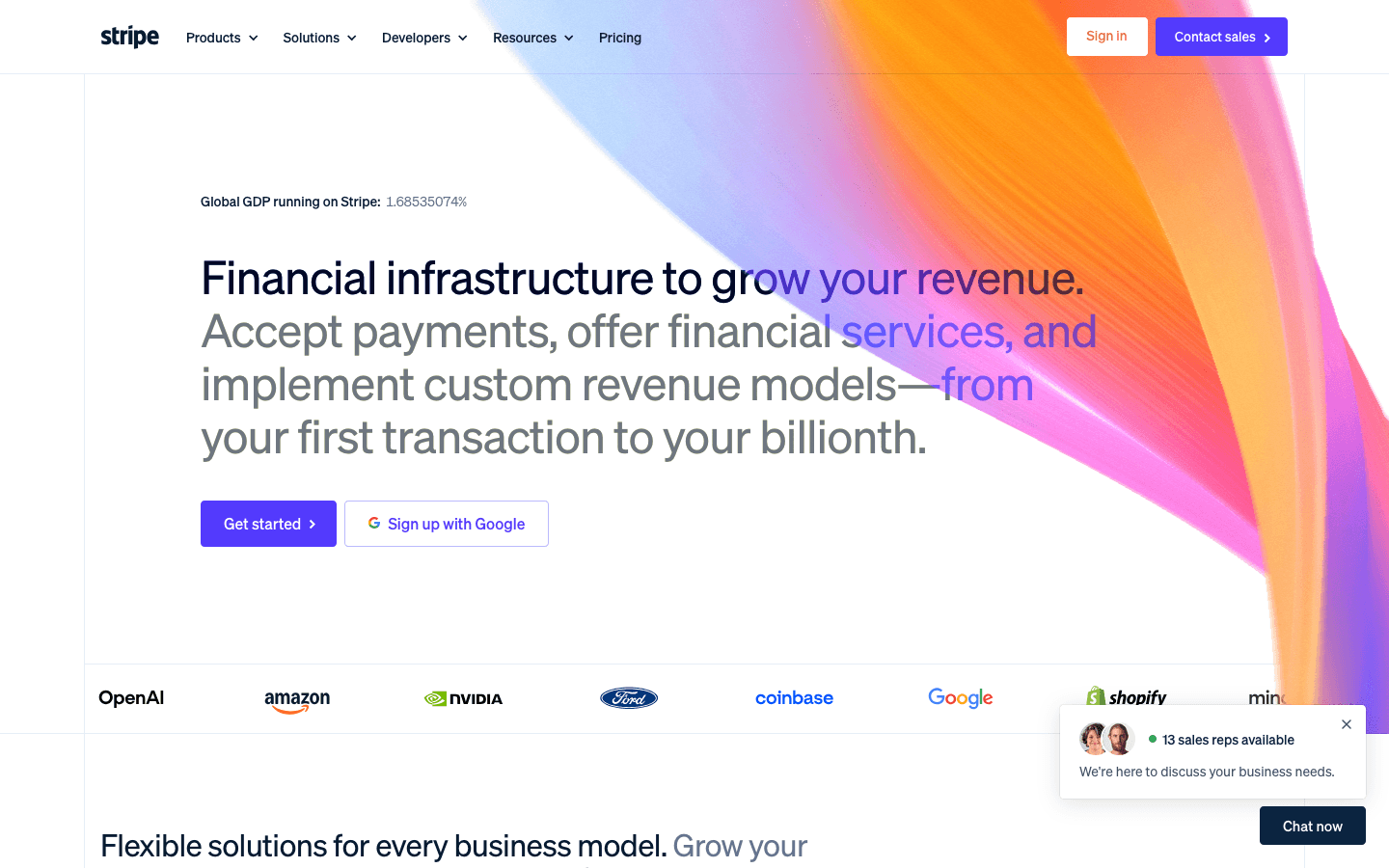
Stripe is a payments API that lets you accept cards, bank transfers, and local payment methods, then layers on billing, tax, and fraud tools on top. Most businesses start with basic Checkout or the Payments API and add products like Billing (subscriptions), Tax (sales tax calculation and filing), and Radar (fraud detection) as they need them.
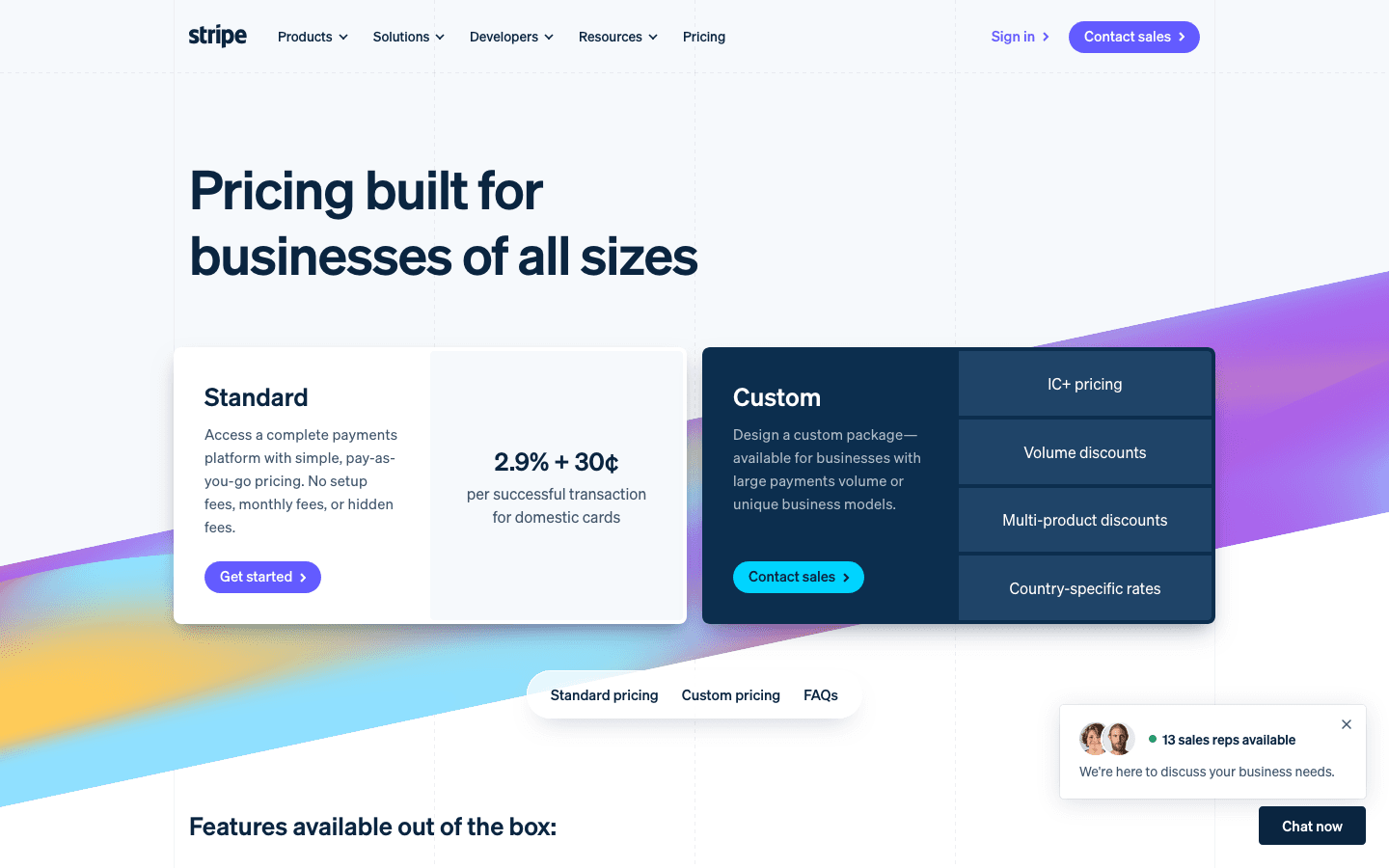
Each add-on product has its own pricing, so your real bill is processing fees plus whatever extras you turn on. The core card rate (2.9% + 30 cents in the US) is published and has stayed roughly flat for years, but international cards, currency conversion, and manually entered cards each add their own surcharge, which is where actual costs creep up for global or B2B sellers.
Stripe screenshots


Who it's for
- ✓ Developers who want a well-documented API and are comfortable wiring up payments themselves
- ✓ Businesses selling internationally that need one processor covering cards, local payment methods, and multi-currency payouts
- ✓ SaaS companies that want billing, tax, and payments under one vendor instead of stitching several tools together
Who should look elsewhere
- ✗ Merchants in higher-risk categories (supplements, CBD, adult, crypto) who need predictable underwriting, since Stripe's automated risk reviews can freeze funds with little warning
- ✗ Businesses that want a flat, published price for subscriptions and tax filing rather than a percentage of volume plus tiered contracts
Pros
- + Processing rate and surcharges are published, not hidden behind a sales call
- + One account covers cards, ACH, wallets, and dozens of local payment methods across regions
- + Billing and Tax products plug into the same dashboard and API, so you're not reconciling three vendors
- + No setup fee, monthly minimum, or contract required for standard card processing
Cons
- – Account holds and reserve requirements are decided by an automated risk system, and businesses report funds frozen for months with vague explanations
- – Add-on products (Billing, Tax, Sigma, Revenue Recognition) each carry their own separate fee, so the effective rate for a subscription business with tax compliance can run well above the advertised 2.9%
- – International cards, currency conversion, and manual card entry each stack an extra surcharge on top of the base rate
- – Support is largely self-serve and automated for standard accounts; getting a human to review a disputed hold takes persistence
Stripe pricing
What you pay for
You pay per transaction, not a subscription, for core card and bank payments. The base card rate is public and simple, but real cost depends on card type, currency, country, and which add-on products (Billing, Tax, Sigma) you turn on, each billed separately. Stripe discloses its standard rates on its pricing pages; only large-volume and custom deals require talking to sales.
You pay for what you consume rather than a per-seat fee, so cost scales with usage.
| Plan | Price | Highlights |
|---|---|---|
| Online card payments (US) | Custom | 2.9% + 30 cents per successful transaction · +1.5% for international cards · +0.5% for manually entered cards · +1% for currency conversion |
| In-person (Terminal) | Custom | 2.7% + 5 cents per successful transaction · +1.5% for international cards · +$0.10 per authorization for Tap to Pay |
| ACH Direct Debit | Custom | 0.8% per transaction, capped at $5 |
| Billing (subscriptions) | Custom | 0.7% of billing volume pay-as-you-go · or flat monthly plans from $620/mo on a 1-year contract for up to $100K volume, plus 0.67% overage |
| Tax | Custom | 0.5% per transaction (no-code) or 50 cents per transaction (API), pay-as-you-go · Tax Complete plans from $90/mo on a 1-year contract, adds automated registrations and filings |
| Custom / high volume | Custom | Volume discounts available above roughly $80K/month · Negotiated rates for large processors |
Stripe has no setup fee, monthly fee, or minimum for standard card processing. The 2.9% + 30 cents rate is the standard US online card rate; it moves with card type, currency, and volume, so most businesses pay a blended rate above the sticker number. Billing and Tax are separate products billed on top of processing if you use them. High-volume and enterprise pricing is negotiated and not published.
Pricing verified July 22, 2026 · source
How Stripe's pricing compares
Stripe next to its closest alternatives on entry price, billing, and whether pricing is public.
Is Stripe still actively developed?
Last significant update: June 2026. Stripe Projects added new agent integrations, more model providers, and custom developer controls for building AI coding agents on Stripe.
Top Stripe alternatives
Stripe FAQ
What does Stripe cost for a typical US online business?+
The standard rate is 2.9% plus 30 cents per successful card transaction, with no monthly fee. International cards add 1.5%, manually entered cards add 0.5%, and currency conversion adds 1%, so your blended rate depends on your customer mix.
Does Stripe charge extra for handling sales tax?+
Yes. Stripe Tax is a separate product billed at 0.5% per transaction through no-code integrations or 50 cents per transaction through the API, on top of your processing fees. A flat-fee Tax Complete plan starts at $90 a month on a 1-year contract and adds automated registrations and filings.
Is there a free plan?+
No. Stripe has no free-forever tier. There's no setup or monthly fee for standard processing, but every transaction carries a fee, and every add-on product (Billing, Tax, Sigma) is priced separately.
Why do some merchants complain about Stripe freezing their money?+
Stripe's automated risk system can place holds or reserves on an account for elevated risk factors like chargebacks, refund spikes, or unusual volume, sometimes with little explanation and holds lasting months. This shows up repeatedly in Better Business Bureau complaints.