Top ZoomInfo Alternatives in 2026
Here for ZoomInfo itself? See the full ZoomInfo profile, pricing & reviews →
Suggest a change- If you want a large contact database with published, self-serve pricing instead of a sales call, choose Apollo. Apollo posts per-seat prices for its 230M+ contact database and outreach tools right on its pricing page, so you can compare plans before ever talking to sales.
- If you're a small team or solo rep who mainly needs verified emails and direct-dial phone numbers on a tight budget, choose RocketReach. Essentials starts at $33 a seat a month billed annually, the cheapest published entry price of any tool here, and Pro adds mobile numbers for $75 a seat.
- If you need to combine dozens of data sources into one enriched record or run AI research on gaps a database can't fill, choose Clay. Clay's waterfall enrichment spans more than 200 providers and its Claygent AI agents can answer open-ended research questions no single database field covers.
- If you want one subscription that bundles data, multichannel outreach, a dialer, and AI signal detection the way ZoomInfo does, choose Amplemarket. Amplemarket packages lead data, sequences, a dialer, deliverability monitoring, and its Duo AI copilot into a single platform, mirroring ZoomInfo's all-in-one pitch.
- If your team already relies on ZoomInfo's Chorus conversation intelligence, buyer intent signals, and the sheer size of its database, and switching would mean losing integrations you depend on, choose stay on ZoomInfo. no alternative here matches ZoomInfo's combined database size, intent data, and bundled conversation intelligence in one vendor relationship, even though you pay for that breadth through an opaque, sales-negotiated contract.
ZoomInfo built its business on being the largest, most frequently refreshed B2B contact database, but it sells every paid plan through a sales rep with no public price list. Teams often find out the real cost only after seats, credit volume, and add-ons like intent data get added to a quote, and Vendr's aggregated purchase data puts the median contract at about $33,500 a year.
The alternatives below cover the same core job, finding and reaching the right people, but take different approaches. Apollo and RocketReach publish self-serve prices for a straightforward contact database plus outreach tools. Clay turns enrichment into a customizable, usage-priced workflow. Amplemarket bundles data with a fuller AI sales platform at a premium price. None match ZoomInfo's raw data size, but several are cheaper, more transparent, or a better fit for how a specific team actually works.
ZoomInfo alternatives compared
| Tool | Best for | Starting price | Free option | Last update |
|---|---|---|---|---|
| ApolloBest for transparent, self-serve pricing | Teams that want prospecting data, enrichment, and outreach sequencing in one subscription instead of stitching together a data provider and a separate sender | $49/seat/mo | Yes | June 2026 |
| RocketReachBest value for small teams | Individual reps, recruiters, or small teams who mainly need to find verified emails and direct-dial phone numbers | $33/seat/mo | Yes | February 2026 |
| ClayBest for custom data enrichment workflows | RevOps and growth teams that need to combine data from many providers into one enriched record | $185/mo | Yes | June 2026 |
| AmplemarketBest for an all-in-one AI sales platform | Sales teams that want prospecting data, outreach, and deliverability monitoring in one subscription instead of stitching together separate tools | $600/mo | Trial (Available on all plans, length not disclosed) | June 2026 |
Why teams switch from ZoomInfo
No public pricing above the free tier
Every paid ZoomInfo plan requires a sales call, and Vendr's aggregated deal data puts the median contract at about $33,500 a year, ranging from roughly $7,200 to $156,000 depending on seats and add-ons.
Credit-based usage can run out mid-cycle
ZoomInfo's paid plans are metered by monthly contact credits, and teams that unlock more contacts than expected can hit limits or pay overage fees before the cycle resets.
Feature and pricing structure keeps shifting
ZoomInfo has grown mainly by acquiring other data and engagement vendors, including Chorus for conversation intelligence, which makes the product span multiple jobs and makes renewal pricing hard to predict year to year.
The best ZoomInfo alternatives, ranked
Apollo is the closest like-for-like swap for ZoomInfo's core job: a huge contact database, over 230 million people, paired with outreach tools, but with prices posted on a public page instead of a sales call. Basic starts at $49/seat/month billed annually and includes 30,000 credits a year, unlimited sequences, and CRM integrations, a level of detail ZoomInfo never states publicly. Apollo also bundles a dialer with call recording, so teams replacing ZoomInfo's phone workflows keep that in one subscription. The free plan gives full database access rather than a locked-down sample, useful for testing data quality before committing to anything. The tradeoff is the credit system: unlocking a phone number costs 8 credits, so heavy users can burn through their annual allotment fast, and the Organization plan's 3-seat minimum pushes real entry cost above $350/month.
Pros
- + Free plan gives full access to the contact database, not just a limited sample
- + Combines data, enrichment, sequences, and a dialer in one product instead of three separate subscriptions
- + Credits are granted upfront for the year on annual plans rather than trickled out monthly
Cons
- – Credit system means the advertised seat price understates real cost for active users who unlock a lot of emails and phone numbers
- – Organization plan has a 3-seat minimum, pushing its real entry cost to at least $357/month even at the lowest advertised per-seat rate
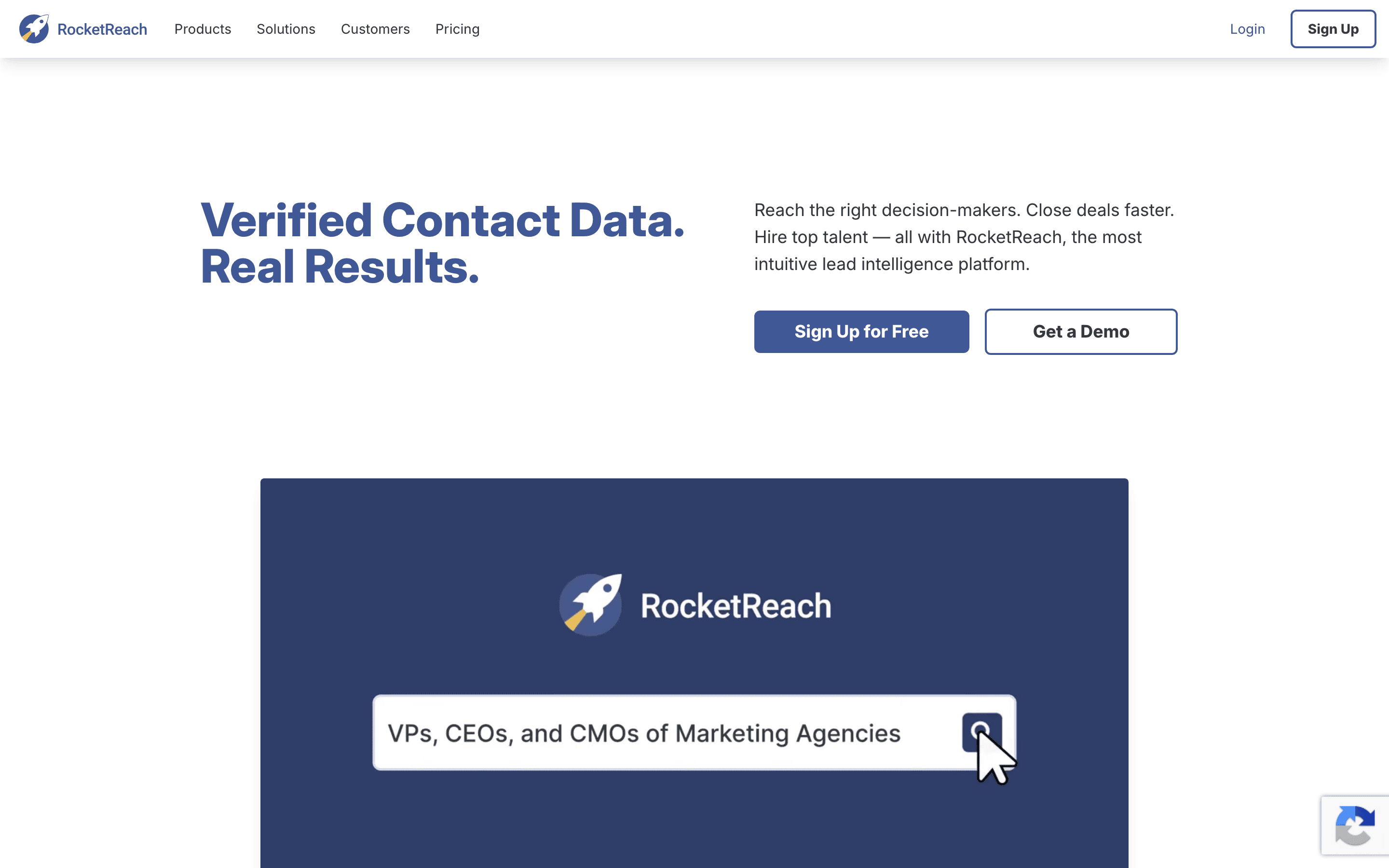
RocketReach is the cheapest self-serve way to replace ZoomInfo's basic lookup workflow. Essentials starts at $33/seat/month billed annually, about $399/year, for email-only searches across a database RocketReach says covers 700 million professionals, with Pro at $75/seat/month unlocking mobile and direct-dial phone numbers plus Salesforce, Outreach, and HubSpot integrations. Autopilot jobs and Sequences add lightweight, semi-automated outreach on top of the raw lookups, and intent and job-change signals come bundled rather than sold as a separate add-on. The catch is that phone numbers sit behind Pro, not Essentials, so budget buyers who need direct dials still have to pay up. The pricing page also renders client-side and showed different currencies to different visitors during verification, making it harder to get a stable self-serve quote than Apollo offers.
Pros
- + Large database with both email and direct-dial phone coverage
- + Autopilot and Sequences let you turn a saved search into ongoing, semi-automated outreach
- + Browser extension works directly on LinkedIn and company websites for one-click lookups
Cons
- – Phone numbers are not available on the entry-level Essentials plan
- – Pricing page renders with client-side JavaScript and appeared to show different currencies to different visitors, which makes it hard to get a stable quote without logging in
Clay fits ZoomInfo switchers who want to build their own enrichment stack rather than buy one static database. It runs waterfall lookups across more than 200 data providers, so a failed match on one source automatically tries the next, and its Claygent AI agents can answer research questions no structured field covers, like reading a company's careers page for headcount signals. Pricing is usage-based: Launch starts at $185/month for 15,000 actions and 2,500 data credits, with unlimited seats and tables on every plan including Free, so cost tracks usage instead of headcount. The tradeoff is a real learning curve. Clay's table-based workflow builder is closer to a spreadsheet-meets-automation tool than a search box, and actions don't roll over month to month, so unused capacity is simply lost.
Pros
- + Waterfall enrichment across 200+ data providers gets higher match rates than any single data source
- + Claygent AI agents can answer open-ended research questions a normal enrichment field can't, like reading a company's careers page
- + Free plan lets you test real enrichment workflows before paying
Cons
- – Usage-based pricing on actions and data credits makes monthly cost hard to predict for high-volume teams
- – Table-based workflow builder has a real learning curve compared with simpler point-and-click tools
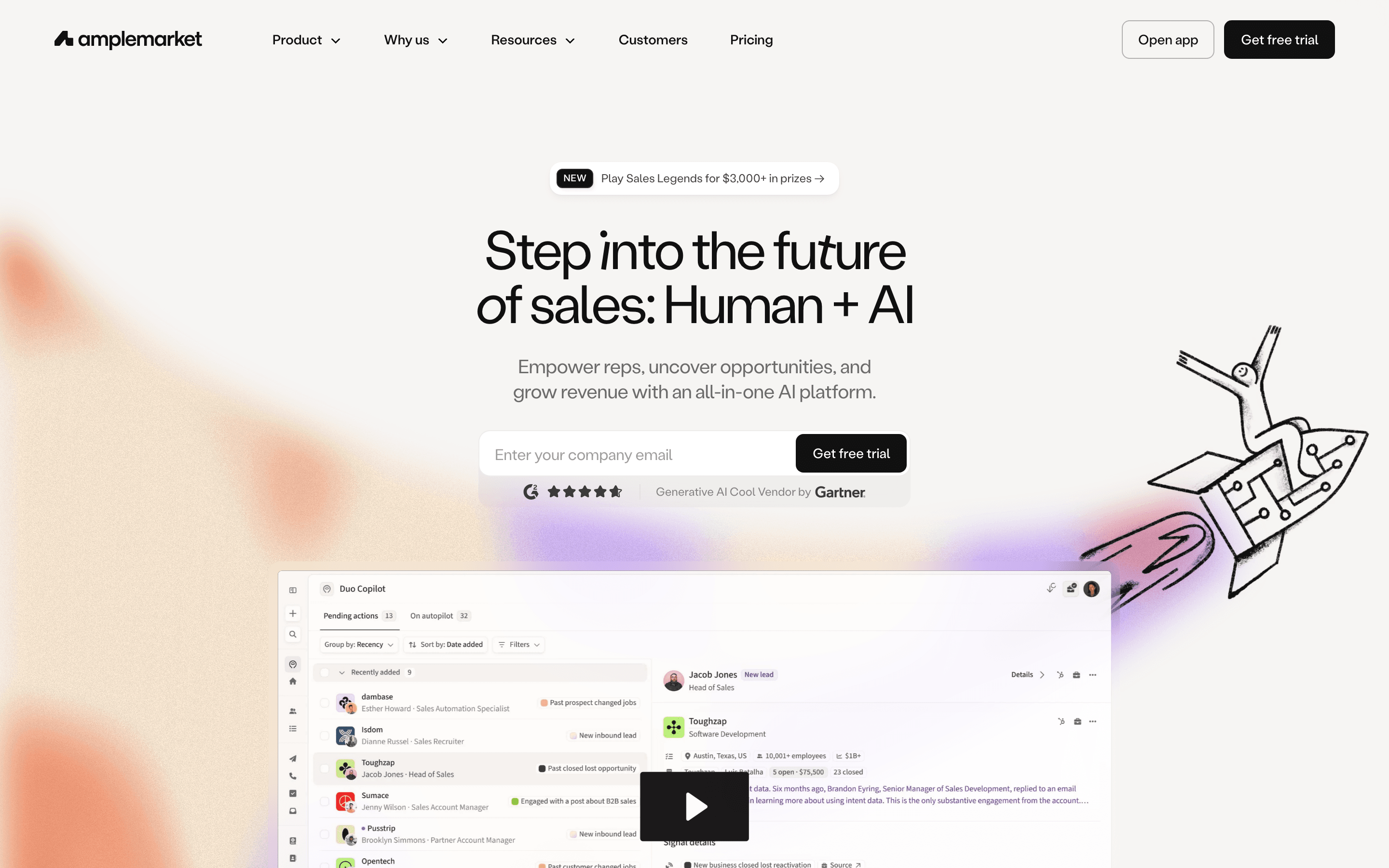
Amplemarket is the alternative that mirrors ZoomInfo's own pitch most closely: one subscription bundling lead data, multichannel outreach, a dialer, deliverability monitoring, and an AI layer called Duo that flags buying signals, instead of stitching together point tools. The Startup plan lists at $600/month for 2 users and 27,000 contacts, billed on an annual term, and Duo Copilot, Duo Voice, and Duo Inbox extend well past basic sequencing into call handling and signal-based drafting. Like ZoomInfo, only the entry tier has a public number. Growth and Elite, the plans most teams past a handful of seats will need, are quote-only. There's no free plan either, so budget-conscious teams comparing options before a sales call get less to go on than they would with Apollo or Clay.
Pros
- + Combines lead data, sequencing, dialing, and deliverability tools in one platform
- + AI features (Duo Copilot, Duo Voice, Duo Inbox) go beyond basic sequencing into signal detection and call handling
- + Frequent, visible product releases with monthly changelog posts
Cons
- – Only the entry Startup tier has a published price, and it's billed annually even though shown as a monthly figure
- – Growth and Elite plans, likely needed by any team past a handful of seats, require a sales call for pricing
Should your product be on this sales intelligence & data list?
If you build a tool that belongs next to the ones above, submit it. A human reviews every submission. Approved products get their own page with pricing and screenshots, plus a place in the comparisons where they fit. It is free. You sign in with your work email so you can follow the decision, and there is no password to create.
ZoomInfo alternatives: FAQ
What's the best free alternative to ZoomInfo?+
Apollo's free plan gives full access to its 230M+ contact database with 900 credits a year, more usable access than ZoomInfo's free Lite tier's 10 monthly contact credits.
What's the cheapest ZoomInfo alternative?+
RocketReach's Essentials plan starts at $33/seat/month billed annually, about $399/year, for email-only lookups, the lowest published entry price among these ZoomInfo alternatives.
Which ZoomInfo alternatives publish their prices instead of requiring a sales call?+
Apollo, Clay, and RocketReach all publish per-plan pricing on their websites. Amplemarket only publishes its entry Startup tier.
Is there a ZoomInfo alternative that writes outreach for me instead of just returning contact data?+
Amplemarket does. Its Duo Copilot flags buying signals inside a multichannel sequencer and drafts outreach for you across email and LinkedIn, so the tool handles both the research and the first-draft message.
ZoomInfo alternatives: pricing compared
Entry price, billing model, and whether pricing is public. 4 of 5 publish pricing you can check without talking to sales.
| Tool | Starting price | Billing | Free option | Pricing disclosed |
|---|---|---|---|---|
| ZoomInfo | Free tier + custom | quote-only | Yes | Not disclosed |
| Apollo | $49/seat/mo | per-seat | Yes | Public |
| RocketReach | $33/seat/mo | per-seat | Yes | Partly public |
| Clay | $185/mo | usage-based | Yes | Partly public |
| Amplemarket | $600/mo | tiered | Trial (Available on all plans, length not disclosed) | Partly public |
How we made these picks. We compare tools on public pricing, features, and hands-on assessment, then verify every price against the vendor's own page. We never accept payment for rankings. Read the full methodology. Spotted an error? Report it.
More sales intelligence & data comparisons
Further reading
- Sales intelligence software cost by team size in 2026 - Sales intelligence software cost by team size runs from about $400 a year per seat to a quote-only contract. Here's what a 1, 5, 10, and 25-seat team pays.
- Do you still need ZoomInfo in 2026? - You still need ZoomInfo if you want buyer intent, Chorus, and the biggest database in one vendor. Otherwise Apollo, Clay, or RocketReach cost less.
- Best sales intelligence tools for startups - Apollo fits most seed teams best. Clay wins on enrichment depth, RocketReach on price, and ZoomInfo pays off once you can absorb a five-figure contract.
- How to switch from ZoomInfo to Apollo - A step-by-step guide to switch from ZoomInfo to Apollo: compare real costs, what data you keep or lose, and how to run both during the move.