Top Adyen Alternatives in 2026
Here for Adyen itself? See the full Adyen profile, pricing & reviews →
Suggest a change- If you want the most commonly cross-shopped substitute, with published rates and built-in marketplace payouts, choose Stripe. Stripe discloses its standard card rate directly on its pricing page and its Connect product covers the same platform-payout job Adyen sells to marketplaces.
- If you need PayPal and Venmo accepted natively alongside cards, without switching to a merchant-of-record model, choose Braintree. Braintree runs cards, PayPal, and Venmo through one SDK while staying a straight processor, so you keep control of your own funds flow and tax filings the way you did on Adyen.
- If your real problem with Adyen is that it doesn't handle sales tax or VAT, choose Paddle. Paddle is a merchant of record that bundles global tax registration, collection, and filing into one transaction fee, which Adyen has no product for at all.
- If you're a verified 501(c)(3) nonprofit that wants the lowest published card rate without a sales negotiation, choose Braintree. Braintree publishes a discounted 2.19% + $0.29 rate for verified nonprofits, a self-serve discount none of the other alternatives here offer.
- If you're a global marketplace or platform business that needs payouts, payout timing, and capital products bundled with processing, choose stay on Adyen. none of Stripe, Braintree, or Paddle match Adyen's combined platforms and capital-advance products under one contract, so switching would mean stitching those back together elsewhere.
Adyen is built for large, high-volume merchants and marketplaces that want one direct-acquiring platform across cards, wallets, and local payment methods worldwide. You get indicative rates on its pricing page, but your real price comes from a sales call, and Adyen sets an unpublished minimum monthly invoice that varies by industry.
Teams look elsewhere for three main reasons: Adyen doesn't calculate or file sales tax, its onboarding and KYC checks feel slow and paperwork-heavy for anything short of the largest merchants, and Trustpilot reviews repeatedly describe held funds and slow account support. The alternatives below are the ones a real Adyen buyer would actually cross-shop: other direct processors built for the same scale, plus one merchant-of-record option for teams whose real complaint is the tax problem, not the payments problem.
Adyen alternatives compared
| Tool | Best for | Starting price | Free option | Last update |
|---|---|---|---|---|
| StripeBest overall substitute | Developers who want a well-documented API and are comfortable wiring up payments themselves | Usage-based | No | June 2026 |
| BraintreeBest for PayPal and Venmo checkouts | Businesses that need PayPal, Venmo, and card acceptance under one SDK instead of separate integrations | Usage-based | No | March 2026 |
| PaddleBest for offloading sales tax | Solo founders and small teams selling software or digital products who don't want to register for VAT and sales tax in every country themselves | Custom / quote | No | July 2026 |
| Mallow | Small marketing agencies billing monthly retainers by card or ACH whose current processor takes roughly 3% per invoice | Custom / quote | No | — |
Why teams switch from Adyen
Adyen accounts get held or stopped with limited explanation, and account support is slow to resolve payout and billing disputes.
This is a recurring pattern in Adyen's Trustpilot reviews, not an isolated complaint.
Adyen's onboarding and KYC checks are technical and paperwork-heavy, and its economics are hard to justify unless you're a high-volume merchant.
Adyen has no published starting price, so teams that want to know their real rate without a sales call end up looking at processors that disclose pricing outright.
The best Adyen alternatives, ranked
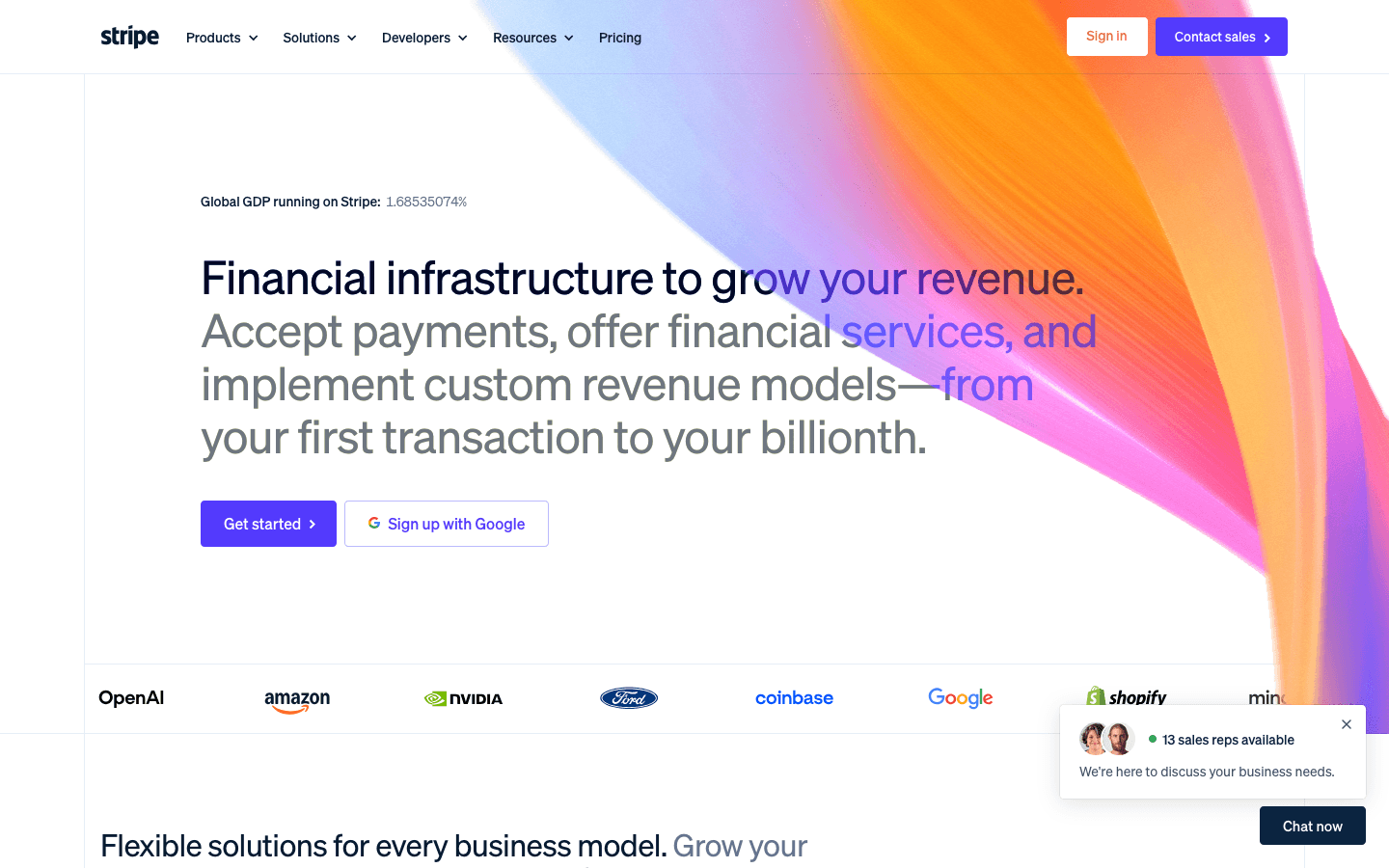
Stripe is the most natural first stop for a team leaving Adyen. Like Adyen, it's a direct payment processor, not a merchant of record, so you keep control of your own funds and tax filings, and it covers cards, ACH, wallets, and dozens of local payment methods across regions in one API. Unlike Adyen, Stripe publishes its standard rate directly on its pricing page: 2.9% + 30 cents for US cards, with clear surcharges for international cards, currency conversion, and manual entry. Stripe Connect competes head-on with Adyen's platform product for marketplaces that need to route payouts to sellers, and Stripe Tax and Stripe Billing let you add sales tax and subscription billing without adding a vendor. The tradeoff is Stripe's own automated risk system, which BBB complaints describe freezing funds for months with little explanation, the same complaint pattern that shows up against Adyen.
Pros
- + Processing rate and surcharges are published, not hidden behind a sales call
- + One account covers cards, ACH, wallets, and dozens of local payment methods across regions
- + Billing and Tax products plug into the same dashboard and API, so you're not reconciling three vendors
Cons
- – Account holds and reserve requirements are decided by an automated risk system, and businesses report funds frozen for months with vague explanations
- – Add-on products (Billing, Tax, Sigma, Revenue Recognition) each carry their own separate fee, so the effective rate for a subscription business with tax compliance can run well above the advertised 2.9%
Braintree is the other major direct processor on this list, and it's the pick if wallet coverage matters as much as cards. Built by PayPal, it processes cards, PayPal, and Venmo through a single SDK across 200+ markets, plus Apple Pay and Google Pay, at a published standard rate of 2.89% + $0.29 with no monthly fee. Verified nonprofits get a lower 2.19% + $0.29 rate, a discount none of the other alternatives here offer. Like Adyen, Braintree only processes payments. It doesn't calculate or file sales tax, so you'd still pair it with a separate tax tool if that matters to you. Support is email and chat only, and reviewers describe reserves, account freezes, and delayed payouts, the same complaint pattern that pushes people off Adyen in the first place.
Pros
- + One SDK covers cards, PayPal, Venmo, and major wallets, so you skip building separate integrations
- + No monthly or setup fee, you only pay per transaction
- + Nonprofits with 501(c)(3) status get a lower card rate (2.19% + $0.29)
Cons
- – Standard card rate (2.89% + $0.29) runs higher than several flat-rate competitors
- – No phone support, and multiple review sites report slow or unresponsive email support
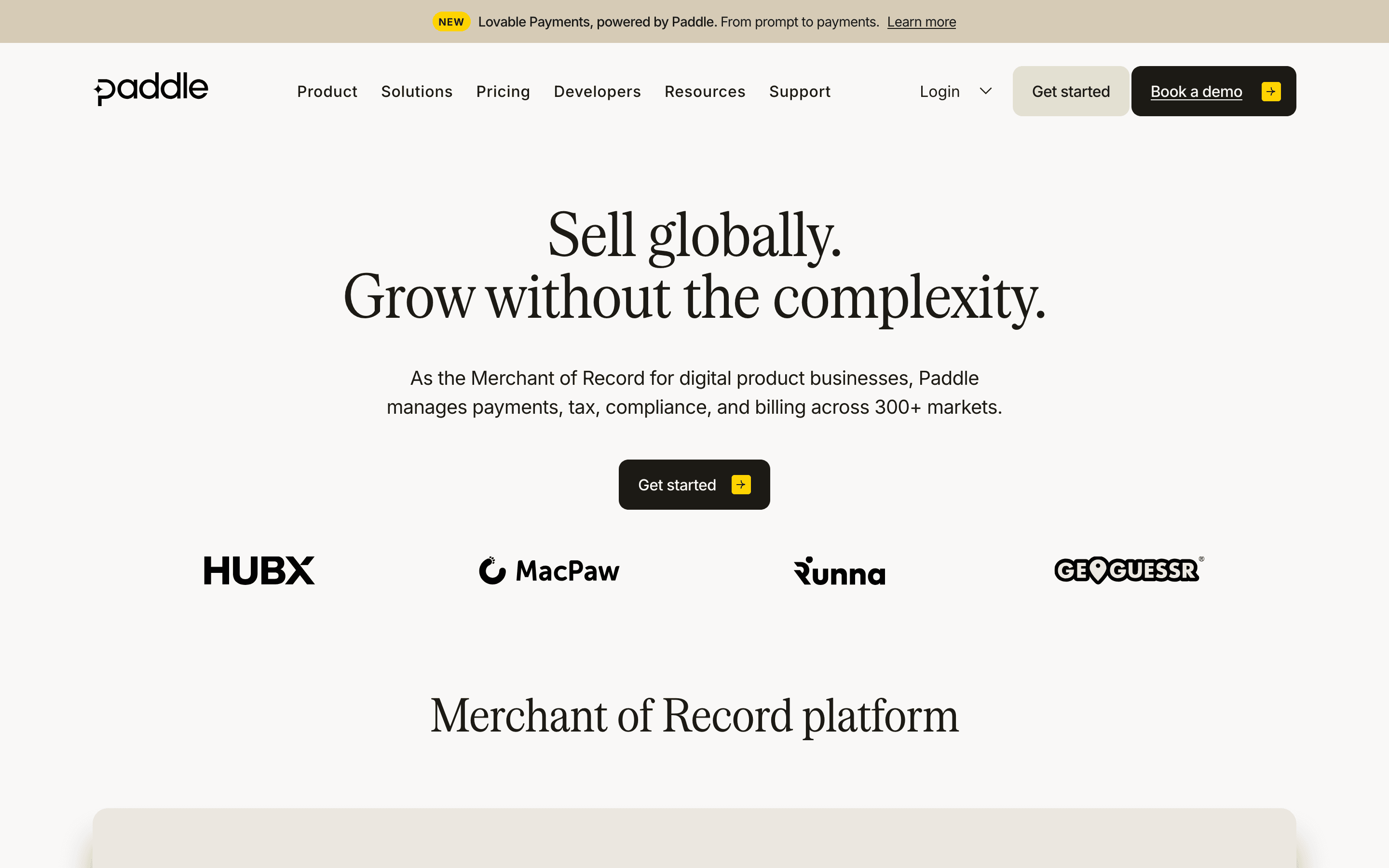
Paddle is worth considering only if what's actually pushing you off Adyen is the tax problem, not the payments problem. As a merchant of record, Paddle collects the money, remits sales tax and VAT in over 200 countries, and pays you out net of one all-in fee, 5% + $0.50 per successful checkout, replacing a processor-plus-tax-tool stack with a single bill. That's a very different model from Adyen's direct acquiring, so it fits software and subscription businesses selling digital products, not marketplaces or physical-goods sellers who valued Adyen's payout and capital products. The fee runs steep at scale, roughly $25,000 a month on $500,000 of volume, and Capterra reviewers describe payouts held 90 to 180+ days after an account closure or risk flag, echoing the fund-holding complaints Adyen itself gets.
Pros
- + One fee covers payment processing, global tax and VAT compliance, billing, fraud protection, and support, so you don't buy and manage separate tools
- + No monthly platform fee. You only pay when you get paid, and there's no lock-in contract
- + Handles tax registration and remittance in over 200 countries, which is the main reason most teams pick a merchant of record over a plain processor
Cons
- – 5% + $0.50 per transaction is expensive at scale. A business processing $500,000 a month pays roughly $25,000 in fees on that volume alone
- – Multiple reviewers describe payouts held for 90 to 180+ days after an account closure or risk flag, with support slow to respond during that period
Mallow
Newly listed after a vendor request, profile built from public sources on 2026-09-08. Ranked last until an editor has compared it hands-on.
Pros
- + Interchange plus card pricing is passed through rather than marked up; the vendor states its blended average card fee is under 2.3%
- + ACH and EFT bank transfers are charged as a flat per-transaction fee that does not scale with invoice size
- + Contract templates and eSignatures are built in, with no per-envelope limits described
Cons
- – The ACH and EFT fee is stated inconsistently across the vendor's own pages: $0.10 on the savings calculator, $0.20 on the homepage and pricing page, and $2 flat on the comparison pages. Confirm the current figure in writing before switching
- – Card cost is variable, quoted from under 0.5% to about 2.9% depending on the card, so a client base paying with premium rewards cards will see much smaller savings than the headline average
Should your product be on this payment processing list?
If you build a tool that belongs next to the ones above, submit it. A human reviews every submission. Approved products get their own page with pricing and screenshots, plus a place in the comparisons where they fit. It is free. You sign in with your work email so you can follow the decision, and there is no password to create.
Adyen alternatives: FAQ
What's the closest alternative to Adyen for a growing business?+
Stripe. It's a direct processor like Adyen, covers similarly broad card, wallet, and local payment method acceptance, and publishes its standard rate instead of requiring a sales call, though large custom deals still get negotiated.
Which Adyen alternative handles sales tax for me?+
Paddle. Stripe and Braintree process payments only and leave tax to you, the same as Adyen. Paddle is a merchant of record, so it registers for, collects, and remits sales tax and VAT in over 200 countries as part of its one transaction fee.
Is there an Adyen alternative that supports PayPal and Venmo natively?+
Braintree. It's built by PayPal and processes cards, PayPal, and Venmo through one SDK, which is useful if you want wallet coverage without adopting a merchant-of-record model.
Do any Adyen alternatives publish their real pricing without a sales call?+
Stripe and Paddle publish their standard rates directly on their pricing pages. Braintree publishes a standard rate too, but routes larger or custom deals to a sales conversation, closer to how Adyen operates.
Adyen alternatives: pricing compared
Entry price, billing model, and whether pricing is public. 2 of 5 publish pricing you can check without talking to sales.
How we made these picks. We compare tools on public pricing, features, and hands-on assessment, then verify every price against the vendor's own page. We never accept payment for rankings. Read the full methodology. Spotted an error? Report it.