Top Polar Alternatives in 2026
Here for Polar itself? See the full Polar profile, pricing & reviews →
Suggest a change- If you want the closest match to Polar's merchant-of-record model but with more payment methods and active development, choose Paddle. Paddle is also merchant of record with a flat per-transaction fee, and it already covers more local payment methods than Polar, including Pix, UPI, BLIK, and Kakao Pay.
- If you'd otherwise stay on Polar's default free-tier rate rather than pay for one of its cheaper plans, or you want a bigger platform (fraud tools, marketplace payouts, negotiated volume pricing) instead of Polar's flat published cut, choose Stripe. The full stack a Polar switcher actually needs, the 2.9% + $0.30 card rate plus Stripe Billing at 0.7% of volume plus Stripe Tax at 0.5% no-code (or $0.50/transaction via API), runs about 4.1% + $0.30 at minimum. That beats Polar's 5% + $0.50 Starter rate outright. For typical subscription ticket sizes, roughly $30 and up, it's also worse than Polar's Pro (3.8% + $0.40) and Growth (3.6% + $0.35) plans. Below that size, on small usage or credit-based transactions, Stripe's lower fixed fee can make it cheaper than Pro and Growth again. Only Polar's Scale plan (3.4% + $0.30) beats Stripe's stack at every ticket size, so the payoff depends on your transaction size as much as which Polar plan you'd have picked.
- If your real need is deep usage-based or hybrid subscription billing and you're fine owning tax compliance yourself, choose Chargebee. Chargebee's billing engine handles subscriptions, usage, and hybrid plans on one invoice with more depth than Polar, and stays free until $250K in cumulative billing, though it isn't a merchant of record so tax registration and filing stay on you.
- If your product bills by usage, credits, or API calls and you want that billing plus merchant-of-record tax handling in one tool, choose stay on Polar. Stripe and Paddle have no built-in usage metering, so you'd bolt that on yourself. Chargebee does handle usage-based and hybrid billing natively, but it's a heavier platform to run and it isn't a merchant of record, so you take back tax registration and filing. Polar's mix of built-in usage billing and merchant-of-record tax in one place is hard to match without adding pieces.
Polar handles merchant-of-record tax compliance and usage-based billing for a cut of every sale, which works well until that cut starts to sting or support goes quiet on you. In May 2026 Polar split into four pricing tiers, raising the free-tier rate for new organizations to 5% + $0.50 and gating its cheaper rates behind $20-$400 monthly plans. That's usually the moment teams start pricing out what else is out there.
The three tools below cover the same job from different angles. Paddle is also merchant of record and takes a flat percentage per sale, the same trade Polar offers. Stripe and Chargebee are do-it-yourself on tax: you register and file yourself and pay for billing tooling on top. Stripe's full stack (card processing plus Stripe Billing plus Stripe Tax) runs about 4.1% + $0.30, which beats Polar's free tier outright. For typical subscription ticket sizes, roughly $30 and up, it also costs more than Polar's Pro and Growth plans. Below that size, on small usage or credit-based charges, Stripe's lower fixed fee can undercut those same plans. Only Polar's Scale plan beats Stripe's stack at every ticket size. Chargebee sits next to Stripe as the pick for teams that want deeper recurring and usage-based billing, staying free until $250K in cumulative billing. Braintree and Adyen are left off this list on purpose. They are bare card processors: neither handles sales tax or VAT, and neither offers the subscription and usage billing that draws teams to Polar, so they solve a narrower job than the three tools here.
Polar alternatives compared
| Tool | Best for | Starting price | Free option | Last update |
|---|---|---|---|---|
| PaddleBest overall alternative | Solo founders and small teams selling software or digital products who don't want to register for VAT and sales tax in every country themselves | Custom / quote | No | July 2026 |
| StripeBest if you're stuck on Polar's free tier | Developers who want a well-documented API and are comfortable wiring up payments themselves | Usage-based | No | June 2026 |
| ChargebeeBest for usage-based and hybrid billing | SaaS companies past early revenue that need hybrid subscription plus usage-based billing on one invoice | Free | Yes | October 2025 |
Why teams switch from Polar
Polar raised its default transaction fee for new organizations
New organizations created on or after May 27, 2026 start on 5% + $0.50 per transaction instead of the older 4% + $0.40 rate, and getting back to something close to the old rate now requires paying $20-$400 a month for a higher plan tier.
Support has been reported as slow or unresponsive
Users have described Polar support as slow or non-responsive, including a February 2026 Reddit thread calling out unanswered tickets.
The best Polar alternatives, ranked
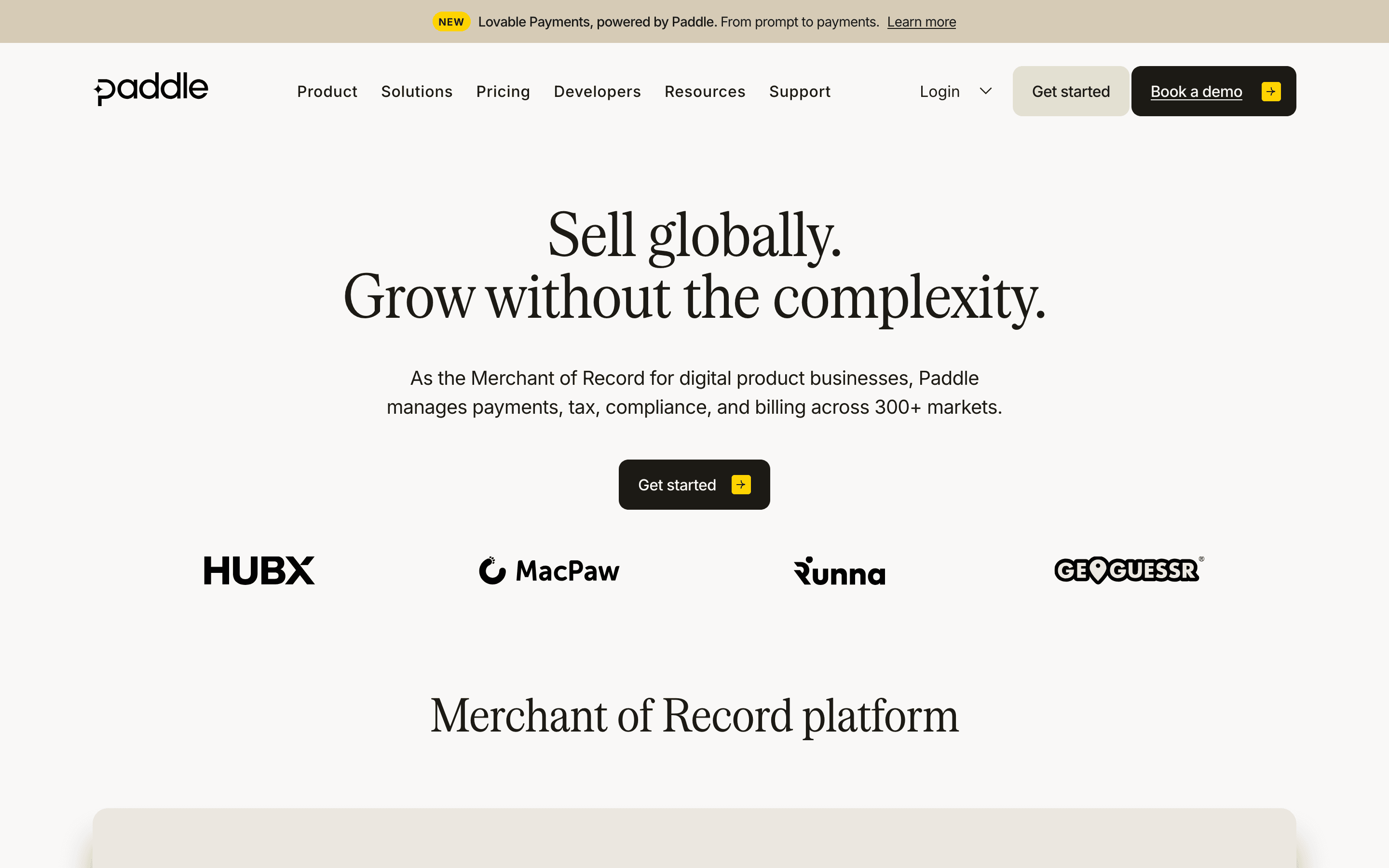
Paddle is the most direct like-for-like swap for Polar. Both work as merchant of record, so tax registration and VAT remittance move off your plate the same way, and both charge a flat cut per transaction with no monthly platform fee required to start. Paddle's rate is 5% + $0.50 per successful checkout, a bit higher than Polar's cheapest paid tier, but you never have to buy a plan to get there. You also get more built-in payment methods than Polar ships today, including Pix, BLIK, UPI, and Kakao Pay, plus recent additions like scheduled API key rotation and an MCP server for agent workflows. The tradeoffs are real: Paddle paid a $5 million FTC settlement in mid-2025 over its merchant-of-record due diligence, and multiple sellers report payouts held 90 to 180+ days after a risk flag or account closure. If Polar's support speed is what's pushing you out, check Paddle's response times too before committing.
Pros
- + One fee covers payment processing, global tax and VAT compliance, billing, fraud protection, and support, so you don't buy and manage separate tools
- + No monthly platform fee. You only pay when you get paid, and there's no lock-in contract
- + Handles tax registration and remittance in over 200 countries, which is the main reason most teams pick a merchant of record over a plain processor
Cons
- – 5% + $0.50 per transaction is expensive at scale. A business processing $500,000 a month pays roughly $25,000 in fees on that volume alone
- – Multiple reviewers describe payouts held for 90 to 180+ days after an account closure or risk flag, with support slow to respond during that period
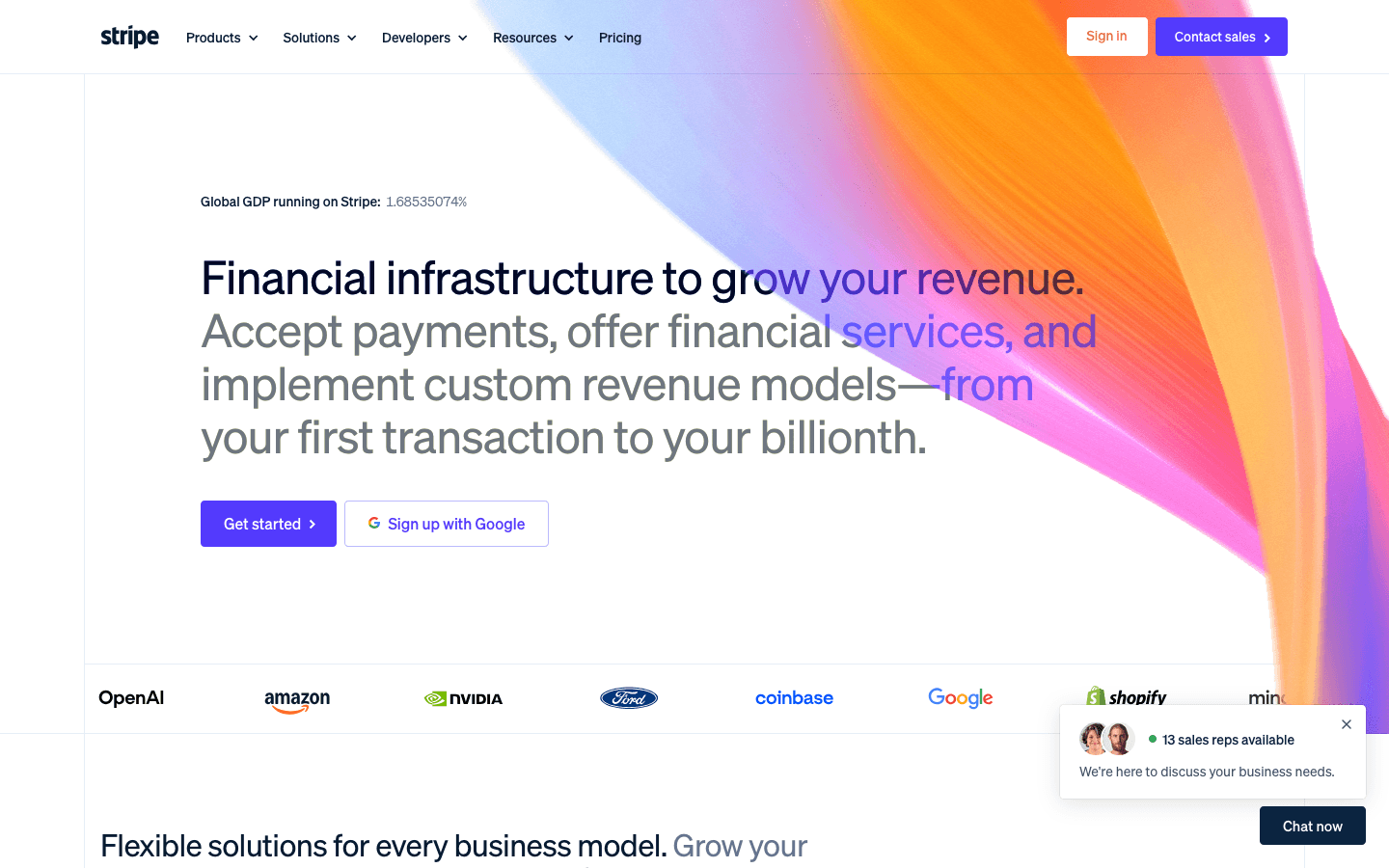
Stripe is the pick if you'd rather assemble the stack yourself than pay Polar's default free-tier rate, but run the full math first. It isn't merchant of record, so a real Polar-equivalent setup means the 2.9% + $0.30 base card rate plus Stripe Billing at 0.7% of volume for subscriptions plus Stripe Tax at 0.5% no-code (or $0.50/transaction via API), which lands around 4.1% + $0.30 at minimum. That beats Polar's 5% + $0.50 Starter rate outright. For typical subscription ticket sizes, roughly $30 and up, it also costs more than Polar's Pro (3.8% + $0.40) and Growth (3.6% + $0.35) plans. Below that size, on small usage or credit-based transactions like API calls or token top-ups, Stripe's lower fixed fee can undercut Pro and Growth too. Only Polar's Scale plan (3.4% + $0.30) beats Stripe's stack at every ticket size, so cost alone isn't a reason to switch unless you know your typical transaction size. You do get a much bigger toolset in the same account: fraud detection with Radar, Connect for marketplaces, and dozens of local payment methods across regions. The downside is you're assembling and paying for the compliance stack piece by piece instead of getting it bundled, and Stripe's automated risk system has generated over 1,700 BBB complaints about frozen funds and account holds, a similar risk to the slow-support problem that pushes some people off Polar in the first place.
Pros
- + Processing rate and surcharges are published, not hidden behind a sales call
- + One account covers cards, ACH, wallets, and dozens of local payment methods across regions
- + Billing and Tax products plug into the same dashboard and API, so you're not reconciling three vendors
Cons
- – Account holds and reserve requirements are decided by an automated risk system, and businesses report funds frozen for months with vague explanations
- – Add-on products (Billing, Tax, Sigma, Revenue Recognition) each carry their own separate fee, so the effective rate for a subscription business with tax compliance can run well above the advertised 2.9%
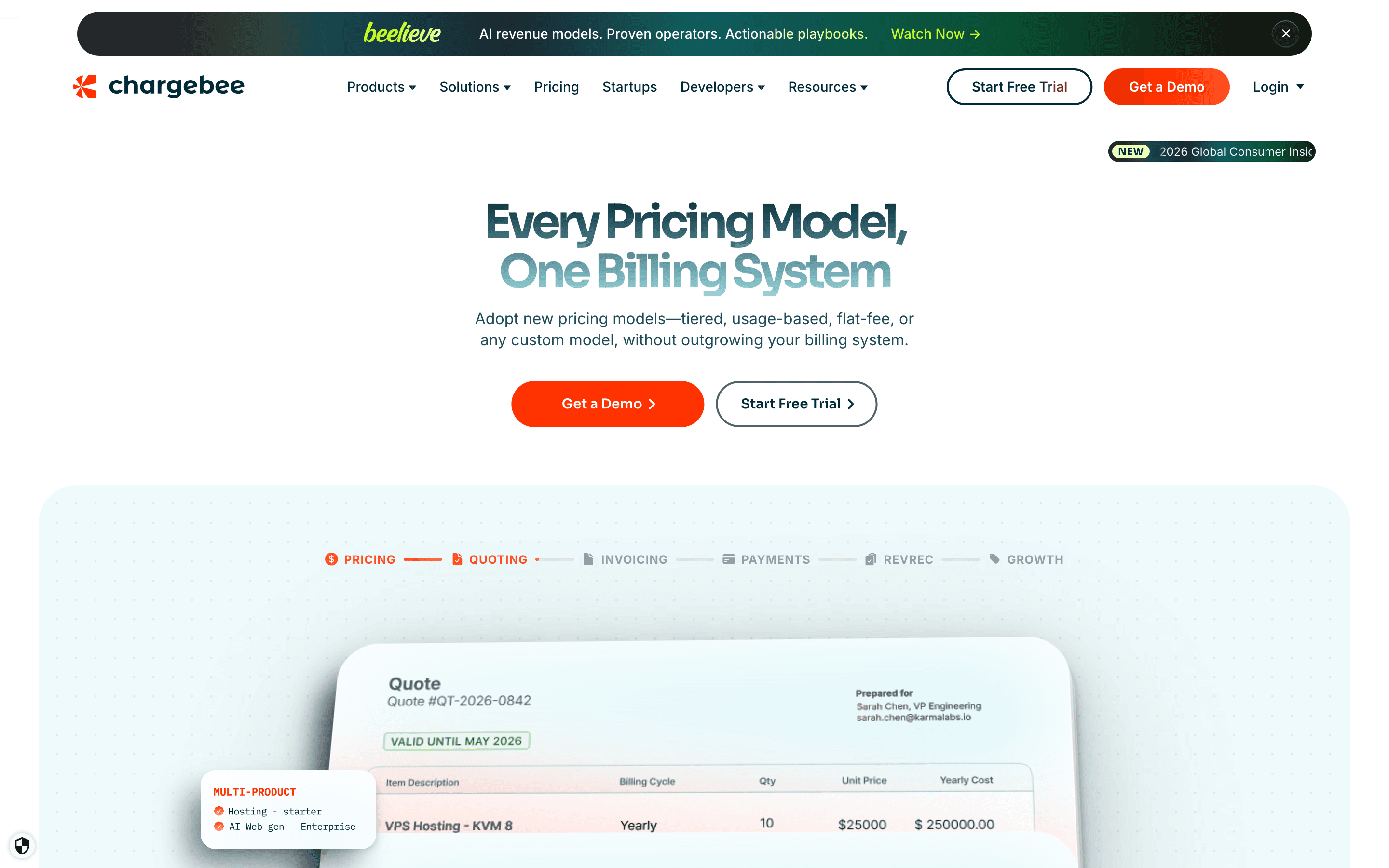
Chargebee is the pick if what you really want from Polar is the billing engine, not the merchant-of-record tax handling. It runs subscriptions, usage-based metering, and hybrid plans that mix the two on one invoice, plus dunning and a hosted checkout, and its usage rating engine is aimed at the same usage- and credit-billed products Polar courts. Unlike Polar, Chargebee is not a merchant of record: you bring your own payment gateway and still own sales tax and VAT registration and filing, usually through a tax integration like Avalara or Stripe Tax. What you get for that extra setup is depth. Chargebee's recurring and usage billing is more capable than Polar's, and the Starter plan stays free until you cross $250K in cumulative billing, after which it takes 0.75% of what you process. Past that, the Performance tier is a 12-month commitment that works out to $599 a month and covers up to $100K in billing a month before the same 0.75% overage applies. The tradeoffs: the 0.75% cut is revenue-based, so the bill grows as you do, and reviewers call it a success tax, while CPQ, revenue recognition, and its retention product are separate paid line items rather than part of billing. Pick Chargebee when hybrid subscription-plus-usage billing is the real job and you're fine owning tax compliance yourself.
Pros
- + Free to start and stays free until $250K in cumulative billing
- + Handles subscription, usage-based, and hybrid billing on the same invoice
- + Deep feature set: dunning, revenue recognition, CPQ, and a retention product all live under one vendor
Cons
- – The 0.75% overage fee is revenue-based, so your bill grows as your business grows; reviewers describe it as a 'success tax' that gets steeper the more you scale
- – Enterprise and several add-on products (CPQ, Revenue Recognition tiers, Growth Enterprise) are quote-only, so total cost isn't visible until you talk to sales
Should your product be on this payment processing list?
If you build a tool that belongs next to the ones above, submit it. A human reviews every submission. Approved products get their own page with pricing and screenshots, plus a place in the comparisons where they fit. It is free. You sign in with your work email so you can follow the decision, and there is no password to create.
Polar alternatives: FAQ
What's the closest alternative to Polar?+
Paddle. Both are merchant of record, both charge a flat percentage per transaction instead of a seat fee, and both handle sales tax and VAT registration for you.
Is Stripe a real alternative to Polar?+
Only if you price the full stack, not just the card rate. A Polar-equivalent setup needs Stripe Billing (0.7% of volume) and Stripe Tax (0.5% no-code, or $0.50/transaction via API) on top of the 2.9% + $0.30 card rate, which runs about 4.1% + $0.30 at minimum. That beats Polar's 5% + $0.50 free-tier rate outright. For typical subscription ticket sizes above roughly $30, it also costs more than Polar's Pro and Growth plans. Below that size, on small usage or credit-based transactions, Stripe's lower fixed fee can undercut those plans too. Only Polar's Scale plan, at 3.4% + $0.30, beats Stripe's stack at every ticket size.
Do any of Polar's alternatives handle usage-based billing the way Polar does?+
Chargebee comes closest. Its billing engine handles usage-based and hybrid metering natively, aimed at the same usage- and credit-billed products Polar serves, though you own tax compliance yourself since Chargebee isn't a merchant of record. Paddle is built around subscriptions and one-time purchases with no native metering, and Stripe requires setting up Stripe Billing's metering yourself.
Polar alternatives: pricing compared
Entry price, billing model, and whether pricing is public. 3 of 4 publish pricing you can check without talking to sales.
How we made these picks. We compare tools on public pricing, features, and hands-on assessment, then verify every price against the vendor's own page. We never accept payment for rankings. Read the full methodology. Spotted an error? Report it.