Top Nhost Alternatives in 2026
Here for Nhost itself? See the full Nhost profile, pricing & reviews →
Suggest a change- If you want the least conceptual jump from Nhost's own Postgres-plus-GraphQL stack, choose Supabase. Supabase gives you the same real hosted Postgres database, auth, storage, and functions bundle Nhost does, but bills per project instead of pooling usage across an organization.
- If you want the option to self-host for free and only pay once you move to a managed cloud, choose Appwrite. Appwrite's core server is open source and free to run yourself, something Nhost does not offer at any price.
- If you're building a mobile-first app and want the most mature native tooling, choose Firebase. Firebase's SDKs and push messaging for Android, iOS, Flutter, and Unity go further than Nhost or any other alternative here, though you trade Postgres for Firestore's NoSQL model.
- If your team is TypeScript-first and wants queries that update the frontend automatically, choose Convex. Convex's reactive queries update in your app the moment underlying data changes, without the manual subscriptions Nhost's Hasura-based GraphQL layer requires.
- If you're a solo developer or small team that wants to own your data and pay nothing to a vendor, choose PocketBase. PocketBase ships as one free binary you run yourself, with no organization billing, no compute credit to exceed, and no project pausing after a week idle.
- If you're already running several small projects under Nhost's org-based billing and rely on its Hasura-style permissions, choose stay on Nhost. switching means re-deriving GraphQL permission rules and shared billing setup elsewhere for a benefit that, for that specific setup, is narrow.
Nhost bundles a managed Postgres database, a GraphQL API, auth, storage, and serverless functions into one backend, billed at the organization level across every project you run. That works well until the free Starter project pauses after a week idle, the $15/month compute credit on Pro gets outpaced by real traffic and bills as overage with no cap, or a step up to SOC 2 compliance means jumping straight to $599/month.
The tools below are the ones a developer evaluating Nhost actually cross-shops: hosted backends that bundle the same core pieces, a database, auth, storage, and functions, so you're not building any of it from scratch. Supabase stays closest to Nhost's Postgres-and-GraphQL approach. Appwrite trades that relational model for a document database in exchange for a real self-hosted-for-free option Nhost doesn't have. Firebase and Convex trade the relational data model for different tradeoffs in exchange for stronger mobile tooling or reactive real-time queries. PocketBase sits furthest from Nhost's fully managed pitch, but it's the honest answer for teams that want the same bundle of features with no vendor bill at all.
Nhost alternatives compared
| Tool | Best for | Starting price | Free option | Last update |
|---|---|---|---|---|
| SupabaseClosest substitute | Developers who want real Postgres with auth and storage already wired up, not a proprietary data layer | $25/mo | Yes | July 2026 |
| Appwrite | Developers who want auth, database, storage, and functions from one vendor instead of stitching together separate services | $25/mo | Yes | July 2026 |
| FirebaseBest for mobile apps | Mobile-first apps (Android, iOS, Flutter) that want auth, a real-time database, and push notifications out of the box | Free tier + custom | Yes | July 2026 |
| ConvexBest for real-time, TypeScript-first teams | Developers who want a database, backend functions, and real-time updates working together out of the box without assembling separate services | $25/seat/mo | Yes | April 2026 |
| PocketBaseBest free or self-hosted option | Solo developers and small teams who want a real database, auth, and file storage running in five minutes without setting up separate services | Free tier + custom | Yes | July 2026 |
Why teams switch from Nhost
Nhost bills compute at the organization level across every project you run, so one heavy-traffic project can burn through the shared credit and cause overage charges that trace back to a different, lighter project in the same org.
Nhost's included $15/month compute credit on the Pro plan is easy to exceed with real traffic, and overage bills automatically with no spending cap.
Moving from Pro's $25/month to Team's $599/month for SOC 2 compliance and support SLAs is a steep, uneven jump, with no plan in between.
Point-in-time recovery isn't included with Nhost's automated backups; it's a separate paid add-on starting at $100/month.
The best Nhost alternatives, ranked
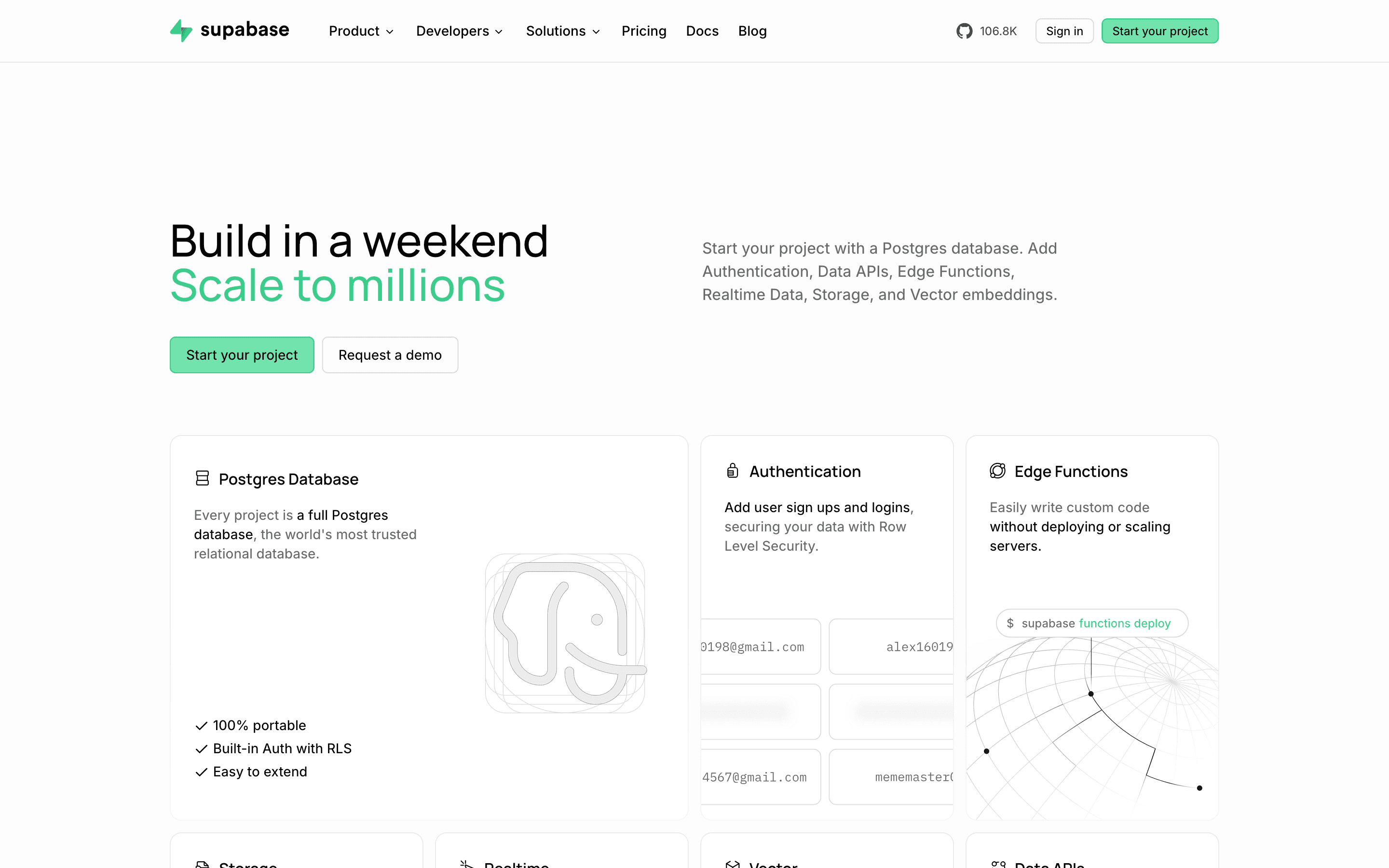
Supabase is the most direct swap for Nhost's own pitch: a real hosted Postgres database with auth, storage, and functions layered on top, so nothing about your data model or SQL habits has to change. Where Nhost bills usage at the organization level across every project you run, Supabase's $25/month Pro plan is per project, with disk, egress, storage, and monthly active users each billed separately past their included quotas, plus a separate hourly compute charge. That means more line items on the invoice, but each one is published up front rather than folded into an opaque compute credit. One catch: Pro's spend caps are on by default, so hitting an included limit pauses the project outright unless you go into the dashboard and turn on pay-as-you-grow. That's the opposite failure mode from Nhost's uncapped overage, a stopped app instead of a surprise bill, so leaving Nhost for cost control means choosing which risk you'd rather manage, not avoiding the problem. The free plan is genuinely usable for a single project, 50,000 MAUs and a 500 MB database, though it caps you at two active projects and pauses after a week idle. That inactivity pause matches Nhost's own free tier, but Nhost's Starter plan is more restrictive on project count, capping at one project rather than two. Supabase is also open source with a documented Docker-based path to self-host for free, so that option below isn't unique to Appwrite or PocketBase. For teams that want Nhost's bundle without a Hasura dependency, Supabase is the closest like-for-like move.
Pros
- + Real Postgres underneath, so you can connect with any Postgres client or ORM and aren't locked into a proprietary query language
- + Generous free tier for a single small project, including 50,000 MAUs and 500 MB of database
- + Auth, storage, realtime, and edge functions all ship in one platform instead of four separate vendors
Cons
- – The bill has a lot of moving parts: a flat plan fee, per-project compute billed hourly, and separate overage rates for disk, egress, storage, and MAUs
- – Spend caps are on by default on Pro, so a project can get paused when you hit an included limit unless you proactively enable pay-as-you-grow
Appwrite
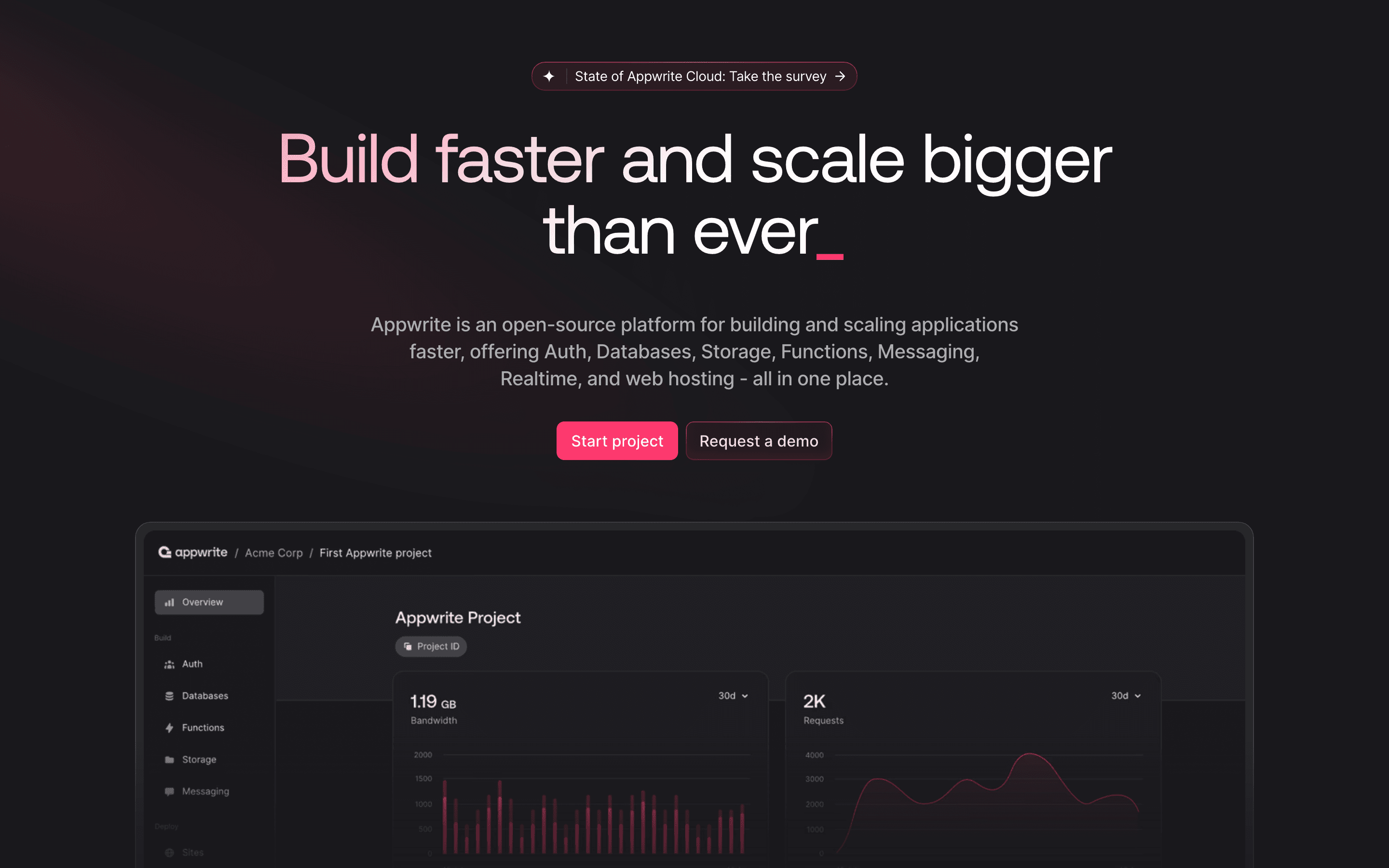
Appwrite is the pick for teams that want an option Nhost doesn't offer at all: running the whole backend yourself for free, since Appwrite's core server is fully open source. Supabase can also be self-hosted, so the real differentiator against Supabase is how clearly Appwrite prices the managed alternative: every resource on Cloud, bandwidth, storage, executions, database reads and writes, users, has its own published per-unit overage rate, so you can weigh paying for Cloud against running it yourself without a sales call. Appwrite Cloud mirrors Nhost's structure closely otherwise, a $25/month Pro plan per project with a real allowance of bandwidth, storage, executions, and database reads before overage kicks in on whichever resource runs out first. Its data model is document-based rather than Postgres, so teams anchored to relational queries and joins will feel a bigger shift than moving to Supabase. The free Cloud plan caps at two projects and auto-pauses after a week of inactivity. Nhost's own free tier shares that inactivity pause but is tighter on project count, allowing only one project rather than two. Appwrite has also expanded past pure backend work into Sites, a hosting product positioned as an open-source Vercel alternative, giving it more surface area than Nhost covers today.
Pros
- + Free and open source to self-host, so you're never locked into the hosted price
- + Pricing page lists real numbers for Free and Pro, not just "contact sales"
- + One dedicated resource bundle per project on Pro instead of shared infrastructure
Cons
- – Pro's $25 base only includes a bundle of usage; every resource type (bandwidth, storage, executions, reads/writes, users, realtime) has its own separate overage rate, so a busy app can rack up several add-on charges at once
- – Free plan caps you at 2 projects and auto-pauses a project after a week of inactivity

Firebase is the alternative for teams whose priority is mobile, not Postgres. Its Android, iOS, Flutter, and Unity tooling is more mature than anything Nhost or the other alternatives here offer, and push messaging through Cloud Messaging is free at any volume. The tradeoff is real: Firestore is a NoSQL document database, so the relational queries and joins Nhost's Postgres backend gives you for free turn into denormalized data and multiple reads, and there's no flat monthly bill, only Spark's fixed free quotas and Blaze's pay-per-unit pricing above them. There's also no path to self-host or move off Google Cloud later, unlike Appwrite, Supabase, or PocketBase. Firebase fits teams already building for Google's mobile ecosystem who are willing to trade SQL and predictable billing for the deepest native tooling and a genuinely free tier to prototype in.
Pros
- + Free Spark tier is real and usable for building and testing, not just a demo
- + Auth, database, storage, functions, hosting, and messaging all live in one console with one SDK
- + Deep, mature tooling for Android, iOS, Flutter, and Unity that most alternatives don't match
Cons
- – No flat-rate plan. Costs scale with reads, writes, storage, and bandwidth, so a bill can jump if usage spikes or a query pattern is inefficient
- – Firestore's per-read and per-write pricing means denormalizing data or fetching related records can multiply costs compared with a single SQL join
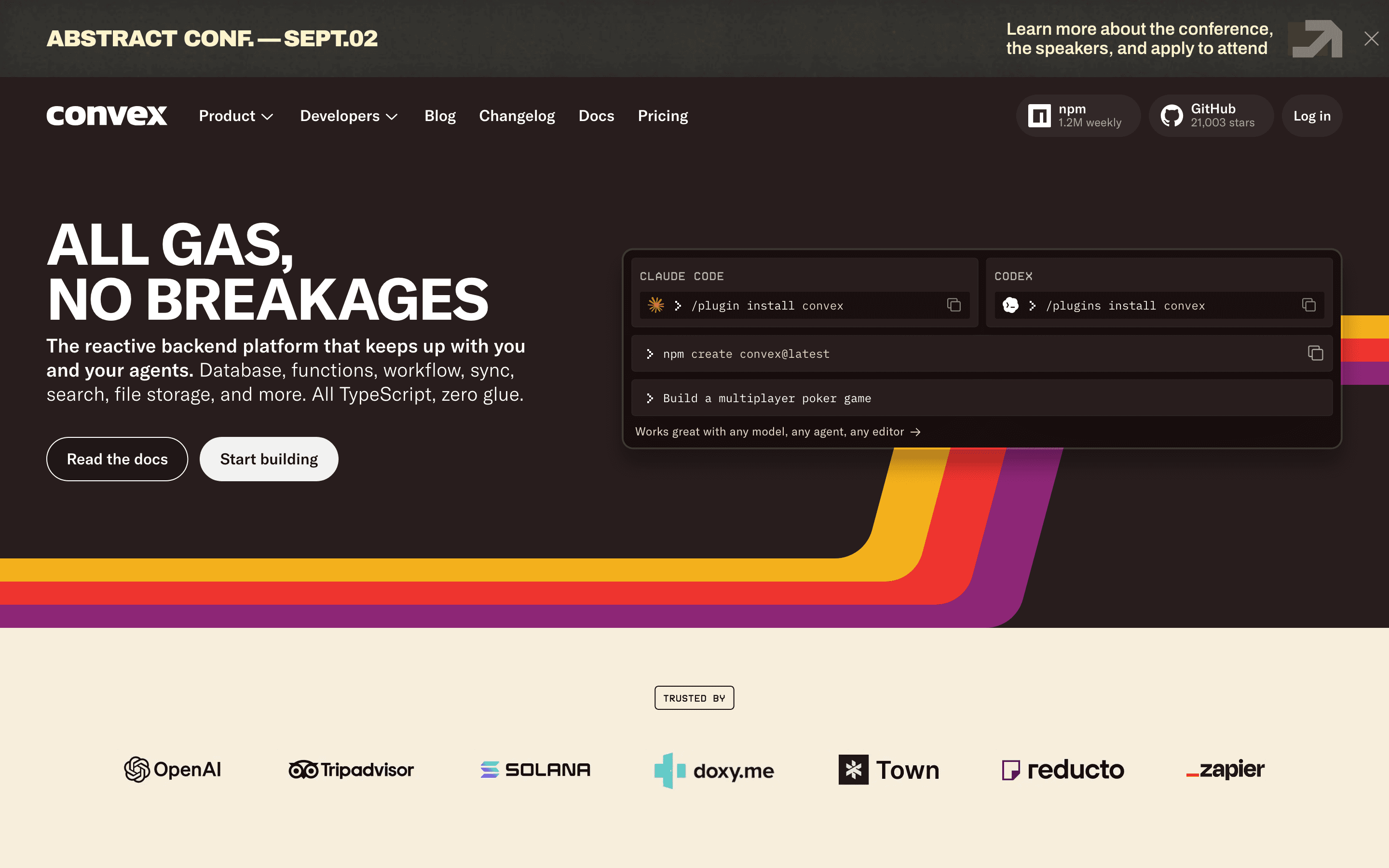
Convex is the furthest departure from Nhost's model, and the right one for TypeScript teams that want reactive data more than they want SQL. Instead of a database plus a separate GraphQL layer, you write TypeScript functions directly, and query results update in the frontend automatically when the underlying data changes, without hand-wiring subscriptions the way Nhost's Hasura-based GraphQL requires. Pricing runs $25 per developer seat on the Professional plan, with function calls, storage, and data egress metered past included quotas, similar in spirit to Nhost's compute-credit overage model. The free tier has no time limit, useful for prototypes. Convex isn't a fit for teams that need a standard Postgres database other tools can connect to directly, and its Business plan jumps to a $2,500/month minimum, a bigger gap than Nhost's own step to Team.
Pros
- + Real-time reactive queries work automatically, no manual subscriptions or cache invalidation
- + Free tier is genuinely free with no time limit, useful for prototypes and side projects
- + Function calls, storage, and compute are all billed from one dashboard instead of stitching together separate vendor bills
Cons
- – Business plan pricing starts at a $2,500/month minimum, a large jump from the $25/seat Professional plan
- – Data egress and action compute are metered past small included quotas, so cost gets harder to predict as traffic grows
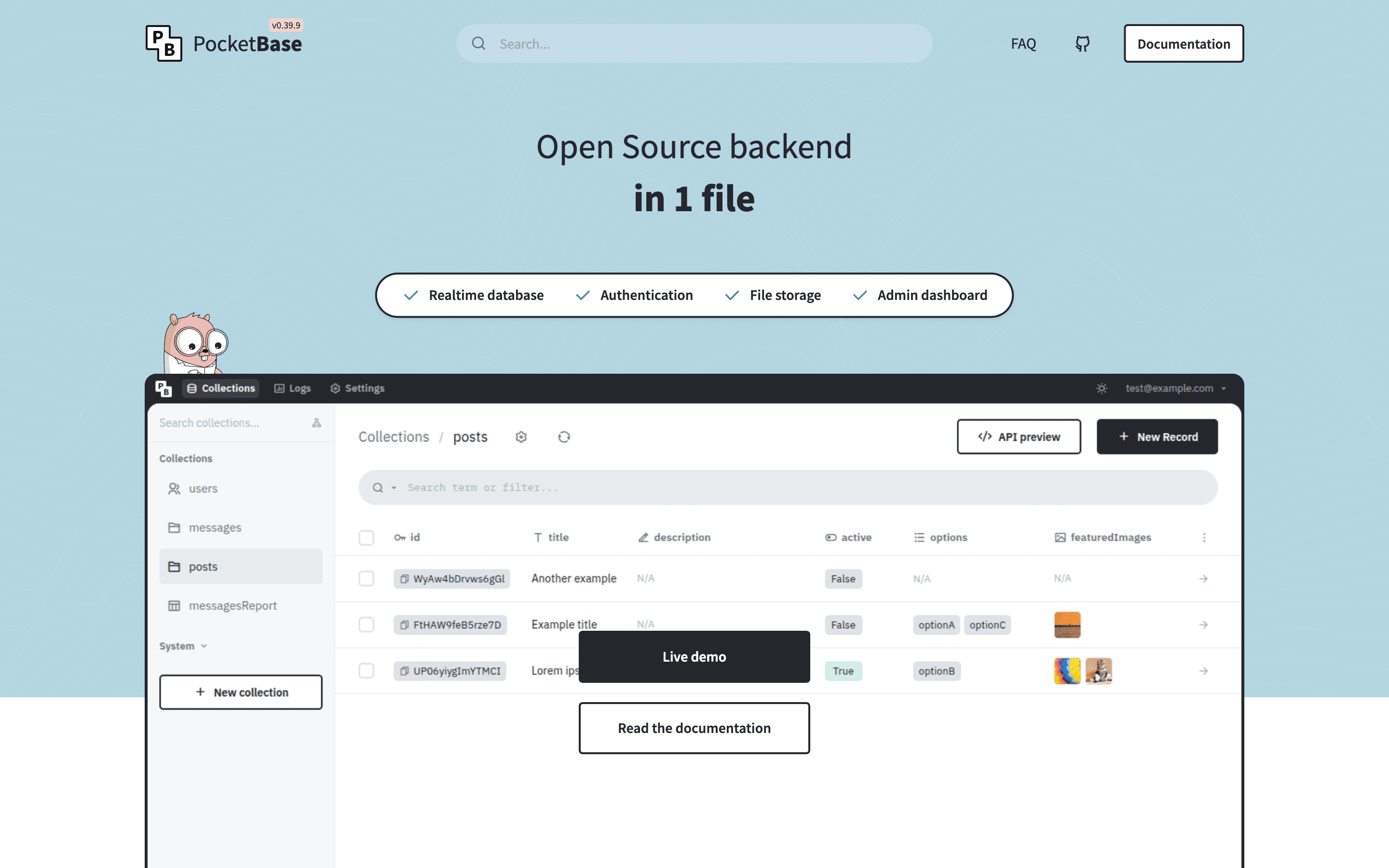
PocketBase is the answer for developers who want what Nhost promises, a database, auth, and storage running together, without paying a vendor or an organization-wide bill at all. It ships as a single Go binary with an embedded SQLite database, built-in OAuth2 auth, file storage, and an admin UI, and it's free and MIT licensed with no usage caps set by the project itself. There's no org billing, no compute credit to exceed, and no project pausing after a week idle, since you control the server. The catch is everything Nhost's managed platform absorbs: backups, uptime, and scaling are on you, and PocketBase runs as a single instance on one SQLite file with no path to horizontal scaling. It's maintained largely by one developer, and its own docs call it not yet recommended for production-critical apps, so it fits small teams and side projects more than a team replacing Nhost at real scale.
Pros
- + One binary, no separate database or auth service to stand up
- + Free and MIT licensed, including for commercial use
- + Realtime subscriptions and an admin UI are built in from the start, not bolted on
Cons
- – Runs as a single instance on embedded SQLite, so horizontal scaling requests (multiple nodes, alternate databases like CockroachDB or libsql) have been closed by the maintainer rather than implemented
- – Still pre-1.0. The docs themselves say it is not recommended for production-critical apps unless you're willing to read the changelog and do manual migration steps between versions
Should your product be on this backend as a service list?
If you build a tool that belongs next to the ones above, submit it. A human reviews every submission. Approved products get their own page with pricing and screenshots, plus a place in the comparisons where they fit. It is free. You sign in with your work email so you can follow the decision, and there is no password to create.
Nhost alternatives: FAQ
What's the best alternative to Nhost?+
Supabase is the closest match. It gives you the same real hosted Postgres database, auth, storage, and functions bundle Nhost does, just billed per project instead of pooled across an organization.
Is there a free Nhost alternative that doesn't pause after inactivity?+
PocketBase does not pause anything, since you run it yourself on your own server with no usage limits set by the project. Appwrite's free Cloud plan is a real option too, but like Nhost's own free tier, it auto-pauses after a week of inactivity.
What's the best Nhost alternative for a mobile app?+
Firebase. Its Android, iOS, Flutter, and Unity tooling is more mature than Nhost's or any of the other alternatives, though you give up Postgres for Firestore's NoSQL model.
Which Nhost alternative is best for real-time, reactive apps?+
Convex. Query results update automatically in the frontend when the underlying data changes, without writing the subscription code Nhost's GraphQL layer requires.
Nhost alternatives: pricing compared
Entry price, billing model, and whether pricing is public. 4 of 6 publish pricing you can check without talking to sales.
| Tool | Starting price | Billing | Free option | Pricing disclosed |
|---|---|---|---|---|
| Nhost | $25/mo | tiered | Yes | Partly public |
| Supabase | $25/mo | tiered | Yes | Partly public |
| Appwrite | $25/mo | usage-based | Yes | Partly public |
| Firebase | Free tier + custom | usage-based | Yes | Not disclosed |
| Convex | $25/seat/mo | usage-based | Yes | Partly public |
| PocketBase | Free tier + custom | free | Yes | Not disclosed |
How we made these picks. We compare tools on public pricing, features, and hands-on assessment, then verify every price against the vendor's own page. We never accept payment for rankings. Read the full methodology. Spotted an error? Report it.