Top SuperTokens Alternatives in 2026
Here for SuperTokens itself? See the full SuperTokens profile, pricing & reviews →
Suggest a change- If you want a free core tier that scales well past MVP and pay only for enterprise features you turn on, choose WorkOS. AuthKit is free up to 1 million monthly active users and SSO or directory sync are billed per connection, the closest match to SuperTokens' own pay-for-what-you-use model but with published rates instead of quote-only multi-tenancy pricing.
- If you want to keep writing your own login UI against an API rather than adopt someone else's widgets, choose Stytch. it is built API-first for developers who own their frontend, with 10,000 monthly active users free and the same headless philosophy SuperTokens' backend SDKs are built around.
- If your team is tired of building and maintaining login screens, a common complaint about SuperTokens' React SDK, choose Clerk. its prebuilt sign-in, sign-up, and account management components need little custom code and its free plan covers 50,000 monthly retained users.
- If you are scaling toward large enterprise customers who expect Okta-backed reliability and a long operating history, choose Auth0. it is backed by Okta's infrastructure with published uptime numbers and dedicated B2C and B2B pricing tracks, though it costs more at scale than SuperTokens' add-ons.
- If you sell B2B SaaS and need organization hierarchies, roles, and fine-grained entitlements without building that layer yourself, choose Frontegg. those features are built into its core product rather than sold as separate add-ons, and its free tier covers 7,500 monthly active users and 5 SSO or SCIM connections.
- If you need to self-host and keep user data on your own infrastructure, choose stay on SuperTokens. every alternative here is a hosted SaaS product metered by monthly active users or by connection, none offer a genuinely free, uncapped self-hosted core the way SuperTokens does.
SuperTokens gets developers a free, open-source login system with no user cap if you self-host it, or a free managed cloud up to 5,000 monthly active users if you don't want to run the servers. Teams start looking elsewhere once they need MFA or account linking, each with a $100/month minimum once turned on, or once they need multi-tenancy, which SuperTokens only prices via a sales quote, or once the recipes-based docs and the thinner React SDK slow down the frontend work.
None of the alternatives below let you self-host the way SuperTokens does. They are all hosted platforms metered by monthly active users or by feature. If keeping auth data on your own infrastructure is the reason you picked SuperTokens in the first place, that alone is a reason to stay.
SuperTokens alternatives compared
| Tool | Best for | Starting price | Free option | Last update |
|---|---|---|---|---|
| WorkOSBest free tier for pay-per-feature scaling | Developers who expect enterprise customers to demand SSO and SCIM directory sync and don't want to build IdP integrations themselves | Free | Yes | July 2026 |
| StytchBest for API-first, build-your-own-UI teams | Developers who want full control over the login UI and are fine wiring up an API rather than an embedded widget | Free | Yes | October 2025 |
| ClerkBest prebuilt login UI | Teams shipping a Next.js, React, or similar app that want working login and user management on day one | $25/mo | Yes | July 2026 |
| Auth0Best for enterprise trust and scale | Teams that need enterprise SSO and SCIM provisioning for business customers, not just consumer login | $35/user/mo | Yes | July 2026 |
| Frontegg | B2B SaaS teams that need SSO, SCIM, and org hierarchies for enterprise customers without building that layer themselves | Free tier + custom | Yes | November 2025 |
Why teams switch from SuperTokens
Add-on costs escalate fast once you need more than basic login
MFA, account linking, and extra dashboard users are each billed per MAU with a $100/month minimum once turned on, on top of the free core auth.
The docs are hard to navigate
SuperTokens organizes its docs around a recipes abstraction that developers on Hacker News have called confusing to search through.
The React SDK feels weaker than the backend SDKs
Developers who have used it say the frontend integration lags behind the well-regarded Node.js, Python, and Go SDKs.
Enterprise pricing is impossible to budget for in advance
Multi-tenancy, machine-to-machine auth, attack protection, and SLAs are all quote-only, so you cannot see the real cost until you talk to sales.
The best SuperTokens alternatives, ranked
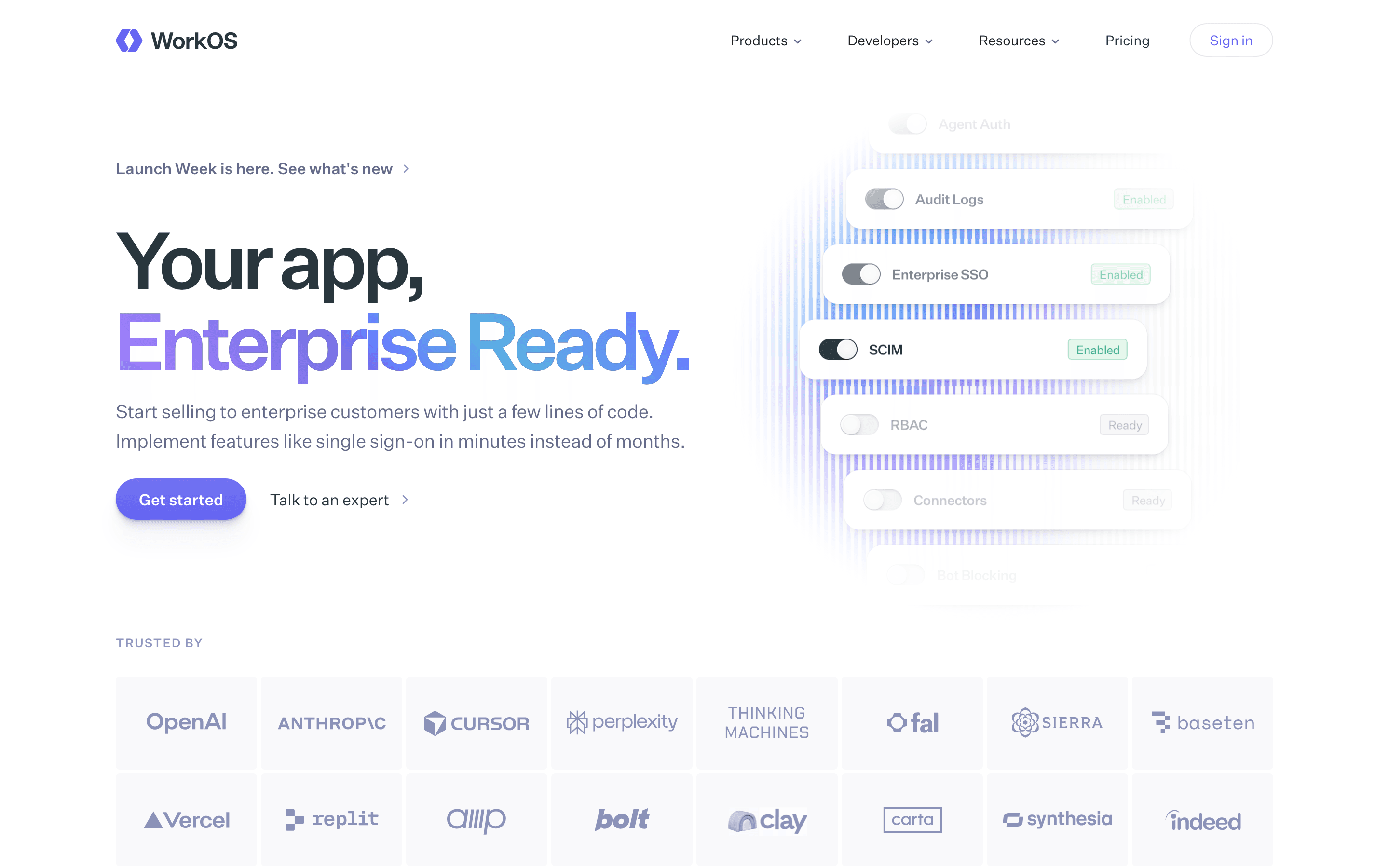
WorkOS is the closest match to SuperTokens' own pricing philosophy: pay for what you turn on, not a flat per-seat fee. AuthKit, its core login and user management product, is free up to 1 million monthly active users, well past what SuperTokens' 5,000 MAU free cloud tier covers. Enterprise features like SSO and SCIM directory sync are priced per identity provider connection ($125/month each, dropping to $65/month at volume), so cost scales with how many enterprise customers you sign rather than your total user count. That mirrors SuperTokens' add-on model for MFA and account linking, but WorkOS publishes its rates instead of leaving multi-tenancy pricing to a sales call. The tradeoff is that WorkOS has no self-hosted option, so you are trusting a hosted vendor with your auth data, something self-hosted SuperTokens users specifically avoid. If your app is heading toward enterprise customers who need SSO, WorkOS is built for exactly that transition.
Pros
- + Core login and user management is free up to 1M monthly active users, so most apps pay nothing until they have real scale
- + SSO and directory sync pricing scales down per connection as you add more enterprise customers, up to 48% off once you reach 51-100 connections
- + AuthKit gives you a hosted, customizable login page so you don't have to design and maintain your own auth screens
Cons
- – Pricing is split across many separate metered items (MAUs, SSO connections, directory sync connections, audit log streams and retention, Radar checks, custom domain), so there's no single number that tells you what you'll pay
- – Each SSO connection still costs $125/month at low volume, which adds up fast if you sign many small enterprise customers who each bring their own identity provider
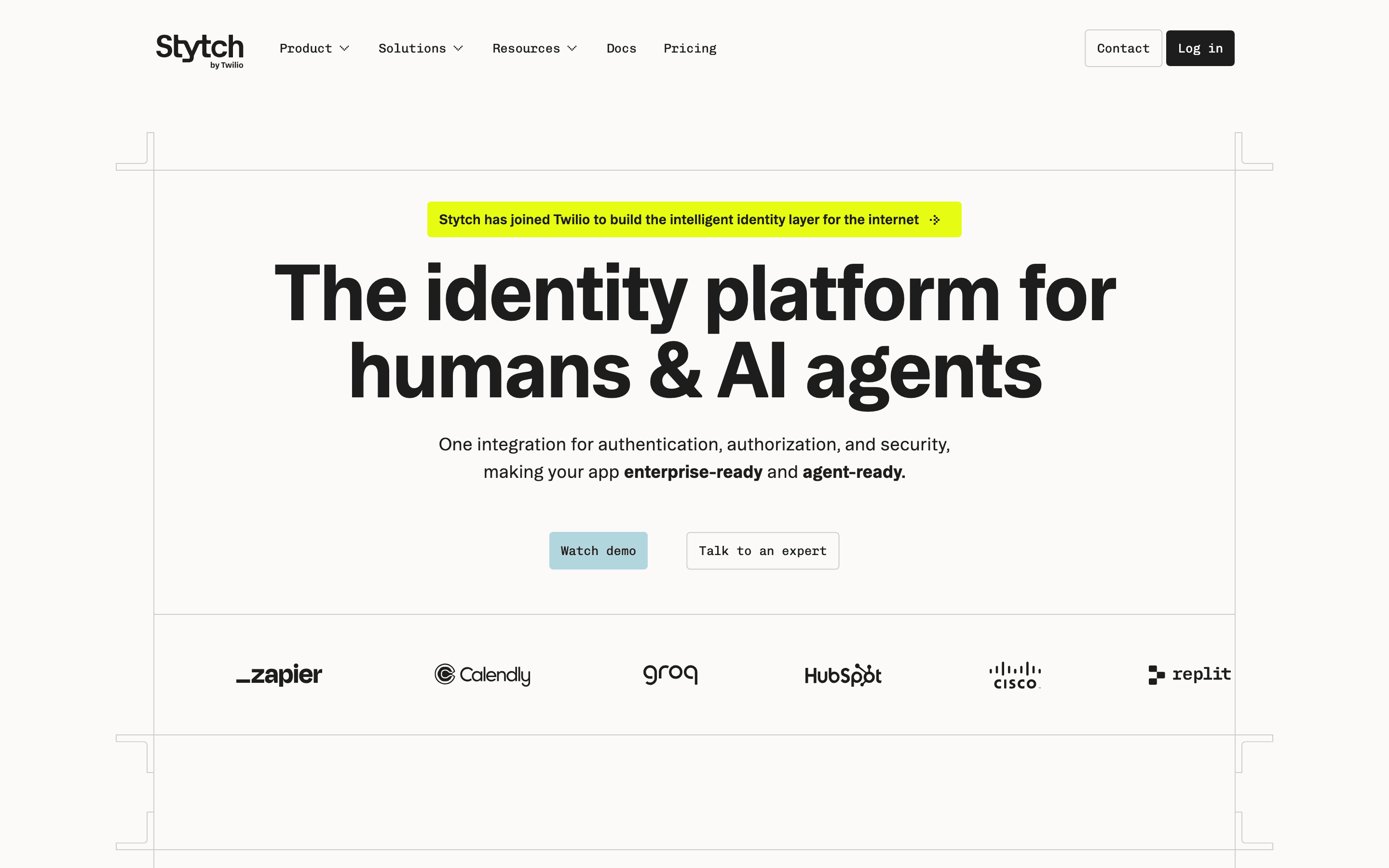
Stytch is API-first: you call its endpoints directly or use lightweight components, which suits teams who liked writing their own frontend against SuperTokens' backend SDKs but found the React SDK thin. The free tier covers 10,000 monthly active users with core features like SSO, sessions, and RBAC included, not a stripped trial. Past that, Stytch does not publish its per-MAU overage rate, you need a sales quote, though extra SSO or SCIM connections are a clear $125 per connection per month. Stytch splits into separate consumer and B2B product lines, with the B2B side handling multi-tenant SSO and an embeddable admin portal your customers can use themselves. One caveat is that Twilio acquired Stytch in October 2025, adding some uncertainty about where pricing and the roadmap go next, even though it still runs as its own product today.
Pros
- + Free tier covers 10,000 MAU with core features like SSO, RBAC, and sessions, not a crippled trial
- + Clean, well-documented API with SDKs for most major frameworks
- + B2B product handles multi-tenant SSO/SCIM and org management out of the box, which most competitors bolt on later
Cons
- – The real cost past the free tier isn't public. You only see two specific overage fees (SSO/SCIM connections, fraud fingerprints); the core per-MAU rate requires a sales conversation
- – Extra SSO/SCIM connections cost $125/connection/month, which adds up fast if you sell to many enterprise customers each needing their own connection
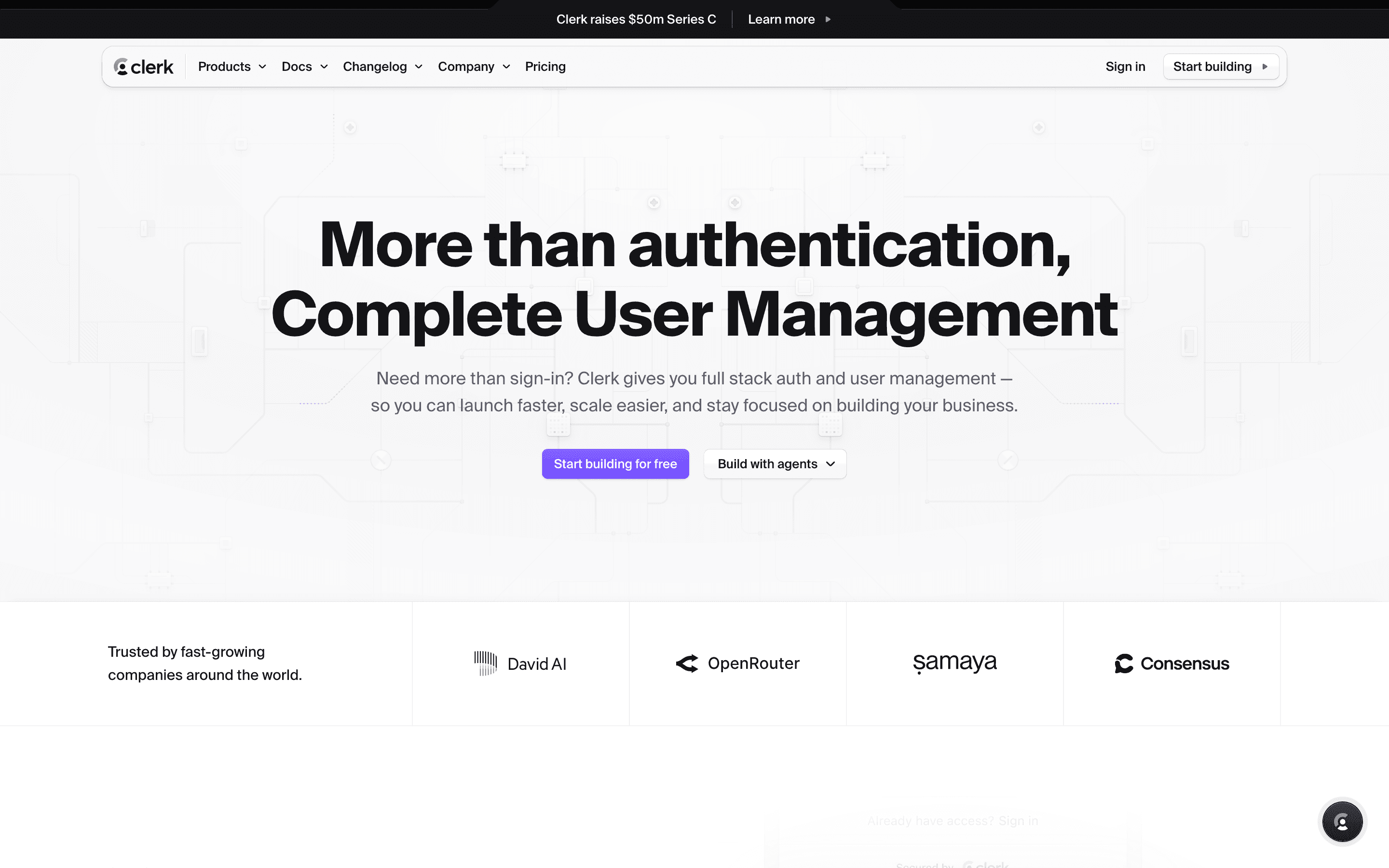
Clerk trades SuperTokens' build-it-yourself flexibility for prebuilt UI: drop-in components handle sign-in, sign-up, and account switching, the opposite of the complaint aimed at SuperTokens' React SDK. The free Hobby plan covers 50,000 monthly retained users, a user only counts once they return a day after signup, so it can be more generous in practice than SuperTokens' 5,000 raw MAU cap. Organizations, roles, and SAML SSO are built into the Pro plan for teams selling to businesses. Like SuperTokens, several features cost extra: B2B authentication, admin impersonation, and built-in billing are separate paid add-ons. One developer who left Clerk for a self-hosted tool said its pricing got out of hand for side projects, a reminder that the same cost math pushing people off SuperTokens' add-ons can eventually push people off Clerk too.
Pros
- + Prebuilt UI components handle login, signup, and account management with little custom code
- + Free tier covers 50,000 monthly retained users, generous enough for most early-stage apps
- + Organizations, roles, and SAML SSO are built in for teams selling to other businesses
Cons
- – B2B features, admin tools, and built-in billing are all separate paid add-ons on top of the base plan
- – Costs scale with monthly retained users, so pricing can climb fast once an app has real usage
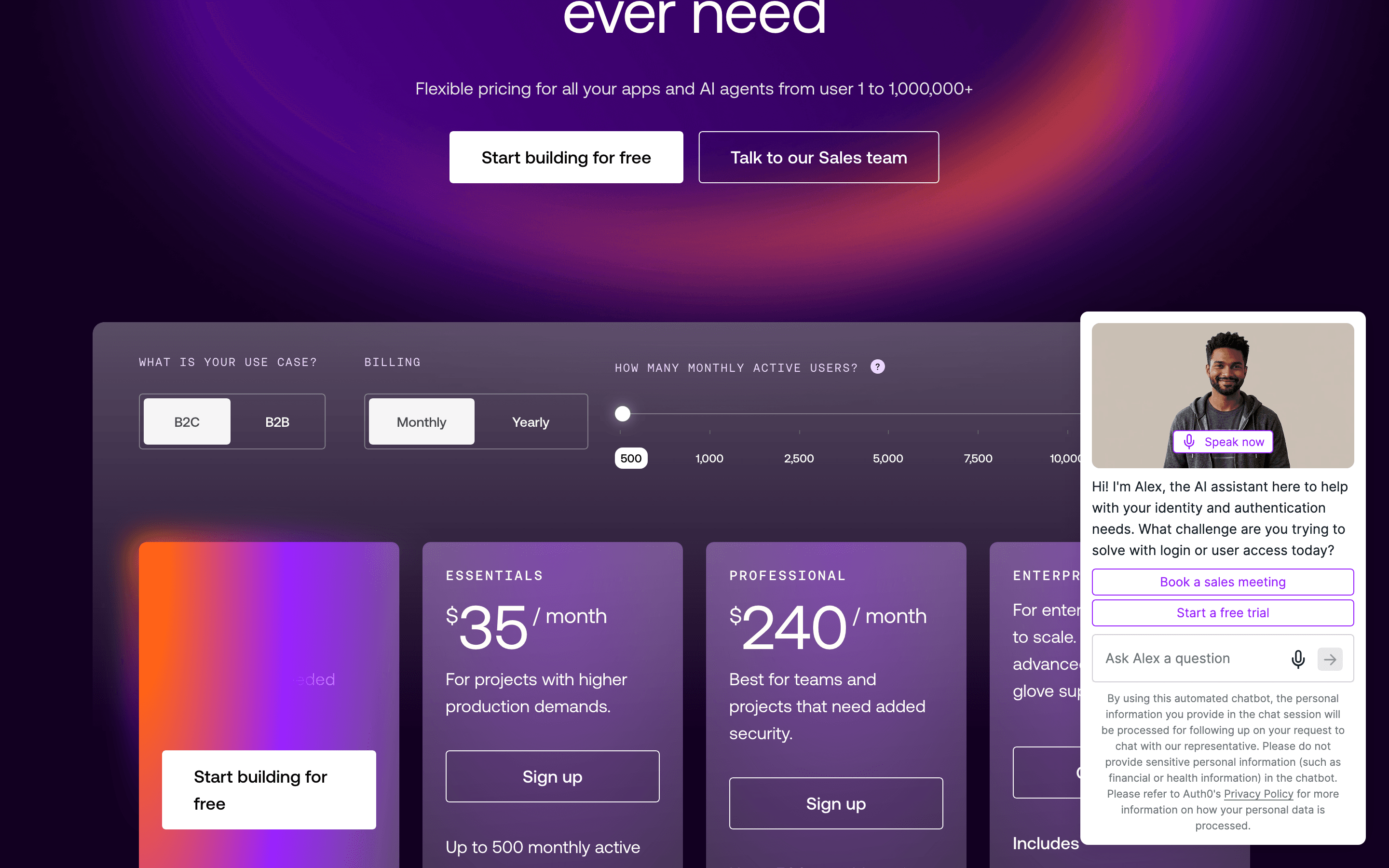
Auth0, now part of Okta, is the enterprise-grade option in this group. The free plan covers 25,000 monthly active users with real SSO and SCIM, not a crippled trial, and separate B2C and B2B pricing tracks match cost to how your app is actually used. Past the free tier, Auth0 is the most expensive of these alternatives: B2C Essentials runs $700/month at 10,000 MAUs and B2B Essentials runs $2,100/month at the same volume, both well above what SuperTokens' add-on pricing or WorkOS's per-connection fees would cost at similar scale. Add-ons like extra SSO connections and Enterprise MFA cost more on top of that. One long-time customer said Okta's acquisition pushed them from a $1,138/month legacy plan onto an $8,000/month Enterprise quote with no way to keep the old pricing, worth remembering before counting on today's published rates staying put.
Pros
- + Free plan covers up to 25,000 monthly active users with real features (SSO, SCIM), not just a stripped-down trial
- + Separate B2C and B2B tracks match pricing to how the app is actually used
- + Backed by Okta's infrastructure, with published uptime and attack-blocking numbers
Cons
- – Per-MAU pricing gets expensive fast once you cross a few thousand users, especially on the B2B track
- – Several needed pieces (extra SSO connections, MFA, AI Agents) are separate paid add-ons, not included in the base tiers
Frontegg
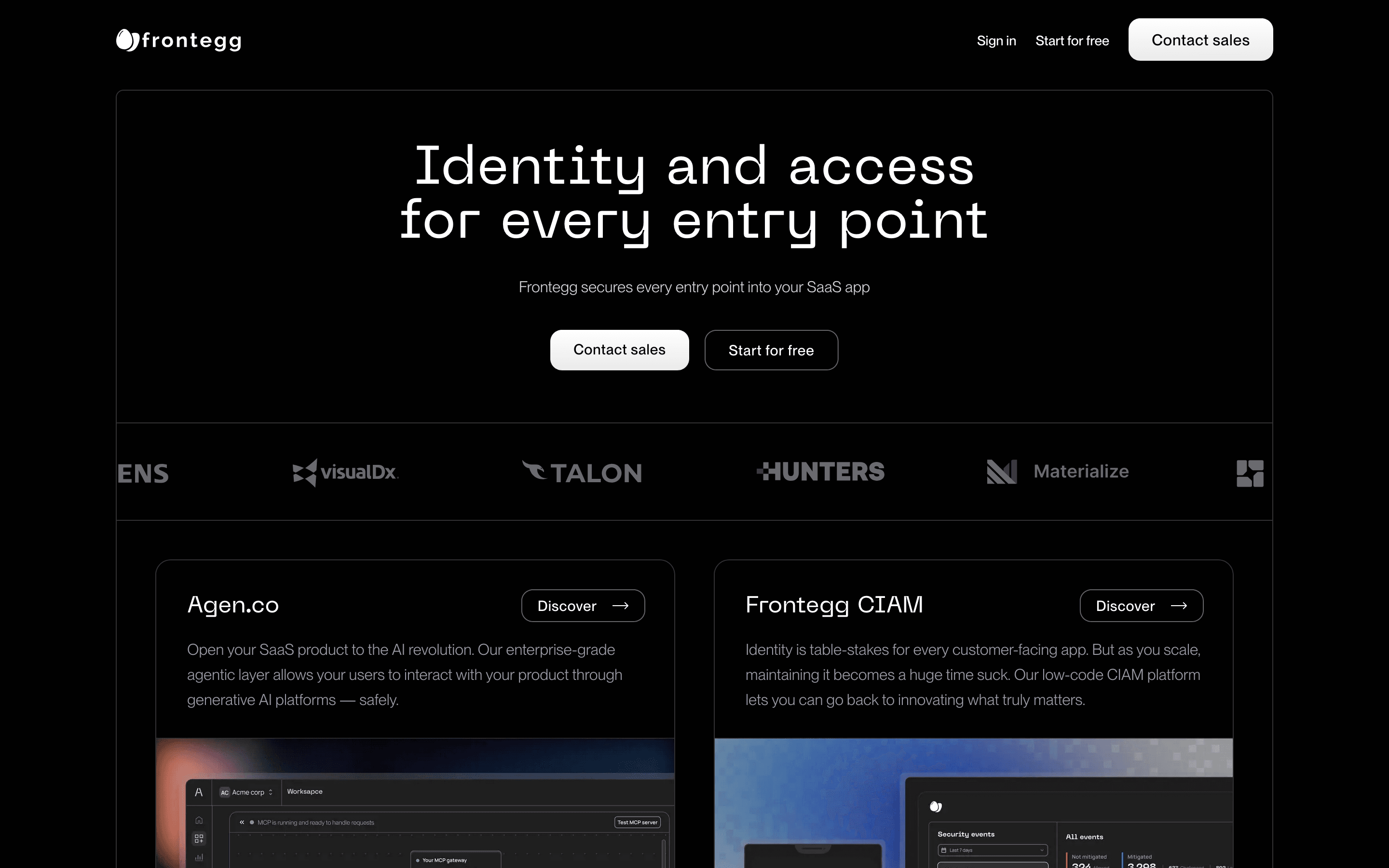
Frontegg is built for B2B SaaS: organizations, role hierarchies, and fine-grained entitlements come built in rather than bolted on, alongside standard email/password, social login, and passkey auth. The free Pay as you go plan covers 7,500 monthly active users and 5 SSO or SCIM connections, a smaller free allowance than WorkOS or Stytch but still a real amount of usage. The catch is transparency: Frontegg publishes no overage rate for MAUs or connections past the free tier, so once you outgrow the free plan you are negotiating a custom quote, the same lack of visibility SuperTokens buyers already dislike about its own quote-only multi-tenancy pricing. Frontegg also recently added identity tooling for AI agents through AgentLink and FrontMCP, which will not matter to most SuperTokens buyers today.
Pros
- + Free tier covers a real amount of usage: 7,500 monthly active users and 5 SSO/SCIM connections
- + B2B features like organizations, hierarchies, and entitlements are built in, not bolted-on add-ons
- + Covers machine-to-machine and AI agent identity use cases beyond plain end-user login
Cons
- – No published price past the free tier. Overage rates for extra MAUs and connections aren't on the pricing page, so you can't estimate cost at scale without a sales call
- – Only two named plans, so there's no visible middle tier between free and custom Enterprise pricing
Should your product be on this authentication & user management list?
If you build a tool that belongs next to the ones above, submit it. A human reviews every submission. Approved products get their own page with pricing and screenshots, plus a place in the comparisons where they fit. It is free. You sign in with your work email so you can follow the decision, and there is no password to create.
SuperTokens alternatives: FAQ
What is the best free SuperTokens alternative?+
WorkOS has the most generous free tier of the group: AuthKit, its core login and user management product, is free up to 1 million monthly active users. Enterprise features like SSO are billed separately per connection once you need them.
Can I self-host any of these instead of SuperTokens?+
No. Auth0, Clerk, WorkOS, Stytch, and Frontegg are all hosted SaaS products metered by monthly active users or by connection. If self-hosting and owning your auth data is the reason you chose SuperTokens, none of these replace that, and staying on SuperTokens is the honest answer.
Which alternative is cheapest if I need enterprise SSO?+
WorkOS and Stytch both charge $125 per SSO or SCIM connection per month at low volume, with WorkOS's rate stepping down to $65 per connection once you pass 50 connections. Auth0 includes one enterprise connection in its B2B tiers, but each additional SSO connection still costs $100/month on top of the pricier base plan, so it isn't truly connection-free. WorkOS and Stytch's per-connection model is more transparent at low connection counts.
Which alternative is best for a B2B SaaS product?+
WorkOS and Frontegg are both built around B2B needs like SSO, SCIM directory sync, and organization management. Frontegg additionally bakes in role hierarchies and fine-grained entitlements as core features rather than add-ons.
SuperTokens alternatives: pricing compared
Entry price, billing model, and whether pricing is public. 4 of 6 publish pricing you can check without talking to sales.
| Tool | Starting price | Billing | Free option | Pricing disclosed |
|---|---|---|---|---|
| SuperTokens | Free tier + custom | usage-based | Yes | Not disclosed |
| WorkOS | Free | usage-based | Yes | Partly public |
| Stytch | Free | usage-based | Yes | Partly public |
| Clerk | $25/mo | tiered | Yes | Partly public |
| Auth0 | $35/user/mo | tiered | Yes | Partly public |
| Frontegg | Free tier + custom | usage-based | Yes | Not disclosed |
How we made these picks. We compare tools on public pricing, features, and hands-on assessment, then verify every price against the vendor's own page. We never accept payment for rankings. Read the full methodology. Spotted an error? Report it.